Berlin Emergency Numbers: 112, 110 and What to Do in an Emergency
Updated: Jul 22

A Berlin fire brigade ambulance. In Germany you reach it, and the fire service, on 112.
Most people never think about Berlin emergency numbers until the moment they suddenly need one, and that is the worst time to be guessing. Someone feels faint on a hot U-Bahn platform at Alexanderplatz, a wallet vanishes in a crowd near Warschauer Straße, or a small burn happens in a holiday flat kitchen. In that first minute you do not want to be searching your phone in a second language. You want the one number, and you want to know it works.
The good news is that Berlin, like the rest of Germany, keeps the first decision simple. There are two emergency numbers to memorise, plus a short list of services worth saving before you need them. Knowing which one fits the situation makes the first minute more manageable.
Berlin emergency numbers: 112 and 110
If you remember nothing else from this page, remember these two.
112 is for a medical emergency or a fire. It reaches the ambulance and the fire brigade. Call it when someone is seriously hurt, has collapsed, is having chest pain or trouble breathing, or when there is a fire. This is the single European emergency number, so the same 112 works across the whole EU, not only in Berlin. Berlin's official police and emergency guidance explains the split between 112 and 110.
110 is for the police. Call it for a crime in progress, an assault, an immediate threat to safety, or road danger that needs police. A past theft with no current danger can be reported at a station or online instead.
Both numbers are free. On a mobile phone in Germany you need an inserted SIM, but it does not have to be German and you do not need call credit. Berlin's official newcomer guidance says emergency staff often speak English, but it does not guarantee this on every call. Clearly state what happened and where, answer the operator's questions, stay on the line and, if possible, ask a German speaker nearby to help.
A quick note that surprises a lot of visitors: the official German numbers are 112 and 110, so do not rely on 911. Match the first call to the immediate problem: injury or fire is 112, while danger or a crime in progress is 110. The services can coordinate when a situation needs more than one response.

For immediate danger or a crime in progress, the police answer on 110. Report a past theft at a station or online instead.
When it is serious but not a 112 emergency: 116117
This is the number many visitors overlook. 116117 is the on-call medical service for when you genuinely need a doctor but it is not life-threatening: a high fever, a nasty ear infection, a sprain, a migraine that will not lift. It runs around the clock, including nights and weekends when normal practices may be closed. The telephone service is officially German-only, so ask a German speaker to help if you need one; the 116117 English page also explains the service and links to the practice search.
Think of it this way. If there is a risk to life or permanent injury, call 112. If you need urgent medical help that is not life-threatening and it is 9pm on a Sunday, call 116117. Do not use an emergency line for routine medical advice. If you are still unsure whether you need a doctor at all, my guide on seeing a doctor in Berlin as a visitor walks through how the system actually works.

A hospital emergency department is Notaufnahme in German. For anything life-threatening, call 112 first rather than making your own way there.
Pharmacies at night and on Sundays
Berlin pharmacies, the shops marked with a big red A for Apotheke, mostly keep normal shop hours and close on Sundays. A rotating emergency pharmacy service covers nights, Sundays and public holidays; the on-duty location changes.
To find the one nearest you right now, check the official Notdienstfinder run by the Apothekerkammer Berlin. An on-duty pharmacy may add the official €2.50 emergency-service fee at night, on Sundays and on public holidays. It is normal, not a scam. For the full picture on how pharmacies work here, including English help and what they can hand out without a prescription, I have a separate Berlin pharmacy guide.

The red A marks an Apotheke. Use the official rota to find the pharmacy on duty at night or on Sunday.
If your wallet, cards or phone are stolen
If a wallet or phone disappears in a crowd, first decide whether there is any immediate danger. A crime in progress or a threat to safety belongs on 110. A past theft with no current danger needs two practical moves instead.
First, block your cards immediately. Germany's central card-blocking hotline, 116 116, handles participating banks and card issuers around the clock. If your issuer is not connected, use its own app or emergency number instead. From outside Germany, try +49 116 116; if that does not connect, use +49 30 4050 4050. The German landline call is free, while mobile and international charges can vary.
Second, file a criminal report, a Strafanzeige. For a past theft with no immediate danger, you do not need to call 110. Report it at a police station or through the Berlin police Internetwache, then keep the confirmation or reference number because your insurer may ask for it. A Verlustanzeige is for an item that was lost rather than stolen.
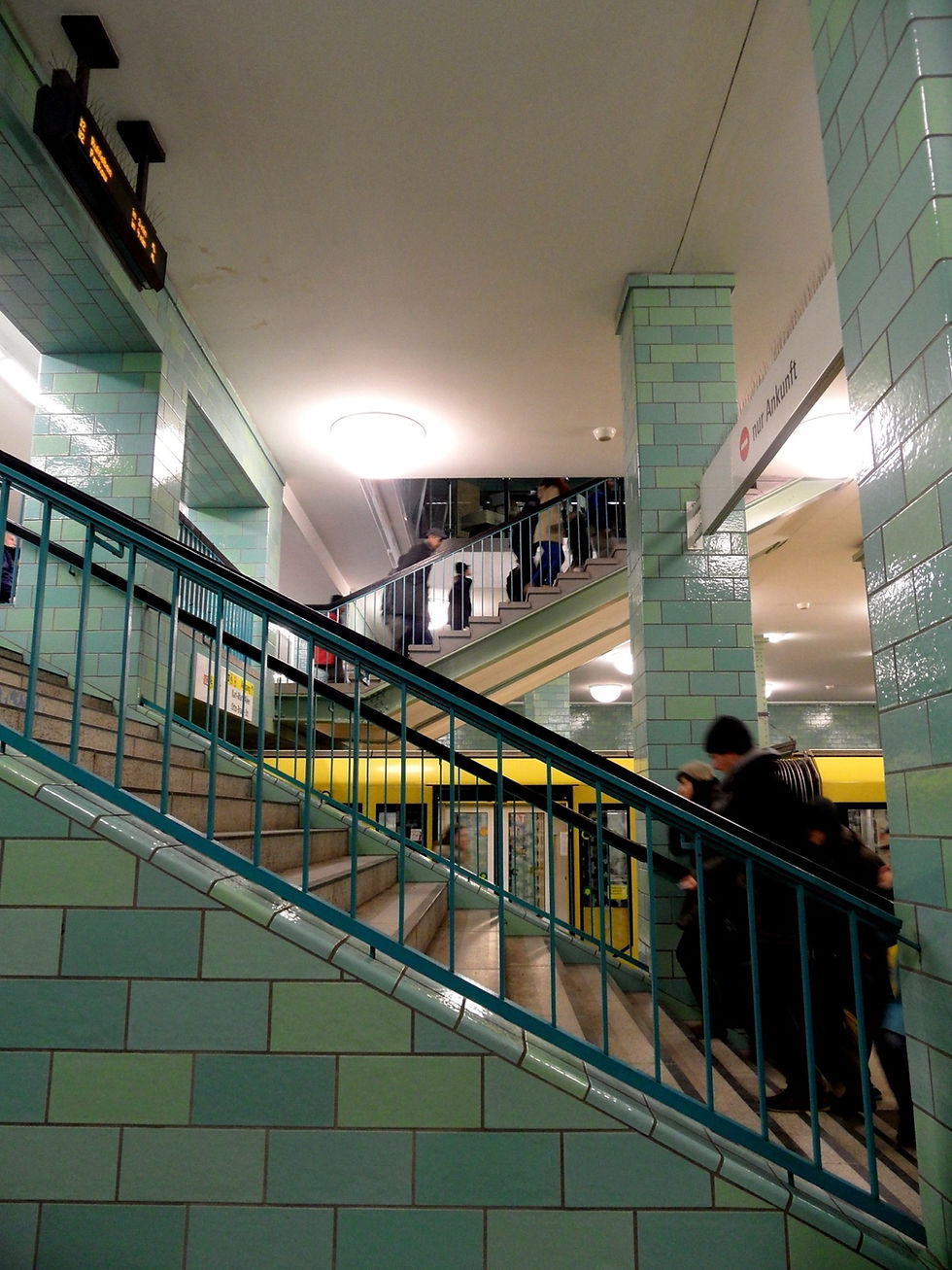
On crowded platforms and at train doors, keep your phone and wallet closed and secure.
One thing worth separating: if you simply left a bag on the U-Bahn or tram, that is not a theft and not an emergency. That is lost property, handled by the transport lost-and-found, and I cover exactly how to chase it in my lost property in Berlin guide. Knowing which situation you are in saves you calling the wrong place. It also helps to know the common tricks in advance, which is why I keep an honest list of Berlin tourist scams and a realistic take on whether Berlin is safe to visit.
If you lose your passport
A missing passport feels like the end of the trip. It is not, but it does take a couple of steps. Report the loss or theft to police promptly, then contact your own country's embassy or consulate in Berlin and follow its emergency-document instructions. Procedures, appointment rules and out-of-hours help vary by country, so do not wait for a weekday if your departure is close.
The practical move: photograph your passport, ID card and travel insurance details before you fly, and store the pictures somewhere you can reach without your phone, such as your email. I have watched that one habit turn a lost-passport panic into a calm embassy appointment.
Poison and mental-health crises
Two more numbers that are good to have and easy to forget.
For suspected poisoning, a swallowed cleaning product, the wrong dose of medication, an unknown mushroom, the Charité poison emergency line for Berlin and Brandenburg is 030 19240, staffed around the clock. For anything immediately life-threatening, it is still 112 first. Standard phone charges can depend on your provider.
For a mental-health or psychological crisis, your own or someone else's, the Berliner Krisendienst is reachable by phone around the clock and offers free help, anonymous on request. Regional centres provide crisis counselling from 16:00 to 24:00; calls outside those hours route through the central service, while weekday 08:00 to 16:00 is for information and referral. If there is any immediate danger to life, call 112.
Find the right number for your situation
Reading a list is one thing. In the actual moment, you want a calm starting point. Choose the situation below for general guidance on the first number or service to use, a short line you can say and the next step. The finder cannot assess the scene; if life may be in danger, call 112 and follow the operator's questions.
Want to keep it open on your phone? Use the standalone Berlin Emergency Number Finder.
A calm plan for the moment it happens
You may never need any of these services, but one small preparation helps: save 112, 110 and 116117 before your trip, screenshot this page, and photograph your key documents. If something does go wrong, take one breath, decide whether there is immediate danger, and use the official number that fits. That moment of clarity is worth more than a long list.
When you join me on the free walking tour, I am happy to point out the nearest pharmacy or station along the way, because knowing where things are is half of feeling safe in a new city. The rest is just knowing which number to call, and now you do.
Photo attribution is available from the compact Image credits disclosure inside the Emergency Number Finder above.