Pharmacy in Berlin: Opening Hours, Sunday Service and English Help
- Yusuf Ucuz
- Jun 22
- 7 min read
Updated: Jul 5
Most pharmacy stress in Berlin is about timing, not the red A sign itself. The tourist questions are usually simple: is it open now, is there a Sunday or late-night option, and can someone explain the medicine in English if you need help quickly?
That is when the German word Apotheke stops feeling abstract and starts mattering.
Berlin does have emergency pharmacies on Sundays, public holidays, and overnight, but they rotate. You usually need to check the current Notdienst pharmacy instead of assuming the nearest normal pharmacy will be open.
This guide is the practical Berlin version: normal opening hours, Sunday service, English-speaking help, prescriptions, and when to call 116117 or 112.
Pharmacy in Berlin: the short answer

Caption: The red A sign is the easiest way to spot a real Apotheke in Berlin.
If you need medicine in Berlin, look for the red A sign. That means Apotheke, the German word for pharmacy.
For small problems during normal opening hours, go to a nearby Apotheke and ask the pharmacist. For evenings, nights, Sundays and public holidays, use the official Notdienst system, which shows the pharmacies on emergency duty. Berlin.de explains that emergency pharmacies with night and weekend service exist across the city, and that the pharmacies on duty change daily.
For urgent medical help that is not life-threatening, the official patient service number is 116117. The English page for 116117 says it is for medical help outside normal practice hours when doctors' practices are closed, you need help today, and the situation is not life-threatening. The service is 24/7, but the phone service is only available in German.
For danger to life, serious injury, severe breathing problems, chest pain, heavy bleeding, stroke symptoms, or another real emergency, call 112. For police emergencies, call 110. Berlin.de and visitBerlin both list 112 for fire/rescue or medical emergencies and 110 for police.
What counts as an Apotheke in Berlin?

Caption: In Germany, real medicine usually means the pharmacy counter, not a supermarket shelf.
The easiest visual clue is the red pharmacy A sign, usually with a snake and bowl symbol. In Berlin, you will see it on shopping streets, inside some stations, near doctor's offices, and in malls.
The important difference is this: an Apotheke is a licensed pharmacy. A drugstore such as dm or Rossmann is useful for shampoo, sunscreen, plasters, toothpaste, vitamins, basic cosmetics and some non-medicine wellness products. But for many medicines, including common painkillers and cold medicines, the normal route is the pharmacy counter.
The German pharmacists' association ABDA explains the principle clearly: over-the-counter medicines may only be sold by a licensed pharmacy, and OTC medicines are sold under pharmacist supervision for safety reasons. That is why Berlin can feel stricter than the UK, the US or parts of southern Europe.
Do not read that as unfriendly. It often works in your favor. If you explain the problem simply, pharmacists can usually guide you toward the right non-prescription product, tell you when you need a doctor, and help you avoid mixing the wrong things.
Useful phrases:
Apotheke - pharmacy
Notdienst - emergency duty service
Rezept - prescription
Schmerzmittel - painkiller
Fieber - fever
Allergie - allergy
Durchfall - diarrhea
Mir ist schlecht - I feel sick
Ich brauche Hilfe auf Englisch - I need help in English
You do not need perfect German. Bring the package of anything you already took, show the active ingredient if you know it, and use a translation app for symptoms if needed.
Normal opening hours and the Sunday problem

Caption: Central Berlin has pharmacies in visitor areas, but hours still matter, especially on Sundays and public holidays.
Many Berlin pharmacies open Monday to Friday during daytime business hours, often Saturday for shorter hours, and close on Sundays and public holidays. Exact hours vary by pharmacy, so check Google Maps, the pharmacy's own listing, or an official pharmacy finder before crossing the city.
Berlin does have some pharmacies with longer daily hours. Berlin.de lists examples such as the pharmacy at Berlin Central Station, Medios pharmacy at Oranienburger Tor, Nordkreuz Apotheke at Gesundbrunnen, and Lichtenberg Apotheke, with daily or extended opening patterns. Treat those as useful orientation, not a promise that nothing changes. Always check the current listing before going, especially late in the evening.
For a normal tourist day, the best move is simple:
If you feel something coming on, buy what you need before evening.
If tomorrow is Sunday or a public holiday, do not leave basics until tomorrow.
If you take regular medication, carry enough for the trip plus a buffer.
Keep medicine in your day bag, not buried in luggage at the hotel.
Berlin is easy when you plan slightly ahead. It is annoying when you start the medicine search at 23:40.
How emergency pharmacies in Berlin work
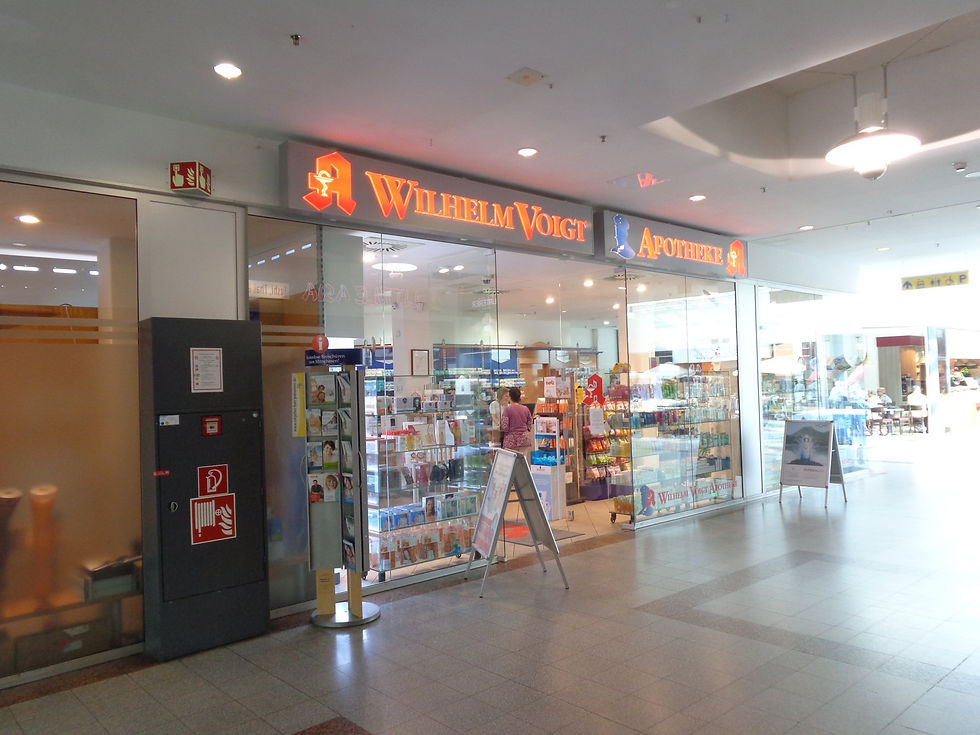
Caption: Emergency pharmacy duty rotates, so always check the current Notdienst address before travelling.
Germany uses a rotating emergency pharmacy system. In German, this is Apotheken-Notdienst or Notdienstapotheke.
It does not mean every pharmacy is open all night. It means selected pharmacies are on duty for a defined time window, usually covering nights, Sundays and public holidays. Berlin.de says the pharmacies with emergency service change daily. The Apothekerkammer Berlin runs a Notdienstfinder for Berlin, and aponet.de also provides an official emergency pharmacy search based on pharmacy association data.
Use these search terms:
Notdienst Apotheke Berlin
Notapotheke Berlin
Apotheken Notdienst Berlin
Apothekerkammer Berlin Notdienstfinder
When you find a result, check three things before you travel:
1. The exact duty time. 2. The address and district. 3. Whether the route is realistic by public transport, taxi or walking.
Emergency pharmacies are for urgent medicine needs outside normal hours. They are not meant as a fun late-night shopping option, and there may be an emergency service fee. If you only need sunscreen, cosmetics or a snack, use a station shop or wait until normal hours.
Use the Berlin Pharmacy Map Launcher
If you already know the area where you are starting, use this map launcher before opening ten random tabs. It does not claim to show the live emergency roster. It points you to the right official or map search from a realistic Berlin starting area.
Use this Berlin Pharmacy Help Picker first
If you are unsure whether you need a normal pharmacy, an emergency pharmacy, 116117 or 112, use the picker below. It is a decision aid, not a diagnosis.
If the result tells you to use 112, do not keep researching. Call.
When to use 116117, 112 and 110
This is the part worth saving.
Use 112 for emergencies: serious injury, danger to life, severe breathing problems, chest pain, signs of stroke, heavy bleeding, fire, or when someone may need an ambulance. Berlin.de lists 112 for fire and rescue services. visitBerlin also lists 112 for medical emergencies and fire brigade.
Use 110 for police emergencies. That means immediate danger, violence, serious threats, theft in progress, or situations where police need to come now.
Use 116117 when you need medical help today, but it is not life-threatening and normal doctor's practices are closed. The official English page says the service is for evenings, weekends and public holidays; it also says the phone service is only available in German. If you do not speak German, ask hotel reception, a local friend, or a German-speaking person nearby to help with the call when possible.
Use a pharmacy for smaller medicine questions: cold symptoms, mild pain, stomach trouble, hay fever, blister care, wound cleaning, travel basics, or questions about non-prescription options.
Use a doctor, clinic or 116117 when:
You need a prescription.
Symptoms are worsening.
A child, elderly person or vulnerable traveler is involved.
You are unsure whether pharmacy advice is enough.
You have a condition where the wrong medication could be risky.
Use the emergency room only for real emergencies. A hospital emergency department is not the shortcut for a simple prescription refill.
Prescriptions and medicine from home
If you are from another EU country, the EU's Your Europe guidance says a prescription issued by a doctor in one EU country is valid in other EU countries, but the medicine may not be available, may have a different name, and dispensing follows the rules of the country where the pharmacy is located. It also recommends that prescriptions include patient details, doctor details, date, common medicine name, format, quantity, strength and dosage.
In practical tourist terms: bring documentation, not just memory.
Carry:
The medicine in original packaging.
The active ingredient name, not only the brand.
A copy of the prescription.
A short medical note for important chronic medication.
Enough supply for the trip plus a few spare days.
For non-EU prescriptions, controlled medicines, strong painkillers, ADHD medication, sleeping medication or anything narcotic-regulated, do not assume a Berlin pharmacy can simply refill it. German customs guidance says medicinal products and narcotics are strictly regulated when entering Germany. If your medication is essential, check the rule before travel and bring the right documents.
What to buy before the problem starts
The least dramatic pharmacy visit is the one before the emergency.
For a normal Berlin city trip, I would pack or buy:
Blister plasters, because Berlin walking days get longer than planned.
Your usual painkiller, if you know it is safe for you.
Any regular prescription medicine.
Allergy medicine if you know you need it.
Sunscreen in summer.
Rehydration salts or basic stomach support if you are sensitive when traveling.
A small tube of wound disinfectant or plasters for minor cuts.
Do not overpack. Berlin is not remote. But do not put essential medication in checked luggage only, and do not rely on finding your exact brand at midnight.
Where this connects with a Berlin walking day

Caption: Most Berlin pharmacy visits are ordinary neighborhood moments. The trick is knowing when an ordinary pharmacy is enough.
BerlinWalk's route is about 2 hours, and it stays in the historic center from Alexanderplatz toward Hackescher Markt. That means you are rarely far from transport, station shops, cafes and pharmacies during the day.
But walking still exposes the classic tourist problems: blisters, dehydration, heat, cold, pollen, tired knees, or a headache after a long travel day. If you are joining a walking tour early in your trip, do the boring preparation first: water, comfortable shoes, weather layers, and medication you already know you need.
For bigger first-day logistics, the Berlin First-Day Planner is the better tool. For late returns after dinner or clubs, use the Berlin night transport guide. For general risk awareness, the Berlin safety guide is the broader read.
This pharmacy guide is the small but useful piece in between: not glamorous, but exactly what you want open when something goes wrong.
For the next step, my practical Berlin guides to finding a doctor in Berlin can help with the next practical detail.