Doctor in Berlin: What Tourists Should Do When They Feel Unwell
- Yusuf Ucuz
- Jun 28
- 6 min read
Feeling unwell in another country has a special kind of panic. You are not sure if you need a hospital, a normal doctor, a pharmacy, an ambulance, your insurance company, or just a quiet room and water. Berlin is not a difficult city for medical help, but it is split into different doors. The trick is choosing the right door first.
This guide is not medical diagnosis. It is a practical Berlin visitor guide to the official help routes: 112 for real emergencies, 116117 for urgent non-emergency medical help, a normal doctor for routine issues, an Apotheke for medicine advice, and your insurer for payment questions.
Doctor in Berlin: the short answer
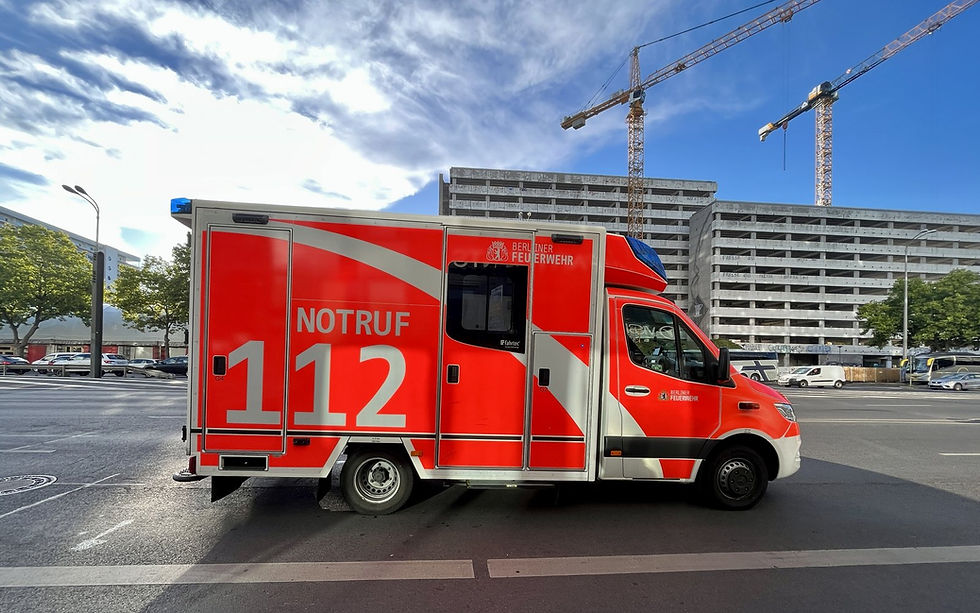
Caption: In Berlin, the first medical decision is not the building. It is the right route: emergency, on-call service, pharmacy, doctor or insurance.
If you are a tourist looking for a doctor in Berlin, start by asking one question: is this life-threatening or could waiting be dangerous? If yes, call 112. That is the emergency number for ambulance and fire service in Germany.
If it is urgent but not immediately life-threatening, use 116117, the German medical on-call service. The official 116117 English page explains that the service helps when you need medical help outside normal practice hours and it cannot wait until the next working day.
If it is uncomfortable but stable, look for a normal doctor appointment, ask your accommodation, use your insurer's assistance line, or start with a pharmacy. Berlin's official visitor information also lists emergency services and pharmacies, which is useful when you are deciding between a hospital, doctor and Apotheke.
The common tourist mistake is going straight to a hospital for everything. Sometimes that is right. Often it means a long wait in the wrong place.
First rule: 112 is for real emergencies

Caption: For severe symptoms or serious injury, do not search for a normal doctor first. Use 112.
Call 112 if there is severe chest pain, serious breathing trouble, heavy bleeding, a major accident, signs of stroke, loss of consciousness, a severe allergic reaction, a dangerous fall, or another situation where waiting feels unsafe. Do not turn this into a language exam. Say "ambulance", your location, what happened, how many people need help, and whether the person is conscious and breathing.
In Berlin, 112 is the number to remember when the problem feels immediate. If you are in a hotel, restaurant, museum or station, staff can often help explain the exact address. If you are outside, open your map app and read the street name or nearby landmark.
Do not worry about being a tourist. Emergency services are used to visitors, trains, hotels, airports and confused locations. The important part is not to downplay serious symptoms because you are embarrassed.
If it is urgent but not life-threatening, use 116117
The number 116117 is the better route when the problem feels medically important but not like an ambulance case. Think: high fever that is not settling, a painful ear infection, a bad rash, a worsening stomach problem, a minor injury that needs a doctor, or something that cannot comfortably wait until tomorrow.
The service can guide you toward an on-call practice, medical advice route or next step. It is especially useful outside normal opening hours, on weekends and public holidays. If the situation becomes severe while you are waiting or talking, switch to 112.
For planning, save this before the trip:
112: ambulance, fire, urgent danger.
116117: urgent non-emergency doctor help.
110: police.
Your travel insurer assistance number: payment, coverage, direct billing, private clinic questions.
When a normal doctor in Berlin makes more sense

Caption: For stable, non-emergency symptoms, a normal doctor visit or 116117 route is usually calmer than going straight to hospital.
For a stable problem, a normal doctor is usually calmer than an emergency department. Search for Allgemeinmedizin, Hausarzt, Praxis, or MVZ near your hotel. Many Berlin practices show languages and booking options online, but same-day appointments can still be limited.
If you have EU public health coverage, bring your European Health Insurance Card. The EU's EHIC guidance explains that the card helps with medically necessary state-provided healthcare during a temporary stay, under the same conditions as people insured in that country. It is not a replacement for travel insurance, and it does not normally cover private treatment or repatriation.
If you come from outside the EU or you use a private clinic, expect payment questions. Some practices may ask you to pay and claim later from your insurer. Keep every receipt, diagnosis note and prescription record.
Pharmacy, hospital, or doctor: how to choose the first door

Caption: For minor medicine questions, the red Apotheke sign is often the simplest first stop.
Berlin pharmacies are useful, but they are not mini-hospitals. For simple medicine advice, minor cold symptoms, over-the-counter remedies, sunscreen burns, basic stomach support, mosquito bites, or help understanding a prescription, an Apotheke can be the fastest first stop. I have a separate guide to pharmacies in Berlin, including emergency pharmacies and Sunday closures.
A hospital emergency department is for serious or potentially serious cases. If you are trying to identify a hospital yourself, Berlin keeps an official hospital directory, though it is more practical in German than in tourist English. In a real emergency, do not shop for hospitals yourself. Call 112.
For anything involving a lost passport, stolen wallet or missing phone during a medical problem, split the tasks. Handle the health issue first, then use the BerlinWalk guide to lost property in Berlin for the document, card and device steps.
What tourists should prepare before calling or going in
Before you call 116117, visit a doctor, or go to an on-call practice, write down the facts in plain language:
Your full name and date of birth.
Your hotel or exact current address.
What happened and when it started.
Current symptoms, especially fever, pain, breathing, bleeding, dizziness or allergy signs.
Medicines you take and allergies you know about.
Your insurance type: EHIC, travel insurance, private insurance, or none.
A contact number and email.
If German feels stressful, do not try to build perfect grammar. Short English usually works better than a memorized phrase you cannot adjust. Useful words are Schmerzen for pain, Fieber for fever, Allergie for allergy, Atemnot for shortness of breath, Unfall for accident, and Krankenversicherung for health insurance.
EHIC, travel insurance and payment reality
The EHIC is useful for EU visitors, but it is not magic. It helps with medically necessary public healthcare during a temporary stay. It does not turn every private clinic into a free visit, and it does not replace travel insurance for cancellation, private treatment, medical transport home, or complicated claims.
If you have travel insurance, contact the assistance line early for anything more expensive than a simple pharmacy stop. Insurers often prefer you to use a specific clinic or get a case number before treatment when it is not an emergency.
If you need medicine, keep the prescription and the pharmacy receipt. If you need a doctor's note for missed travel, ask before you leave the practice. Getting paperwork later is much harder.
If you feel unwell on arrival day

Caption: Berlin has major hospitals, but tourists should still choose the right route instead of treating every problem as a hospital case.
Arrival day is when visitors make the worst medical decisions. You are tired, dehydrated, carrying luggage, and trying to solve transport, hotel check-in and a new city at once. If the problem is serious, forget the itinerary and call 112. If it is urgent but not life-threatening, use 116117. If it is mild, start with water, rest, pharmacy advice and a normal doctor route.
If you are coming through BER, my BER Airport departure guide is useful later in the trip, but do not let airport timing override health. A missed museum slot is annoying. A missed warning sign is worse.
For a walking tour day, be direct with yourself. A BerlinWalk tour is about 2 hours on foot. If you have fever, dizziness, breathing trouble, stomach illness, a fresh injury, or anything that makes standing and walking hard, reschedule instead of pushing through. Berlin will still be here tomorrow.
A calm plan beats a heroic plan
The best medical plan in Berlin is not dramatic. Save 112, 116117, your insurer's assistance number and your accommodation address. Carry your EHIC or insurance details. Know the difference between a pharmacy, a normal doctor and an emergency department.
Most visitor health problems are not dramatic. But when you feel bad in a foreign city, the small choices matter. Use the right number, keep the details simple, and do not let embarrassment decide for you.
Image Credits
Ambulance on Otto-Braun-Strasse, Berlin: Benoit Prieur, Wikimedia Commons, CC0.
STEMO vehicle, Berliner Feuerwehr: Sebastian Rittau, Wikimedia Commons, CC0.
Charite Berlin context image: Glewe, Wikimedia Commons, CC BY-SA 4.0.
Berlin Apotheke Oranienburger Tor: Saalebaer, Wikimedia Commons, CC0.
Medical waiting room: Harrison Keely, Wikimedia Commons, CC BY 4.0.