Shopping in Berlin: Where to Actually Shop (A Local Guide)

Updated: Jul 22

I guide walking tours through the historic centre of Berlin, and shopping is one of the questions I get most often once the history part is done. Where do you actually shop in Berlin? People usually expect me to name a single famous street, the way you would in Paris or Milan.
Berlin does not really work like that.
This city is wide, layered, and a bit anti-glamour by nature. The best shopping here is spread across neighborhoods, and the most interesting things to buy are rarely in the obvious places. So this is the honest version: where to go depending on what you actually want, from a person who walks these streets every week.
First, the honest part: it is about neighborhoods, not luxury
If you come to Berlin expecting wall-to-wall designer flagships, you will be a little underwhelmed. Berlin is not, and has never tried to be, a luxury capital. It is cheaper than Munich, scruffier than Hamburg, and proud of it.
What Berlin does brilliantly is the other end of shopping: independent designers, concept stores, record shops, second-hand by the kilo, and Sunday flea markets that feel like a city-wide treasure hunt. If you go in looking for that, you will love it.
So before you pick a destination, decide what you are actually shopping for. The map below sorts the main spots by exactly that, fashion and malls, concept stores, vintage, flea markets, and souvenirs, with the nearest U-Bahn or S-Bahn for each.
The famous shopping streets (and whether they are worth it)
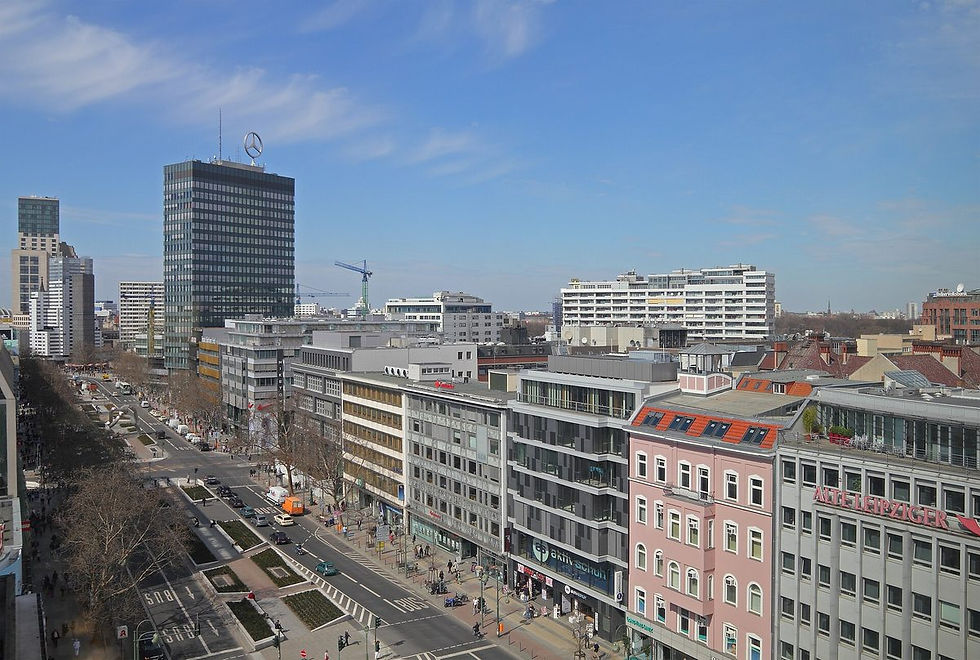
The grand shopping address in Berlin is in the west: Kurfürstendamm, known to everyone as Ku'damm, and its extension Tauentzienstraße. This is the closest thing Berlin has to a classic high street, with flagship fashion stores, big international chains, and the occasional jeweller.
The anchor here is KaDeWe (Kaufhaus des Westens) on Tauentzienstraße. It is continental Europe's largest department store, recently renovated, and home to every luxury name you can think of. Even if you do not plan to buy a thing, go up to the sixth-floor food hall. It is one of the great food experiences in the city.
Over in Mitte, Friedrichstraße used to be the smart central shopping street. Be aware that the old Galeries Lafayette here closed in August 2024, so the street is quieter than older guidebooks suggest. It is still a pleasant walk, but it is no longer a shopping destination in its own right.
Department stores and malls
When the weather turns, and in Berlin it will, the malls are genuinely useful.
Mall of Berlin at Leipziger Platz is the big central indoor mall, with mainstream brands and a food court, a short walk from Potsdamer Platz.
Bikini Berlin near Zoologischer Garten is the design-led option, a concept mall with rotating pop-up "boxes" and a rooftop terrace that looks straight into the zoo. More for browsing than for bargains.
Alexa sits right next to Alexanderplatz, where my walking tour begins. It is a large, mainstream mall, good for high-street brands, electronics, and a quick coffee out of the rain.
None of these will surprise a seasoned shopper, but they are reliable and central.
Where locals actually shop: the neighborhoods

This is the real Berlin, and it is where I send curious visitors.
Mitte is the design heart. The streets around Münzstraße and Mulackstraße are full of German labels, denim specialists, sneakers, and concept stores. A few minutes away, the Hackesche Höfe, a set of interconnected courtyards, hides independent shops and the famous Ampelmann store. This is also where my tour finishes, so it is the easiest neighborhood to fold into a walking day.
Prenzlauer Berg centres on Kastanienallee, half-jokingly called "Casting Alley," a relaxed run of indie boutiques, local designers, and vintage between the cafes.
Kreuzberg is more laid-back again. Bergmannstraße is lovely for books, records, and small gift shops, with the Marheineke covered market hall at one end.
Neukölln, just south, is the youngest and most creative corner, with small studios, plant shops, and one of the best canal-side markets in the city.
Vintage and second-hand: Berlin's real strength
If you only do one kind of shopping in Berlin, make it this one.
Berlin is one of the best cities in Europe for vintage and second-hand clothing. The undisputed centre is Friedrichshain, especially the streets around Boxhagener Platz, where you will find everything from curated vintage to enormous by-the-kilo warehouses. Prenzlauer Berg and Kreuzberg have their own smaller scenes, and there are well-known second-hand shops clustered around Rosenthaler Platz in Mitte, an easy stop right after the tour.
Prices are fair, the selection is huge, and it fits the city's character far better than any luxury boutique.
Flea markets: the best Sunday plan in Berlin

Here is something that catches many visitors out: almost all regular shops in Berlin are closed on Sundays. It is the law, not a coincidence. But Sunday is exactly when Berlin's flea markets come alive, so plan around it rather than fighting it.
My favourites:
Mauerpark Flohmarkt (Prenzlauer Berg) is the most famous, every Sunday from around 10:00 to 18:00. Vintage, records, crafts, street food, and the legendary open-air karaoke next door in the afternoon.
Trödelmarkt Arkonaplatz (Mitte) is smaller and more curated, strong on mid-century furniture, GDR design, and vinyl.
Flohmarkt am Boxhagener Platz (Friedrichshain) is the friendly, local one, less touristy than Mauerpark.
Flohmarkt Straße des 17. Juni near Tiergarten is the classic antiques and art market, open both Saturday and Sunday.
Nowkoelln Flowmarkt on the Maybachufer canal in Neukölln runs roughly every second Sunday from spring to autumn, and is the place for handmade and young-designer finds.
A Sunday spent walking two of these markets is one of the best free things you can do in the city.
Souvenirs and gifts worth taking home
Skip the cheap fridge magnets near the big sights. The most Berlin gift is anything from the Ampelmann store, the cheerful East German traffic-light figure, available as bags, sweets, and homeware at Hackescher Markt. The Nikolaiviertel, Berlin's reconstructed medieval quarter near Alexanderplatz, is a calmer, more photogenic spot for craft and souvenir shops. For the full breakdown, I wrote a separate guide on what to buy in Berlin.
The practical stuff: hours, Sundays, payment, and tax-free shopping
A few things that will save you frustration:
Opening hours. Most shops open around 10:00 and close between 18:00 and 20:00, Monday to Saturday. Sunday is closed for regular shops, with the exceptions of flea markets, bakeries, shops inside major train stations, and the odd legally permitted special Sunday.
Payment. Berlin is more cash-friendly than you might expect, and some smaller shops and market stalls still prefer cash or have card minimums. Carry some euros, especially for flea markets. Here is my full take on paying by card in Berlin.
Tax-free shopping. If you live outside the EU, you can reclaim the 19% VAT on goods, as long as a single receipt from one store is over 50.01 EUR. Ask for a tax-free form in the shop, then get it stamped by customs when you leave the EU. The goods must be exported within three months and the customs stamp is mandatory.
Budget. If you want to know what a shopping day fits into, see my realistic Berlin daily budget.
Shopping around the walking tour
The nice thing about how my route runs is that it bookends two good shopping areas. We start at the World Clock on Alexanderplatz, right beside the Alexa mall and a short walk from the Nikolaiviertel. We finish near Hackescher Markt, steps from the Hackesche Höfe shops and the vintage cluster around Rosenthaler Platz.
In other words, you can understand the city's history in the morning and shop it in the afternoon, without changing neighborhoods. Plenty of guests do exactly that. If you want the lay of the land before you spend a euro, join the free walking tour first, then let the Hackescher Markt area take it from there.
For the next step, my practical Berlin guides to Berlin flea markets can help with the next practical detail.
Image credits
Photos via Wikimedia Commons: KaDeWe by Hiroki Ogawa (CC BY 3.0). Tauentzienstraße by A.Savin (CC BY-SA 3.0). Hackesche Höfe by Fred Romero (CC BY 2.0). Mauerpark flea market by Ji-Elle (CC BY-SA 3.0).