Prenzlauer Berg Berlin: A Local Guide to the Café and Sunday District

Updated: Jul 22
You step off the U2 at Eberswalder Straße on a Sunday, and the first thing you notice is that Berlin has stopped being grey. There is a currywurst stand under the railway bridge, a queue of people in no hurry, a farmers' market a few streets away, and a park full of records and karaoke. This is Prenzlauer Berg, and it is the part of the city most visitors mean when they say they want to see where Berliners actually live.
I send people up here all the time, usually after they have done the big historic centre and want a softer, more everyday Berlin. The district is easy to walk, hard to get wrong, and much better if you know which corners are worth your time. Here is how I would spend an afternoon in Prenzlauer Berg, stop by stop.

The Wasserturm on its little hill is the district's landmark and a good picture of what Prenzlauer Berg is now: old bones, quietly lived in.
What is Prenzlauer Berg, and where is it?
Prenzlauer Berg sits just north of Berlin's centre, in the former East. Walk or ride ten minutes north from Alexanderplatz and you are in it. For most of the twentieth century it was a poor, crowded district of coal-heated tenements. After the Wall fell in 1989 it became the symbol of gentrified Berlin: renovated Altbau facades, playgrounds, cafes, and a reputation for young families that locals gently tease as the "Latte-macchiato" belt.
That reputation is fair, but it undersells the place. The pull of Prenzlauer Berg is not one big sight. It is the streets themselves, the markets, the courtyards, and the way a normal residential district turns into a Sunday party. If you have already walked Mitte and want to understand how Berliners spend a weekend, this is where to come.
It also pairs well with a very different neighbourhood on the other side of the tracks. If you liked the grit of Kreuzberg, Prenzlauer Berg is its calmer, leafier cousin, and seeing both tells you most of what you need to know about modern Berlin.
How to get to Prenzlauer Berg
The simplest way in is the U2, which stops at Senefelderplatz, Eberswalder Straße and Schönhauser Allee along the district's spine. The tram network is dense here too, and the M10 in particular is a useful east-west line. From the centre it is a short hop, so a normal AB ticket covers you. If the difference between the yellow underground and the overground trains is still fuzzy, my guide on the U-Bahn versus the S-Bahn sorts it out in a minute.
My advice: aim for Eberswalder Straße as your entry point. It drops you in the middle of the good part, right under the elevated line, and everything below is walkable from there.
Stop one: Eberswalder Straße and Konnopke's

The yellow U2 rattles over the viaduct while people eat currywurst at Konnopke's below. It is the most Prenzlauer Berg image there is.
Come up the stairs at Eberswalder Straße and you are standing under the yellow U-Bahn as it runs along the green iron viaduct. Directly beneath the tracks is Konnopke's Imbiss, a currywurst stand that has fed this corner since 1930 and stayed in the same family through the GDR years. Order a currywurst, eat it standing at one of the metal tables, and you have done the single most local thing on this walk.
One practical note that catches people out: Konnopke's is open Monday to Saturday and closed on Sundays. If you are here on a Sunday for the market and the park, plan your sausage for another meal, or accept one of the many other stands nearby. For where else currywurst is worth queuing for, I keep a running list in my best currywurst in Berlin guide.
Stop two: the Kulturbrauerei
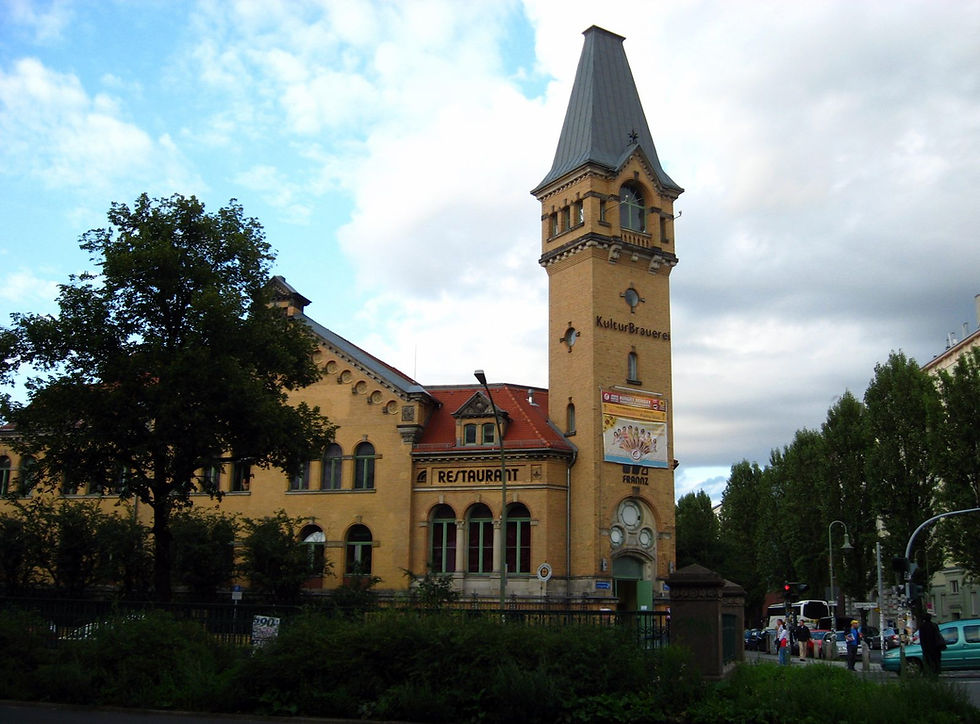
The Kulturbrauerei kept its 1800s brewery buildings and filled them with cinemas, venues and a Sunday food market instead of beer.
A three minute walk down Sredzkistraße brings you to the Kulturbrauerei, a huge red and yellow brick complex that was a working brewery in the nineteenth century. Today the courtyards hold a cinema, concert halls, a Sunday street-food market, and one genuinely good reason to step inside on any day.
That reason is the Museum in der Kulturbrauerei, a free museum about everyday life in East Germany. It is small, honest, and full of real objects: a Trabant with a roof tent, a complete newspaper kiosk, the ordinary furniture of a life behind the Wall. It runs Tuesday to Sunday and costs nothing, which makes it one of the best-value stops in the whole district. Give it half an hour.
Stop three: Kollwitzplatz and its market

Kollwitzplatz on a market day: Brandenburg produce, long benches, and the unhurried Sunday feeling the district is known for.
Kollwitzplatz is the green square at the heart of the district, named after the artist Käthe Kollwitz, whose statue sits in the middle. On a quiet day it is simply a nice place to sit under the trees. On the right day it is the reason to come.
The weekly market runs on Thursdays and Saturdays, with more than fifty stalls of Brandenburg produce, cheese, bread and cooked food, plus benches to eat at. The visitBerlin listing for the Kollwitzplatz market has the current times. My advice is to arrive hungry, buy lunch from a stall rather than a restaurant, and eat it on a bench like everyone else. That is the real Prenzlauer Berg experience, and it costs very little.
Below is the whole loop laid out in walking order. Tap through the six stops, or pick any point on the map, so you can see how the afternoon fits together before you set off.
Stop four: the Wasserturm
A few minutes south of Kollwitzplatz stands the Wasserturm, Berlin's oldest water tower, built in 1877 and converted into flats long ago. It sits on a small raised park that is one of the calmest green spaces in the area, good for a short breather between markets.
It also carries a darker history. In 1933 the engine rooms below the tower were used by the SA as one of the city's first improvised prisons, where opponents of the new Nazi regime were held and tortured. A plaque near the base marks it. It is a quiet reminder that even Berlin's most comfortable district has the twentieth century buried just under the surface.
Stop five: Kastanienallee and Berlin's oldest beer garden

Kastanienallee, the cafe-and-vintage street locals half-jokingly call "Casting Allee" for its steady stream of people-watching.
Loop back northwest and you reach Kastanienallee, a leafy street of cafes, vintage shops and small designers that locals nickname "Casting Allee". It is a good place to slow down, order a coffee outside, and watch the district go about its day.
Tucked in a courtyard at Kastanienallee 7 is Prater Garten, Berlin's oldest beer garden, pouring since 1837 under the chestnut trees. In summer it is one of the most pleasant places in the district to sit with a beer, and it needs no reservation, no plan, and no rush. If beer gardens are your thing, I have gathered the best of them across the city in my Berlin beer gardens guide.
Mauerpark on a Sunday
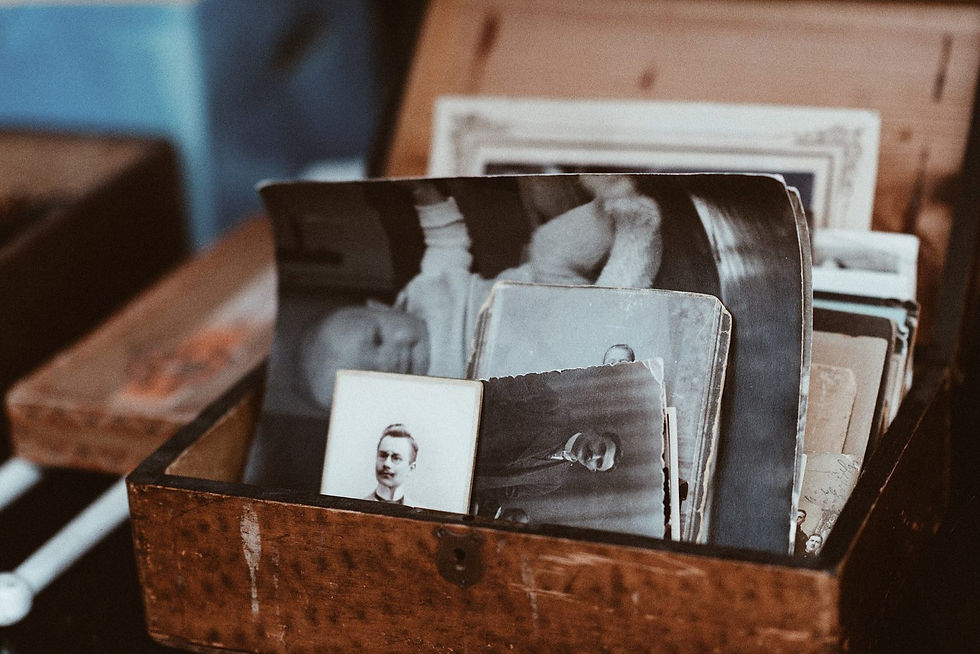
The Mauerpark flea market rewards slow digging: old photos, records and odd treasures, spread across the former death strip every Sunday.
At the northwest edge of the district lies Mauerpark, a wide green strip that was once part of the Berlin Wall death zone. Today it is the city's most famous Sunday park. Every Sunday it hosts a huge flea market and, in the afternoon, the open-air Bearpit Karaoke, where a few hundred strangers cheer on whoever is brave enough to sing.
If your visit lands on a Sunday, end here. It is the loud, joyful opposite of the quiet Wasserturm, and it ties the whole district together. I have written a fuller guide to Mauerpark on a Sunday, and if you are chasing markets more generally, my Berlin flea markets guide points you to the rest.
Where Prenzlauer Berg fits in your Berlin days
Prenzlauer Berg is a district for a relaxed half day, not a checklist. It works best as a change of pace: do the heavy history of the centre first, then come north to see how the city actually lives. If you are still deciding which part of town to base yourself in, my guide to the best Berlin neighbourhoods to stay in weighs Prenzlauer Berg against the rest.
The tour I run sits on the other side of that contrast. It starts at Alexanderplatz and explores the old heart of the former East, so it is the historic counterpoint to a lazy Prenzlauer Berg afternoon rather than a walk through the same streets. If you want to understand the centre before you come up here to relax, join my free Berlin walking tour, about 2 hours on foot from Alexanderplatz, and then let Prenzlauer Berg be your reward afterwards.
Image credits
Wasserturm Prenzlauer Berg: photo by Oberlausitzerin64, via Wikimedia Commons, CC BY-SA 4.0.
Kulturbrauerei tower: photo by Tomasz Sienicki, via Wikimedia Commons, CC BY 3.0.
Kollwitzplatz market: photo by Fridolin freudenfett, via Wikimedia Commons, CC BY-SA 4.0.
Kastanienallee: photo by Matti Blume, via Wikimedia Commons, CC BY-SA 4.0.