Open Monument Day Berlin 2026: How to Choose and Book the Hidden Sites
On an ordinary Berlin weekend, many of the buildings that make you stop in the street are closed, private, or only interesting from the pavement. Open Monument Day changes that for two days, and the danger is obvious: the programme is so large that you can turn a rare access weekend into a long sequence of missed time slots.
My advice: book one hidden site first, then build one nearby back-up around it. Do not treat the whole city as a hop-on, hop-off heritage list.
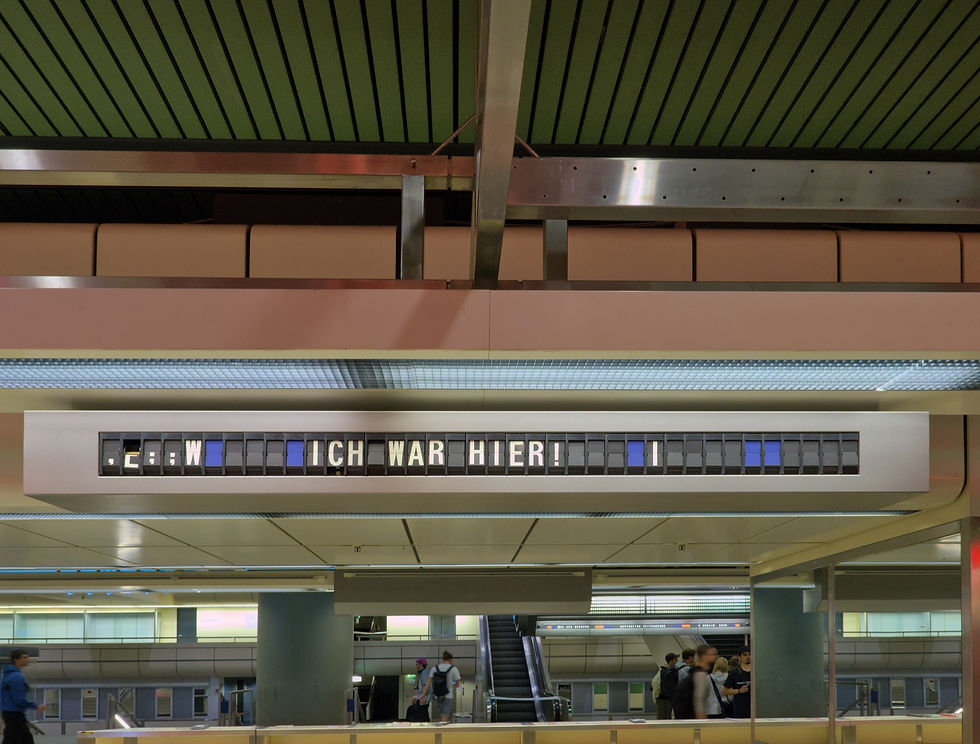
This ICC photograph was taken during the 2025 heritage weekend. It shows the kind of normally inaccessible architecture the event can reveal, not a confirmation of a 2026 programme entry.
Open Monument Day Berlin 2026: why the booking order matters
Open Monument Day takes place in Berlin on 12 and 13 September 2026. Berlin's heritage authority describes a citywide programme of around 350 monuments and roughly 1,000 activities, many of them normally not open to the public and generally free to visit.
That scale is the point, but it is also the trap. A monument weekend is not one event in one park. It is a scattered programme of interiors, gardens, walks, tours and special access across Berlin's districts. Some entries need registration, some run at fixed times, and some may have different language or accessibility conditions.
The only programme worth trusting for your exact weekend is the official Open Monument Day search. Use it as a planning tool, not just a list of attractive buildings.
Start with the official filters, in this order
The official search already gives you the filters a visitor actually needs: district, Saturday or Sunday, time of day, monument theme, language, registration, indoor access and wheelchair suitability. Use them in an order that protects the day.
1. Choose Saturday or Sunday first. Do not build a route around an entry that runs on the other day.
2. Filter for with registration if there is one place you really want. Read its own listing before assuming a place is held for you.
3. Choose a district and time window. A 10:00 visit in Charlottenburg and a 13:00 tour in Neukölln are not a relaxed pair.
4. Add a no-registration back-up in the same area. The official search has a specific without registration filter for this reason.
5. Only then add language, indoor and accessibility requirements. If you need an English-language event or step-free access, make that filter part of the first search, not a detail after booking.
The better plan has one priority and one back-up. It does not depend on reaching three districts at exact times.
Use the building type to choose the part of Berlin
The 2026 theme is NetzWERKE: Denkmale & Infrastruktur, a useful reason to look beyond the postcard centre. The official search lets you work by themes including public buildings, industry, technology and transport, modern architecture, gardens, housing and settlements, sacred buildings, world heritage and archaeology.
That means a visitor can make a real choice before seeing the final individual listings:
• Choose Charlottenburg and the west for a large-building or infrastructure day, then leave time for the actual address and entry instructions in the official listing.
• Choose Friedrichshain and Karl-Marx-Allee if modern East Berlin architecture is the part of the city you want to understand.
• Choose Neukölln if one neighbourhood, a bathhouse or a local building is more interesting to you than another central landmark.
• Choose Mitte only when the official programme gives you a specific interior or tour you would not otherwise get.

Kino International is a strong example of East Berlin modernism on Karl-Marx-Allee. Check the official heritage-weekend listing before treating any building as an open 2026 stop.
For the second option, my Karl-Marx-Allee guide gives the street context before you decide whether a programme entry there is worth your limited weekend time.
Do not confuse an attractive building with an available visit
An image of the ICC, Kino International, Stadtbad Neukölln or Frankfurter Tor can make you want to go. That is useful inspiration. It is not a booking confirmation.

Stadtbad Neukölln is a listed Berlin building in Ganghoferstraße. Its photograph is architectural context, not a promise about the 2026 programme.
Before you commit, open the programme detail and check four things: the date, the starting time, whether registration is required, and the entry or meeting-point instruction. If you need an English-language format, use the official English programme overview before travelling across the city.
This sounds cautious, but it is what separates a good heritage weekend from standing outside a door at the wrong time with a beautiful screenshot on your phone.
Give the weekend a realistic Berlin shape
Open Monument Day works best as the cultural centre of a day, not as the entire trip. If your priority visit begins later in the afternoon, use the morning for a compact central route or a booked museum. If it begins at 10:00, protect that time and let the afternoon stay flexible.

Frankfurter Tor is a clear landmark at the eastern end of Karl-Marx-Allee. Use the official programme to find out whether there is an actual visit nearby, rather than assuming a photo stop is part of the event.
For the broader September calendar, see my Berlin in September guide. If you need to fit a heritage booking around arrival times, a hotel area and other fixed tickets, the Berlin Trip Planner can help you see whether the day is already too full.
My free walking tour is a separate 2-hour historic-centre route from Alexanderplatz towards Hackescher Markt. It can be a good morning on another day of the trip, but it should never be squeezed between two timed heritage entries. If it fits your plan, check live availability.
The better Open Monument Day plan
The rare thing about this weekend is access, not volume. Reserve the one interior or tour that matters to you, hold one nearby no-registration alternative, and leave the rest of Berlin out of the equation. You will see more by doing less, and you will leave with a real building in your memory rather than a list of addresses you never reached.
Image credits
Source and licence details for the photographs used in this article.
ICC Berlin during Open Monument Day 2025: Nylki, CC BY-SA 4.0, via Wikimedia Commons.
Kino International: Matthias Suessen, CC BY-SA 4.0, via Wikimedia Commons.
Stadtbad Neukölln entrance: Manfred Heyde, CC BY-SA 3.0, via Wikimedia Commons.
Frankfurter Tor west view: Gryffindor, Public domain, via Wikimedia Commons.