German Signs in Berlin: The Words Tourists Actually Need
- Yusuf Ucuz

- Jun 28
- 5 min read
Berlin is easy to travel in without speaking fluent German, but the city still speaks to you through signs. Station exits, ticket machines, shop doors, bottle-return corners and emergency notices all use short German words that decide what you do next.
You do not need a phrasebook for this. You need a small sign-reading instinct: which word means exit, which word means platform, which warning means your train is not running normally, and which payment sign means the card terminal is not going to save you.
German signs in Berlin: the fast rule

Caption: Start with action words. Ausgang is the sign that tells you how to leave the station or building.
When a German sign in Berlin confuses you, look for the action word first. Is it telling you to enter, leave, change platform, validate, pay, wait, return bottles or avoid a closed route? The noun matters less than the next move.
That is why tourists often get lost even after learning basic phrases. "Danke" and "bitte" are friendly. "Ausgang", "Gleis", "Ersatzverkehr" and "Bitte entwerten" are practical.
If you are starting a day near Alexanderplatz, Hackescher Markt or Museum Island, this is also where sign-reading pays off fast. The same words appear on U-Bahn platforms, S-Bahn boards, museum cloakrooms, bakeries, pharmacies and station shops.
The station words that stop most wrong turns

Caption: Station signs are not language tests. They are route decisions: exit, platform, direction or transfer.
The most important station word is Ausgang. It means exit. If a station has several exits, the word after Ausgang usually points you toward a street, square, landmark or shopping passage. Follow the exit name, not just the crowd.
Eingang means entrance. It is the opposite of Ausgang and is useful around museums, public buildings and bigger stations.
Gleis means platform or track. On regional trains, S-Bahn platforms and main stations, Gleis is the word that matters when your app says a train leaves from platform 4. Bahnsteig also means platform, especially on local transport.
Richtung means direction. On the U-Bahn and S-Bahn, direction often tells you the end station of the line, not your exact stop. If you are taking U2 toward Stadtmitte, for example, you may need the train direction rather than the stop name on every sign.
Umstieg means transfer. If you see it with another line number, it usually points toward a connection.
Ersatzverkehr is the word tourists rarely know until it ruins a plan. It means replacement service, often because a train, tram or bus route is interrupted. If you see SEV, it usually means rail replacement bus. Do not stand on the platform hoping the normal train appears. Look for the replacement bus signs, staff instructions or the operator app.
For current ticket types and route changes, use the official BVG ticket pages or S-Bahn Berlin ticket information rather than guessing from an old travel forum.
Ticket machine signs and the validation trap
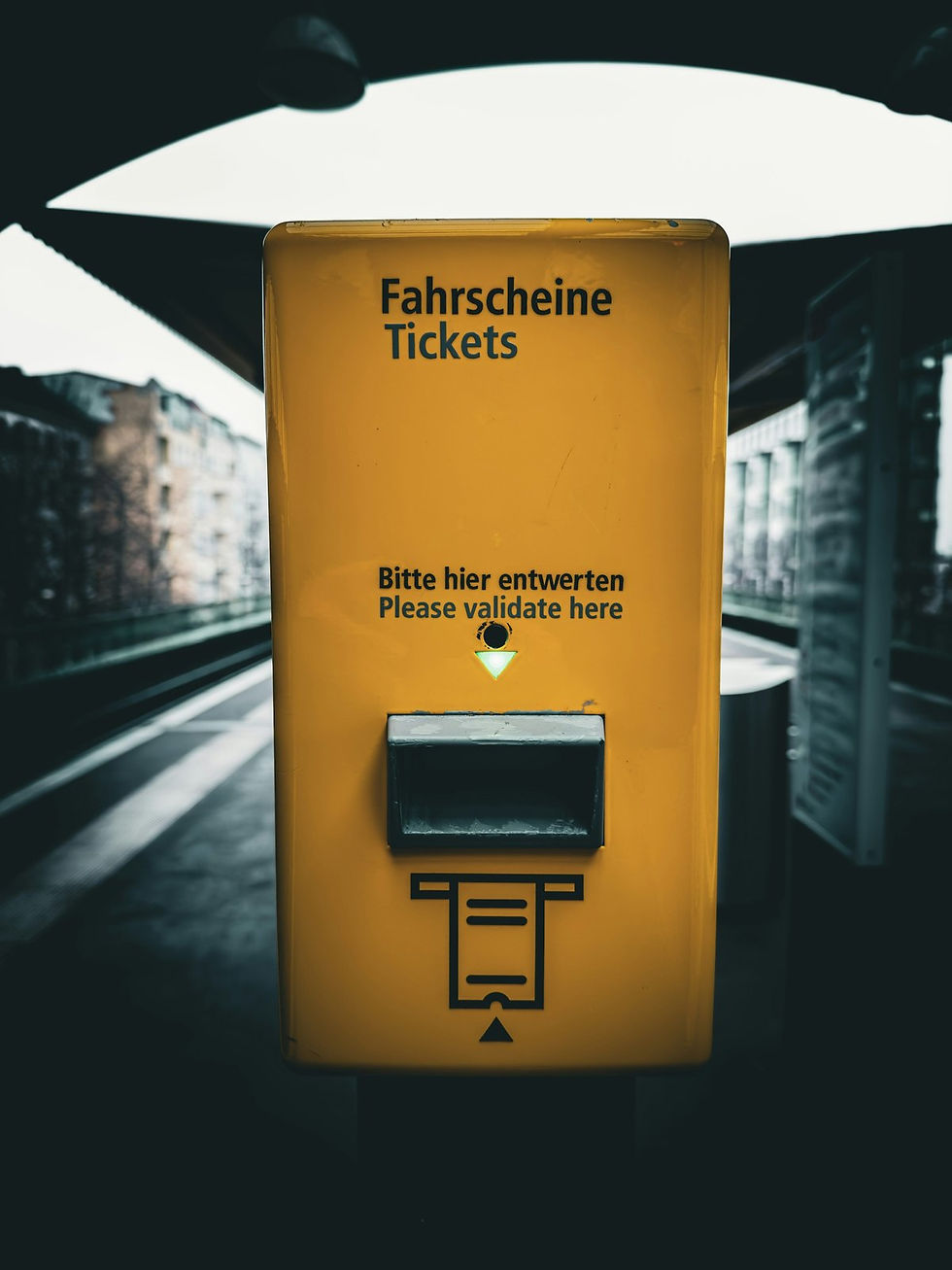
Caption: The ticket mistake is usually not the German grammar. It is buying a paper ticket and forgetting whether it needs validation.
The most expensive sign mistake in Berlin is not a complicated word. It is missing the validation step.
Fahrkarte or Ticket means ticket. Entwerten means validate. If a paper ticket says it must be validated, you stamp it before the first ride. A ticket that is bought but not valid yet can still lead to a fine in a control.
Look for Bitte entwerten or the small validator machines on platforms, buses and trams. If your ticket is digital or already time-stamped, the rule is different. If it is a blank paper ticket, slow down before boarding.
Ticket checks are called Kontrolle or Fahrscheinkontrolle. Inspectors can appear in plain clothes and then show ID. The calm version is simple: show a valid ticket, do not panic, and ask for official paperwork if there is a problem.
If this is your first Berlin trip, read my full guide to validating Berlin train tickets before you buy a paper ticket. It explains the difference between buying, validating and activating.
Shop, cafe and payment signs that change the plan
Berlin is much more card-friendly than it used to be, but small places still have edge cases. The sign to watch is Nur Barzahlung. It means cash only. Kartenzahlung means card payment. EC-Karte can mean German debit card support, not always every international card.
Kasse means checkout or till. Selbstbedienung means self-service. Bitte warten means please wait, which matters at cafes, restaurants, small bakeries and cloakrooms.
On shop doors, geoffnet means open and geschlossen means closed. If you only remember one practical shop phrase, remember Heute geschlossen: closed today. Sunday rules can still surprise visitors, so do not build an entire breakfast or grocery plan around one normal-looking shop door.
For payment details, my Berlin credit card guide is the deeper read. The short version: carry one working card and a little cash.
Bottle-return and supermarket words
The word Pfand means deposit. You pay it on many bottles and cans, then get it back when you return the empty container. The machine is usually marked Pfandautomat or Leergutannahme.
Do not throw every bottle away automatically. Some containers have a deposit and some do not. The machine accepts the right ones, prints a voucher, and you take that voucher to the checkout.
If you are confused, watch what locals do for ten seconds. Put the bottle base-first into the machine, wait for the scan, press the print button, then use the receipt at the Kasse.
I have a separate guide to Pfand in Germany if you want the full tourist version.
Safety, bathroom and emergency signs
WC means toilet. Damen means women and Herren means men. Behinderten-WC means accessible toilet. Aufzug means elevator or lift, which is useful in big stations with luggage.
Notausgang means emergency exit. Achtung means attention or warning. Vorsicht means caution. Polizei means police. Apotheke means pharmacy, not a general drugstore.
For serious emergencies in Germany, call 112 for fire and ambulance emergencies and 110 for police. For medical help that is urgent but not life-threatening, 116117 is the medical on-call service. If you are dealing with medicine rather than a real emergency, start with my pharmacy in Berlin guide.
The words you will hear on a walking-tour day
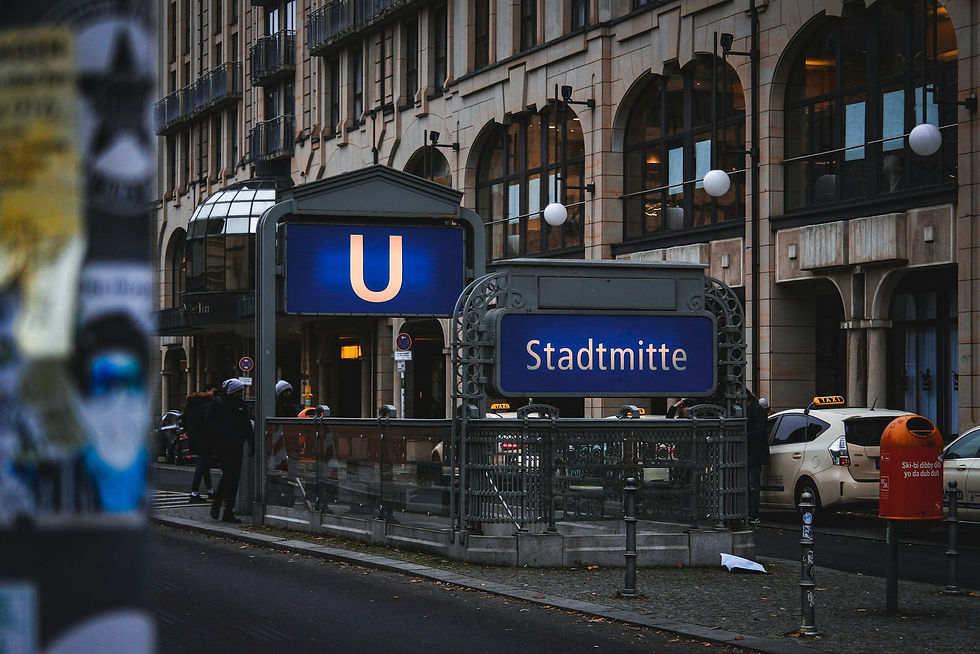
Caption: Direction, platform and exit signs matter most when you are trying to arrive calmly before a timed walk.
On a BerlinWalk day, the useful sign words are usually simple: Ausgang to leave the station, Richtung to choose the right train direction, Gleis if you arrive by regional train, Kasse for snacks or water, WC before the walk, and Apotheke if you need a small health fix.
The 11:30 meeting point is the World Clock at Alexanderplatz. If you are using public transport, give yourself a buffer for the last exit. A station can be technically "right" while the wrong Ausgang adds ten minutes.
If you want the meeting logistics first, use the BerlinWalk meeting point page. If you want a fuller language layer before the trip, pair this guide with German phrases for tourists.
My practical rule for German signs in Berlin

Caption: At Alexanderplatz, the right sign can save more time than another map refresh.
Do not translate the whole sign. Translate the decision.
Ausgang: leave here. Gleis: find the platform. Richtung: check the end station. Entwerten: validate before riding. Ersatzverkehr: switch to the replacement route. Nur Barzahlung: get cash or choose another place. Pfandautomat: return the bottle before checkout.
That small set will not make you fluent, but it will save time at exactly the moments tourists lose it.