Berlin Rent Increase: Which of the Four Limits Actually Stops the Letter

The envelope looks like nothing. A single sheet, a table with four columns, a paragraph of legal German, a line at the bottom asking you to sign and send it back. Somewhere in the middle is a number that is forty or eighty euro a month bigger than the one you have been paying, and a date that is closer than you think.
Berlin got a new Mietspiegel on 28 May 2026. Letters built on it have been landing ever since, and because a rise only starts three calendar months after the letter reaches you, the ones posted this month are aimed at December. Most people I know read the number, feel sick, and then do the one thing that costs money: nothing at all.
What changed in May, and why your letter arrived now
The Berliner Mietspiegel 2026 was published on 28 May 2026 in the Amtsblatt. It is a new survey, not a top-up of the old one, and it is a qualifizierter Mietspiegel under section 558d BGB, recognised by the Senate and by both the landlord and tenant organisations. That recognition is the part that matters in an argument: the law then presumes the figures in it are the ortsübliche Vergleichsmiete for your kind of flat.
The headline number is 7.71 euro per square metre of net cold rent, the median across the roughly 1.6 million flats it covers, drawn from about 17,000 rent and fittings records. Two years ago the 2024 edition said 7.21. That is fifty cents, close to seven per cent in two years.
Landlords wait for a document like this. A new Mietspiegel refreshes the justification, so the summer after one appears is always the busiest post for these letters.
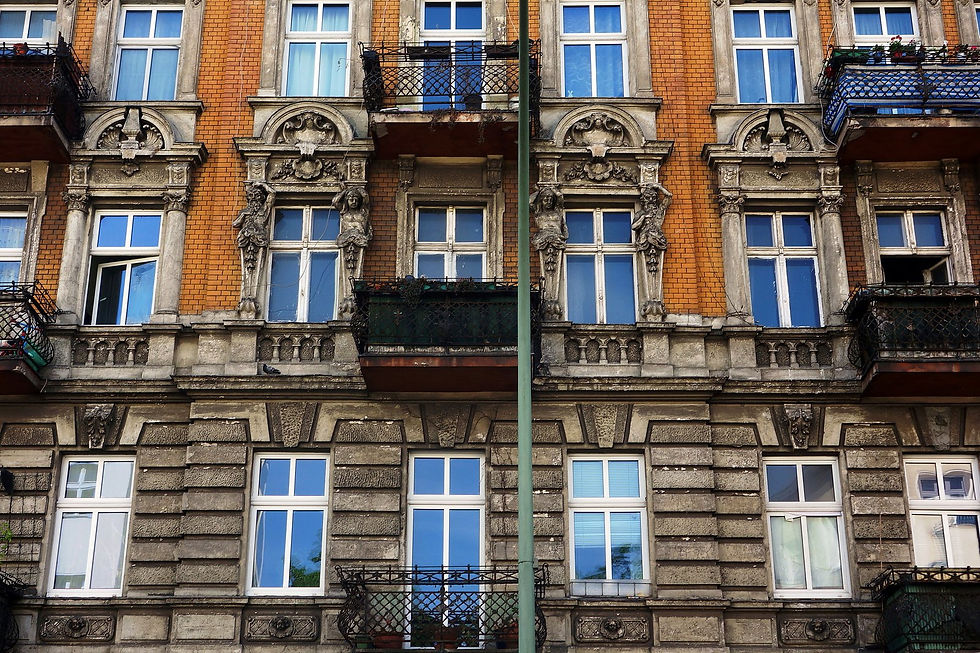
Hermannstrasse in Neukölln. The building type most of these letters are about, and the reason the Baualtersklasse on the first line of the table decides so much.
The four limits on a Berlin rent increase, and the order they bite
A rise to the ortsübliche Vergleichsmiete has to get past four separate things. They are independent. A letter can be perfectly reasonable on the amount and still be dead on the date, and the other way round.
The 15 per cent. Section 558(3) BGB sets a national ceiling of 20 per cent over three years, and lets a state cut it to 15 in a tight market. Berlin has done exactly that, through the Kappungsgrenzenverordnung of 14 March 2023, so the whole city sits at 15 per cent. The base is the rent you were paying three years before the day the rise is meant to start, not three years before the letter.
The Mietspiegel value. Whatever the percentage allows, the rent may not go above the ortsübliche Vergleichsmiete for a flat of your age, size, fittings and Wohnlage. This is the ceiling people forget, and for most Berlin tenancies it is the lower of the two.
The clock. Section 558(1) BGB gives you two separate protections. The rent has to have been unchanged for 15 months on the day the rise starts, and the demand itself cannot be made until 12 months after the last rise. Modernisation and operating cost rises do not restart either clock.
The form. The demand has to be in text form, has to name the amount, and under section 558a(3) BGB the landlord has to quote the figures from the qualified Berlin Mietspiegel for your flat even when the stated reason is three comparable flats or a surveyor's report. If a new managing agent signs the letter without attaching authority, section 174 BGB lets you reject it straight away.
The crossover almost nobody works out
Here is the arithmetic that decides your letter, and it takes one line.
Your ceiling is whichever is lower: your current rent times 1.15, or your flat size times your Mietspiegel value. Set those equal and the 15 per cent only binds when you already pay less than about 87 per cent of your Mietspiegel value. At the citywide median of 7.71 euro per square metre, that crossover sits at 6.70 euro per square metre.
Pay more than that and the famous 15 per cent is decoration. The Mietspiegel is your real ceiling and it is well below where the percentage would let them go.
Take a 62 square metre flat at 465 euro net cold, which is 7.50 per square metre, a very ordinary Berlin number.
The 15 per cent ceiling is 534.75 euro.
The Mietspiegel ceiling, at the median 7.71, is 478.02 euro.
The percentage is 57 euro a month above the line that actually stops the letter.
Now take a long tenancy in the same flat at 5.20 per square metre, so 322 euro.
The 15 per cent ceiling is 370.76 euro.
The Mietspiegel ceiling is still 478.02 euro.
Here the percentage is the only thing holding the line, and it is holding 107 euro a month of it.
That is the whole shape of it. The cheaper your tenancy, the more the 15 per cent is doing for you and the more likely the letter is a legitimate walk up towards the market. The closer you already are to your Mietspiegel field, the less the percentage means and the more the fight is about which box of the table your flat belongs in.
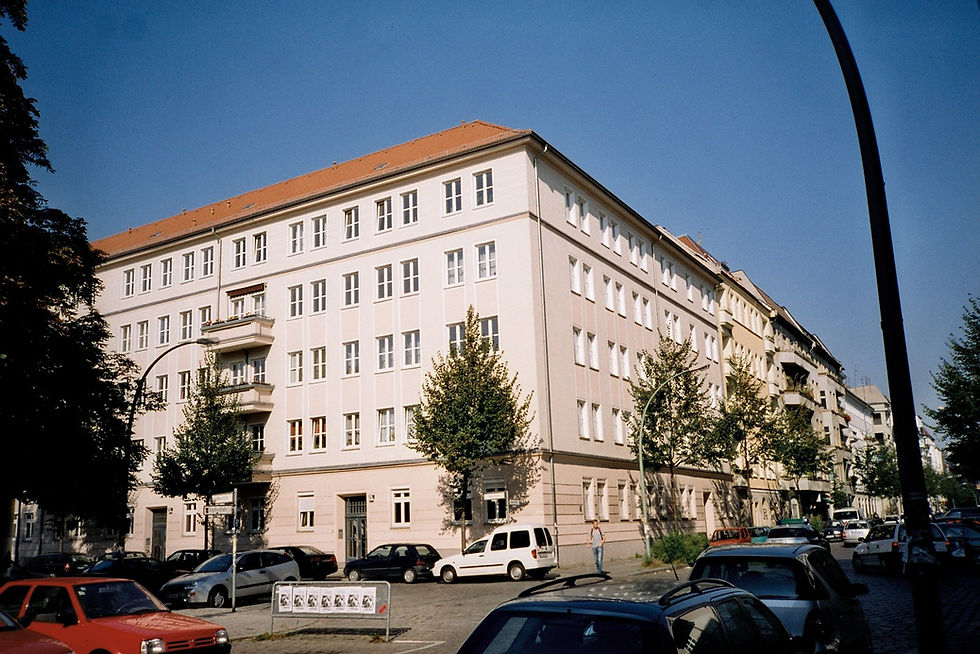
Wismarplatz in Friedrichshain. A 1950 to 1964 building sits in its own row of the Mietspiegel table, which is why the year on your lease matters as much as the district.
Put your own numbers in
The rent increase limits tool below is the same arithmetic with your dates attached. Type in what you pay, what the letter asks, the Mietspiegel value for your own street and any rises you have already had, and it draws the last three years of your rent against both ceilings so you can see which one the letter runs into.
One thing it does that a percentage in your head will not: it separates the kinds of rise. Modernisation rises under section 559 and operating cost rises under section 560 are real money leaving your account, but section 558(3) leaves them out of the 15 per cent. Entering them pushes your ceiling up, not down, which is counterintuitive and is exactly where people get their own sum wrong.
The two dates that matter more than the amount
Section 558b BGB runs on calendar months, and that makes the dates easy once you see them.
You have until the end of the second calendar month after the letter reaches you to agree. If you agree, the higher rent is owed from the start of the third calendar month. A letter that arrives on 10 September 2026 gives you until 30 November, and the first bigger payment is 1 December.
Silence is not agreement. Nothing is deducted, nothing happens automatically. What silence does do is open the landlord's own window: three further months in which to sue you for your consent. Most never do, especially over thirty euro, but a letter that is genuinely correct will win that case and you will pay the arrears anyway.
So the useful move is rarely all or nothing. Partial agreement is a normal, written, one-paragraph thing: you agree to the amount you believe is right, you say plainly that you are not agreeing above it, and you keep paying. That takes the clearly correct part off the table and leaves only the disputed part.
Two exceptions worth knowing. A modernisation rise under section 559 and an operating cost adjustment under section 560 need no agreement from you at all. Done properly, they simply take effect. Those letters are not asking, and reading them as a request is how people end up in arrears.
Modernisation is a different track entirely
If the letter talks about a new heating system, insulation or windows, none of the above applies. Section 559 lets the landlord add 8 per cent of the cost of the work to your annual rent. On a 50 square metre flat with 9,600 euro of chargeable costs that is 64 euro a month, which the Senate's own tenant guide to permitted rent levels uses as its worked example.
There are hard caps on top. The monthly rent may not rise by more than 3 euro per square metre in six years, and only 2 euro if the rent was under 7 euro per square metre before the work. Repairs that were due anyway do not count as modernisation cost and have to be taken out of the sum.
The timing is different too. The higher rent starts at the beginning of the third month after the declaration, and under section 559b(2) that stretches by a further six months if the work was never properly announced, or if the final bill exceeds the announced figure by more than 10 per cent. Both of those are common and both are worth checking.
One old rule still floats around: if the modernisation was announced to you before 31 December 2018, the old 11 per cent applies and there is no per square metre cap at all.

Wohnstadt Carl Legien in Prenzlauer Berg, built around 1930. Where a building sits in the Mietspiegel table is decided by the year it was first fit to live in, not by when it was last renovated.
If your contract is a Staffelmiete or an Indexmiete
Check the contract before you check the sum, because these two lease types make most rent letters inadmissible outright.
A Staffelmiete writes the steps into the contract in advance. Each step has to hold for at least a year, and while it runs, section 557a(2) BGB shuts out both a comparable rent rise and a modernisation rise. A letter asking for either is asking for something the contract already traded away.
An Indexmiete ties your rent to the national consumer price index. Section 557b(2) excludes a comparable rent rise altogether. The rent still has to sit unchanged for a year between adjustments, and a modernisation rise is only possible for work the landlord did not bring on themselves.
Neither of these is exotic in Berlin. If you signed after about 2015, there is a decent chance you have one, and plenty of managing agents send the standard section 558 letter to everybody on the list.
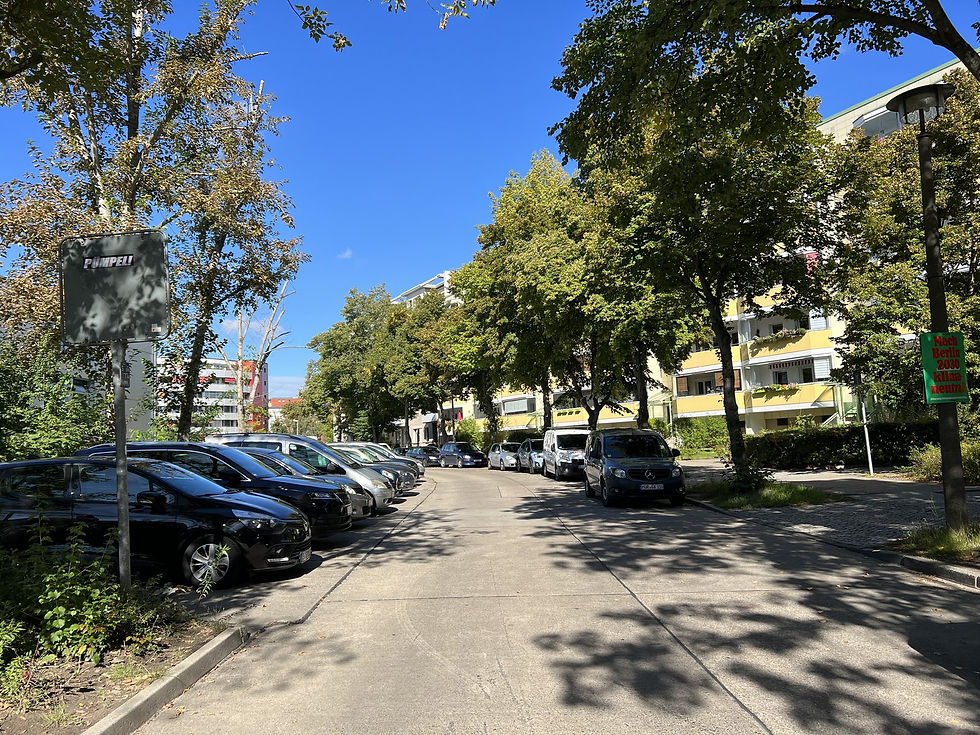
A side street in Lichtenberg. The Wohnlage column of the Mietspiegel is the single most disputed field in these letters, and the 2026 edition puts 29.4 per cent of Berlin flats in the simple lage, 49.9 in the middle and 20.7 in the good one.
What I would actually do with the envelope
I have watched friends do this badly twice, both times by treating the letter as a bill rather than as a question that has a deadline.
Open it the day it arrives and write two dates on the top corner: the end of the second calendar month, and the first of the third. Everything else can wait, those cannot.
Then look up the Mietspiegel field for your own address at the Senate's query service before you accept the one printed in the letter. The Wohnlage is assigned street by street and sometimes house number by house number, and moving a flat from good to middle moves the whole band. If your letter quotes a field that does not match what the service says for your street, you have found the argument without needing anybody's help.
My advice: do not sign it on the day, and do not ignore it either. Work out your own two ceilings, take the letter to a Mieterverein or your district's free Mieterberatung, and if only part of it holds up, agree in writing to that part. A hundred and twenty euro of membership has paid for itself the first time it takes forty euro a month off a letter that would otherwise have run for years.
And while you have the file open, the two other documents that quietly cost Berlin tenants more than any rent letter are the Nebenkostenabrechnung, which is worth checking line by line before its own deadline, and the heating season rules that decide what your landlord owes you once the flat goes cold.
Image credits
Source and licence details for the 3 photographs used in this article.
The Gruenderzeit apartment house at Hermannstrasse 120 in Berlin-Neukoelln: Neuköllner, CC BY-SA 4.0, via Wikimedia Commons.
The Wohnstadt Carl Legien housing estate in Berlin-Prenzlauer Berg: Gavailer, CC BY-SA 4.0, via Wikimedia Commons.
Konrad-Wolf-Strasse, a residential street in Berlin-Lichtenberg: Lukas Beck, CC BY-SA 4.0, via Wikimedia Commons.