5 Mistakes Tourists Make at Alexanderplatz (And What to Do Instead)
- Yusuf Ucuz
- Feb 26
- 5 min read
Updated: Jul 1
Alexanderplatz is one of the first places most visitors encounter in Berlin. It's the city's busiest square, a major transportation hub, and the starting point of our free walking tour. But it's also one of the most misunderstood spots in the entire city.
Every single day, thousands of tourists make the same avoidable mistakes here — and walk away thinking they've seen everything. They haven't even scratched the surface.
Here are the five biggest mistakes, and what to do instead.
Mistake #1: Only Looking Up at the TV Tower
Yes, the Fernsehturm is impressive. At 368 meters, it's the tallest structure in Germany. Yes, you should take a photo. But most tourists spend their entire Alexanderplatz visit staring upward and miss everything happening at ground level.
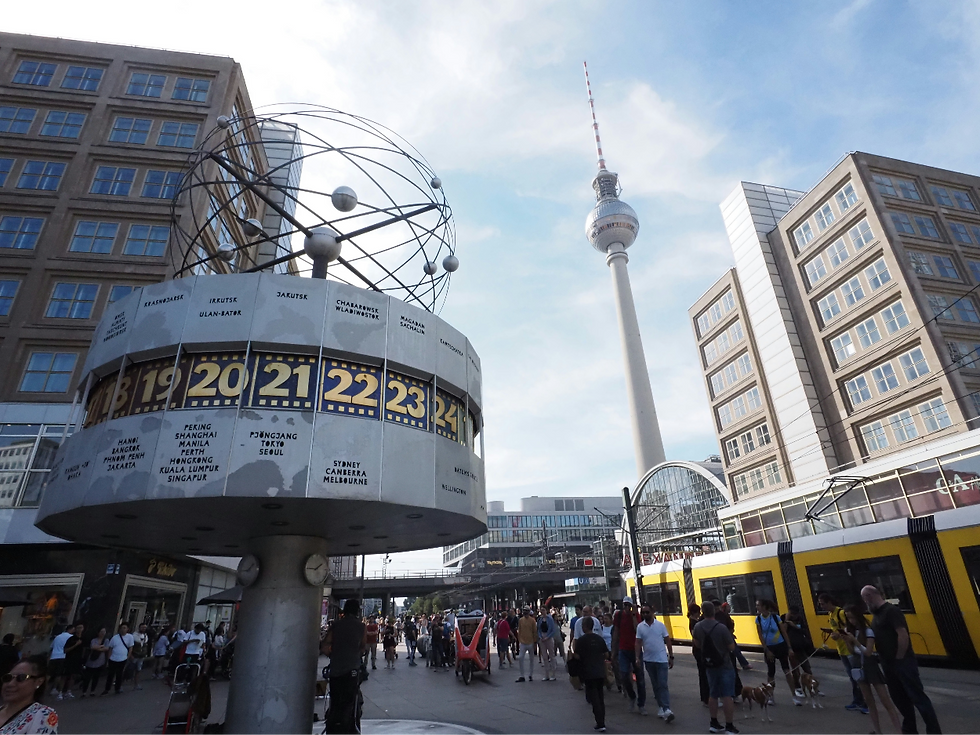
The World Clock (Weltzeituhr) is right there in the middle of the square, and barely anyone stops to understand what it actually is. It's a rotating sculpture from 1969 that displays the time in major cities around the world. Sounds simple. But here's the context that makes it fascinating: this was built by the East German government as a propaganda statement — a way of telling the world that the GDR was internationally connected and technologically advanced. Meanwhile, its own citizens couldn't even leave the country.
That single piece of public art tells you more about Cold War Berlin than the TV Tower ever could.
And speaking of the TV Tower — if you want the best photo of it, don't take it from Alexanderplatz. Walk five minutes to Liebknecht Bridge (Stop 6 on our tour) where you can frame the Fernsehturm together with the Berliner Dom and Humboldt Forum. That's the shot.
Mistake #2: Eating at the Restaurants on the Square
This one costs tourists real money. The fast food chains and overpriced restaurants ringing Alexanderplatz are specifically designed to catch hungry visitors who don't know any better. You'll pay €12–15 for a mediocre burger or a sad Currywurst. It's the Berlin equivalent of eating in Times Square.
The fix is simple: walk.
Five minutes toward Hackescher Markt (the last stop on our tour) and you're in one of Berlin's best food neighborhoods — authentic Döner, Vietnamese pho, incredible Italian, and some of the city's best coffee shops. Ten minutes toward Rosenthaler Platz and you'll find the street food scene that Berlin is actually famous for.
If you're wondering where exactly to find the best Döner in Berlin, we've got a whole guide for that. Spoiler: none of the best spots are at Alexanderplatz.
On our walking tour, we always share our favorite local restaurant recommendations at the end — places where Berliners actually eat, not where tourists get overcharged.
Mistake #3: Thinking Alexanderplatz Is Ugly
"It's just a bunch of concrete." We hear this constantly. And honestly, at first glance, the brutalist buildings and wide-open plaza aren't exactly charming. But that reaction — that's exactly what makes this place so interesting.
Alexanderplatz looks the way it does because the East German government deliberately redesigned it in the 1960s as a showcase of socialist urban planning. The wide open spaces were meant to accommodate mass demonstrations of "people's power." The massive buildings were meant to project confidence and modernity. The entire square was an ideological statement in concrete and steel.
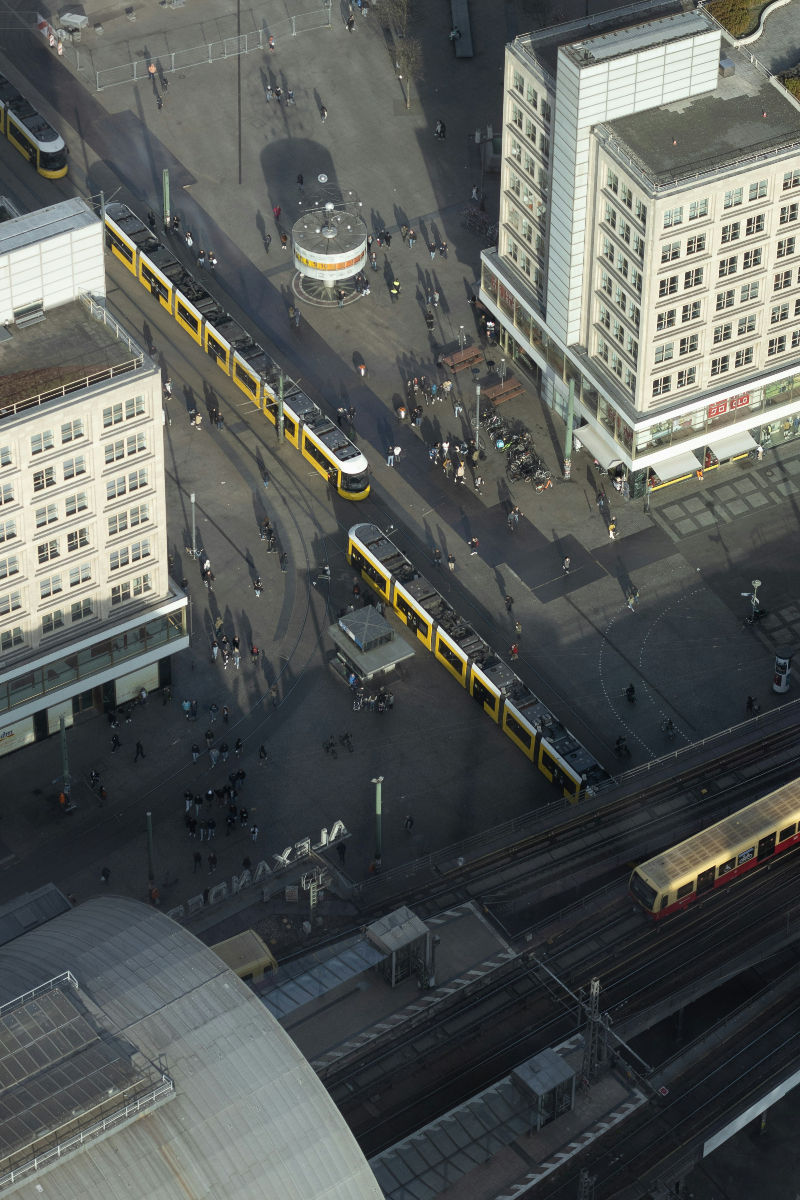
Before World War II, this was a completely different place — a dense, chaotic commercial district packed with department stores, cafés, and tramlines. The bombing destroyed most of it. And when the GDR rebuilt, they didn't try to recreate what was lost. They built their version of the future.
Understanding why Alexanderplatz looks the way it does transforms your experience of it. You stop seeing ugly concrete and start seeing one of the most dramatic transformations in European urban history. The contrast between the medieval origins of this area and its Cold War reinvention is one of the most powerful stories on our entire tour route.
Mistake #4: Not Knowing the Square's Real History
Most tourists arrive at Alexanderplatz, see the modern buildings, and assume the area has always been like this. They have no idea they're standing on nearly 800 years of history.
Here's the short version:
Alexanderplatz started as a cattle and wool market outside the medieval city walls. In 1805, it was renamed after Russian Tsar Alexander I, who visited Berlin that year. By the early 1900s, it had become one of Berlin's busiest commercial centers — a place Alfred Döblin immortalized in his famous 1929 novel Berlin Alexanderplatz.
Then came the war. Allied bombing flattened most of the square. And after 1945, when Berlin was divided, Alexanderplatz ended up in the Soviet sector. The GDR rebuilt it from scratch as a socialist showcase — that's the version you see today.
Every single layer of this square tells a different chapter of Berlin's story. The medieval market. The Prussian renaming. The Weimar-era chaos. The wartime destruction. The Cold War reconstruction. And now, the modern transformation. All of it happened right where you're standing.
If you want to understand how Berlin went from a medieval trading town to a modern capital, there's no better place to start than here. That's exactly why we begin our walking tour at Alexanderplatz — it sets the stage for everything that follows.
Mistake #5: Using It Only as a Transit Stop
This is the most common mistake, and it's the one that costs you the most. Because Alexanderplatz is such a major transportation hub — U-Bahn, S-Bahn, tram, bus, regional trains — most visitors treat it as a place to pass through. They hop off, snap a photo of the TV Tower, maybe glance at the World Clock, and move on.
But Alexanderplatz isn't a stop on the way to Berlin. This is where Berlin began.
Three minutes from the square is the Marienviertel — Berlin's oldest surviving neighborhood, with medieval street patterns and churches dating back to the 13th century. Most tourists have no idea it exists. Five minutes in the other direction is the Rotes Rathaus, Berlin's iconic red city hall, where the story of the city's governance stretches back centuries.
If you skip Alexanderplatz, you skip the foundation. Everything else you see in Berlin — the Museum Island, the government quarter, the Wall — makes more sense when you understand where the city actually started.
That's why spending 30 minutes really exploring this area — or better yet, joining a guided tour that explains it properly — changes your entire Berlin experience.
(Planning your visit? Make sure to check what to wear on a walking tour in Berlin and read up on whether Berlin is safe for tourists.)
See Alexanderplatz the Right Way
Our free walking tour starts right here at Alexanderplatz, at the World Clock. In 1 hour and 45 minutes, we'll walk you through 12 stops from Alexanderplatz to Hackescher Markt — covering everything most tourists miss, telling you the stories behind the concrete, and pointing you toward the best food and drinks for after the tour.
No fixed price. Just tip what the experience is worth.
