Free Walking Tour Berlin: How Tip-Based Tours Actually Work

Updated: 6 days ago
You see the phrase everywhere in European cities:
Free walking tour.
It sounds simple, but it also sounds suspicious. Is it actually free? Is there a catch? Will someone pressure you at the end? How much should you tip? And why would a guide spend 2 hours walking through Berlin with strangers without a fixed ticket price?
Here is the honest explanation.
A free walking tour is better understood as a tip-based walking tour. You do not pay a fixed price before the tour starts. You join the walk, experience the guide, and decide at the end what the tour was worth to you.
That model can be excellent when it is used honestly. It makes a guided city introduction accessible, keeps the guide accountable, and lets guests with different budgets join the same walk. But it only works when expectations are clear.
Free does not mean the guide works for free.
It means there is no fixed upfront price.
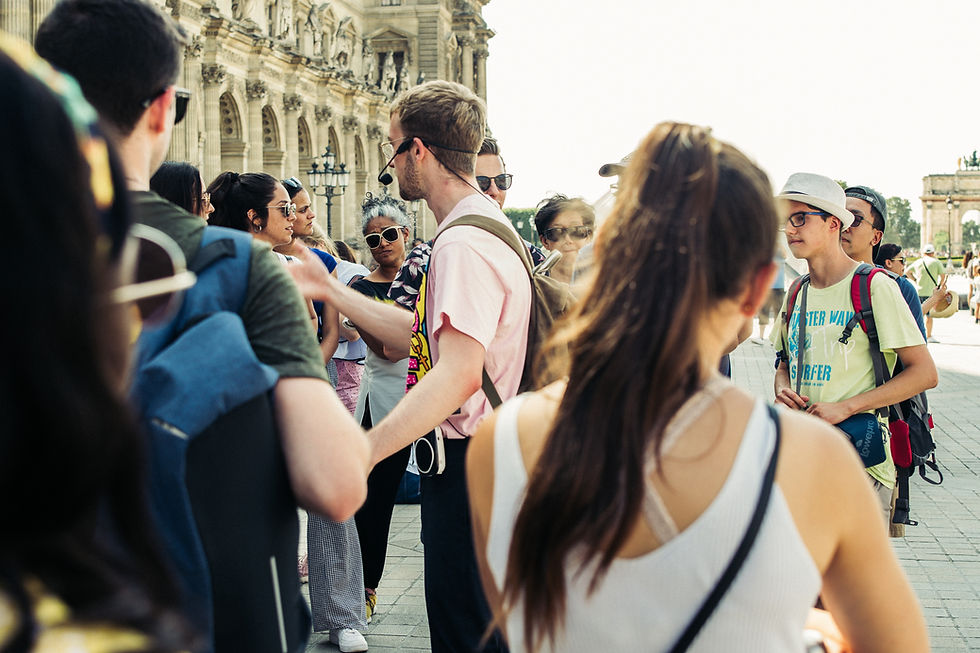
The Short Answer
A free walking tour is a guided group walk with no fixed upfront ticket price.
Instead of paying before the experience, you tip at the end based on:
how good the tour was
how long it lasted
your travel budget
how much value the guide gave you
For a good 2 hours free walking tour in Berlin, EUR 10 per person is the minimum fair tip. EUR 15 is a strong thank-you. EUR 20 or more is generous if the guide made the city click for you.
That is the practical answer.
The deeper answer is that the model depends on trust. The guide trusts guests not to treat free as a loophole. Guests trust the guide not to turn the final moment into a guilt speech.
When both sides respect that, the model works beautifully.
Why Is It Called Free?
The word free is imperfect.
It usually means free to join, not free of value.
You can book without paying in advance. You can show up without buying a ticket. You can leave at the end and choose your own amount. That makes the tour low-risk for travellers, especially in a city where choosing a paid tour from a search result can feel like a gamble.
But the guide is still working.
A good guide prepares stories, checks routes, follows city changes, manages group safety, answers questions, handles weather, adapts to different travellers, and keeps the pace human. That work happens before the walk as much as during it.
So I prefer the phrase tip-based tour. It is less catchy, but it is more honest.
It tells you the real deal:
no fixed ticket price
no payment before the walk
guest decides the amount at the end
guide income depends on the guest experience
Free gets attention. Tip-based explains the model.
How the Day Usually Works
Most free walking tours follow a simple rhythm.
First, you book a spot online. This helps the guide know how many people to expect and keeps groups from becoming unmanageable.
Then you arrive at the meeting point a few minutes early. In Berlin, that might be a major landmark, square, or station exit. For my tour, the meeting point is the World Clock at Alexanderplatz.
The guide checks the group, explains the route, gives a quick safety note, and starts the walk. The tour then moves from stop to stop, mixing history, local context, practical orientation, and questions.
At the end, the guide explains the tip-based model clearly. You decide what the experience was worth, say thank you, ask final questions if needed, tip if you can, and leave.
That is it.
There should be no mystery.
Is There a Catch?
There should not be a catch.
In a healthy tip-based model, the trade is transparent: the guide gives the experience first, then you choose the value afterward.
The model becomes uncomfortable only when expectations are hidden. For example, a tour should not pretend that no payment is expected at all, then suddenly pressure guests at the end. It should also not advertise free while treating one specific amount as a forced minimum.
On the guest side, it is also unfair to enjoy a strong 2 hours tour, ask for extra recommendations, take the guide's time, and then act as if the word free means the work had no value.
The fair middle is simple:
the guide explains the model honestly
the guest understands that tipping is how the guide is paid
the final amount remains the guest's choice
nobody is shamed
That is the version of the model I believe in.
Why Guides Like the Model
Tip-based guiding is demanding, but it has one big advantage: the guide has to earn trust in real time.
A fixed-price tour can be good or bad after you already paid. A free walking tour has to prove itself during the walk. If the guide is lazy, unclear, aggressive, or boring, guests can respond accordingly. If the guide is prepared, thoughtful, funny, and useful, guests usually recognise that.
That pressure can be healthy.
It encourages guides to keep improving. It rewards people who actually care about the city. It also lets independent guides compete with large companies because the guest does not need to risk a fixed ticket price before knowing whether the guide is any good.
The downside is uncertainty. Weather, no-shows, small groups, and confused expectations all affect income. That is why clarity matters so much.
Why Travellers Like the Model
For travellers, the advantage is flexibility.
You can join a city introduction early in your trip without committing to a high fixed price. You can decide afterward whether the tour deserved EUR 10, EUR 15, EUR 20 or more.
That makes the model especially useful for:
solo travellers who want orientation on day one
students and backpackers with tighter budgets
families who do not want to gamble on an expensive tour
first-time visitors who are not sure which Berlin stories matter yet
anyone who wants to judge the guide before deciding the price
It also creates a more human contract. The guide is not selling a ticket from behind a wall. The guide is standing in front of you and earning the value directly.
That can make a tour feel more personal.
How Much Should You Tip?
For Berlin, my simple recommendation is:
EUR 10: minimum fair tip for a good 2 hours tour
EUR 15: strong tip for a very good tour
EUR 20+: generous when the tour was a highlight
If you want one clean number for a good 2 hours Berlin tour, choose EUR 10.
If the guide was excellent, choose EUR 15.
If the tour genuinely helped you plan the rest of the trip, saved you time, made confusing history clear, or gave you recommendations you used later, EUR 15-20 is a fair thank-you.
For a more detailed breakdown by traveller type, read my guide to how much to tip on a free walking tour in Berlin.
The official Berlin.de tipping etiquette guide says tipping in Germany is voluntary and gives 5-10 percent as a normal restaurant range when service is good. A walking tour is different because there is no bill to calculate from, but the voluntary principle still matters.
External free-tour guidance lands in a similar practical zone. Free Tour Community explains the model as pay-what-you-want, where the guide provides the service first and guests decide afterward. SANDEMANs describes its Free Tour guides as working on a tips-only basis.
So do not overcomplicate it.
Tip based on value, not panic.
Is EUR 5 Too Little?
For a good 2 hours walking tour, yes: EUR 5 is below the fair minimum.
That does not mean it is rude in every situation. If your budget is genuinely tight, if you are a student, or if the tour was only okay, give what you can without embarrassment.
But if a guide gave a strong, well-researched, energetic 2 hours tour and you had the budget, EUR 10 should be the floor. EUR 15 is a better thank-you for a very good experience.
The point is not to shame anyone.
The point is to be honest about the model.
If your budget is tight, give what you can without embarrassment. If your budget is comfortable and the tour was good, do not hide behind the word free.
Do You Need Cash?
Cash is still the easiest option in Berlin.
Some guides may accept card, PayPal, Revolut or another mobile payment method, but you should not rely on that unless the tour page says so clearly.
The simple setup:
bring one EUR 10 note for a normal tip
bring an extra EUR 5 or EUR 10 if you might go higher
keep small coins for toilets, lockers, bakeries or snacks
Berlin is more card-friendly than it used to be, but cash still helps in small everyday situations. My credit cards in Berlin guide explains that wider payment picture.
What If the Tour Is Bad?
Then tip less.
Or tip nothing if it was genuinely poor.
That is part of the model.
A tip-based tour should not trap you into rewarding bad work. If the guide was unprepared, disrespectful, careless with the group, factually sloppy, or made you uncomfortable, you are not required to pretend everything was fine.
But be fair with your standard.
Bad weather is not the guide's fault. Construction fences are not the guide's fault. A crowded city centre is not the guide's fault. A story that challenged your assumptions is not automatically a bad story.
Judge the guide on preparation, clarity, care, honesty, pacing, and whether the tour helped you understand the city.
What If You Leave Early?
If you leave near the beginning because the tour is not for you, you do not need to tip.
If you leave near the end because of a train, lunch reservation, museum slot, tired child, or weather issue, it is polite to tip before you go.
You do not need a dramatic exit. Walk up during a pause, say you need to leave, give what feels fair, and go.
Guides understand travel days. Berlin itineraries can be messy.
Is a Free Walking Tour Good for a First Day in Berlin?
Yes, if the route and guide are good.
Berlin is not a city that explains itself easily. The distances are wide, the centre is layered, and many important places are visually confusing. A first-day walking tour can help you understand why Alexanderplatz looks the way it does, why Museum Island matters, why the TV Tower dominates the skyline, why some old streets disappeared, and how to plan the next day.
That orientation is often more useful than another list of sights.
A good first-day tour should give you:
a mental map of the city centre
the difference between medieval, Prussian, Nazi, Cold War and reunified Berlin
practical tips for the rest of your trip
enough context to decide which museums, memorials or neighbourhoods deserve more time
That is why I like starting at Alexanderplatz and walking toward Hackescher Markt. The route moves through many Berlin layers without needing transport between stops.
For that route logic, see why my tour starts at Alexanderplatz.
What Makes a Good Free Walking Tour?
A good free walking tour is not just a guide talking while people follow.
It should have structure.
You should know where the walk starts, roughly where it ends, how long it lasts, what kind of stories it covers, and what the tip-based model means.
The guide should be clear about facts and honest about uncertainty. Berlin history is complicated. A good guide does not flatten everything into easy drama. The city deserves better than that.
The pacing matters too. A tour can have brilliant stories and still fail if the group cannot hear, cannot cross safely, or is left standing too long in bad weather.
Look for these signs:
clear meeting point
realistic duration
visible route logic
honest tip explanation
manageable group size
no aggressive pressure at the end
practical recommendations after the walk
Those details make the difference between a gimmick and a genuinely useful city introduction.
How My BerlinWalk Tour Uses the Model
My free walking tour is tip-based because I like the accountability.
You do not pay before the walk. You join, listen, ask questions, and decide afterward what the experience was worth.
The route has 12 stops and lasts 2 hours. It starts at the World Clock on Alexanderplatz and moves through the historic centre toward Hackescher Markt, with stories about medieval Berlin, Prussia, the GDR, lost neighbourhoods, Museum Island, the TV Tower, and the strange way Berlin keeps rebuilding itself.
I explain the model clearly because I do not want the final minute to feel awkward. If the tour helped you, tip what feels fair. If your budget is tight, give what you can. If it was not for you, the model allows that too.
The goal is simple: make Berlin clearer, not make the payment moment weird.

Common Misunderstandings
"Free means I should pay nothing."
Not quite. Free means no fixed upfront price. If the tour was good, the guide is paid by tips.
"There must be a hidden sales pitch."
There should not be. Some companies use free tours to promote paid tours, but a good guide should still deliver a complete, useful walk.
"I have to tip the same as everyone else."
No. The amount is your choice. Use quality, budget and value as your guide.
"If I ask questions, I owe more."
Questions are welcome. You do not need to meter every sentence. But if the guide gives extra time and useful advice, it is fair to reflect that in the tip if you can.
"A free tour must be less professional than a paid tour."
Not necessarily. Some tip-based guides are excellent because the model rewards quality directly. Some paid tours are mediocre. Judge the guide in front of you.
Final Advice
If you are nervous about the model, bring EUR 10-15 in cash and relax.
That range covers a good 2 hours Berlin walking tour fairly. If the tour is excellent, go higher. If your budget is tight, go lower. If the guide did not earn it, the model gives you that choice.
The best version of a free walking tour is not a trick.
It is a simple exchange:
The guide gives the experience first.
You decide what it was worth afterward.
When that exchange is honest, it can be one of the best ways to meet Berlin.
Want to Try It in Berlin?
My Berlin walking tour lasts 2 hours, covers 12 stops, and gives you a tip-based introduction to the historic centre, from Alexanderplatz toward Hackescher Markt.
There is no fixed upfront price. You decide at the end what the tour was worth.