Warnemünde to Berlin: The Honest Cruise Day Trip Math

Your ship ties up at Warnemünde around seven in the morning, the gangway opens, and half the deck is asking the same question: is Berlin doable from here? The port's own website says the trip takes about two hours. The trains I checked say something else: a bit over three hours door to door, each way. That gap is exactly where cruise day trips go wrong, so before you commit six to seven hours of your port day to sitting on trains, it is worth doing the honest math.
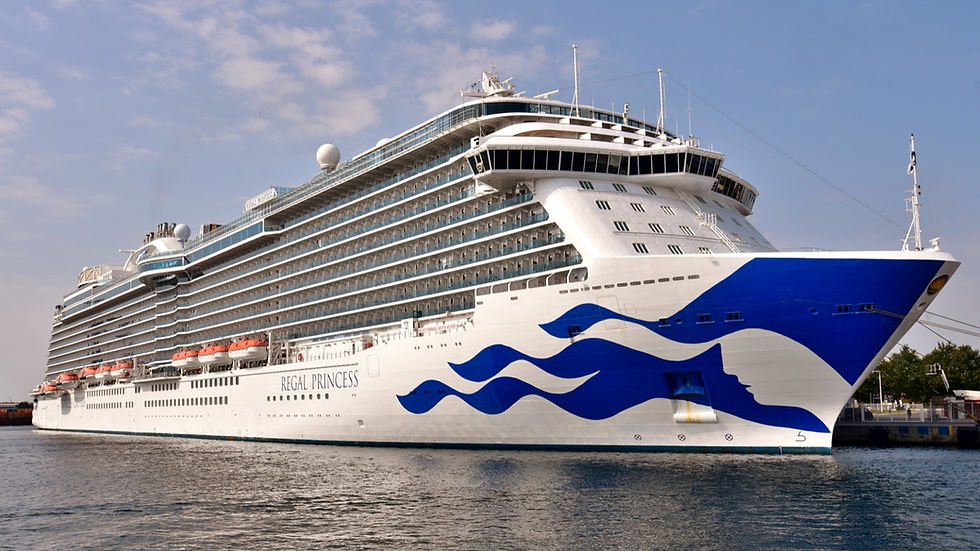
A cruise ship at the Warnemünde pier. The train station is about 500 metres from the gangway.
I guide walks through Berlin's historic centre, and I meet cruise guests who did this trip well and guests who spent more time on the RE5 than in the city. The difference is never luck. It is whether they planned around the real timetable or the brochure number.
Warnemünde to Berlin: the real time math
Start with the only three numbers that matter:
Pier to Warnemünde station: about 500 metres. The cruise berths sit directly beside the station, so this is a 5 minute walk, not a transfer.
Warnemünde to Rostock Hauptbahnhof: 21 minutes on the local S-Bahn, which runs every few minutes through the morning.
Rostock Hauptbahnhof to Berlin: roughly 2 hours 40 minutes on the direct RE5 regional train, or about 2 hours 5 minutes on the Intercity, which has its own quirk I explain below.

The local S-Bahn at Warnemünde station: 21 minutes to Rostock Hauptbahnhof, every few minutes in the morning.
Add the connection waits and you land on about 3 hours 10 minutes from the gangway to central Berlin. Double it for the return and you have committed six and a half hours of your day to travel before you have seen a single landmark.
My advice: treat 11 hours in port as the honest minimum for this trip, and 12 or more as the comfortable version. A typical 9 hour call, say 08:00 to 17:00, leaves you with barely an hour in Berlin, and that is a bad trade. Several September calls at Warnemünde are exactly that shape, so check your ship's actual times before you fall in love with the idea.
The two trains that actually matter
Ignore the clever three-change routings a journey app will offer you. On this route there are only two patterns worth using, and they alternate through the morning. I checked the current timetable on the day of writing; the pattern repeats on both weekdays and weekends.
The RE5 regional train. Take the S-Bahn from Warnemünde, then the RE5 from Rostock Hauptbahnhof at 34 minutes past every second hour, for example 06:03 from Warnemünde arriving Berlin Hauptbahnhof 09:13, or 08:03 arriving 11:11. One easy change, and it lands you at Berlin Hauptbahnhof in the middle of everything.
The Intercity. Trains like the morning IC from Rostock run to Berlin faster, but here is the quirk: they do not stop at Berlin Hauptbahnhof. They run around the eastern ring to Berlin Ostkreuz, where you hop on any S-Bahn toward the centre. For Alexanderplatz and the historic core that is actually convenient, and the 07:33 departure from Warnemünde has you in the city before 10:30.

The RE5 at Rostock Hauptbahnhof. This double-deck regional train runs direct to Berlin in about 2 hours 40 minutes.
Going back, the same two patterns repeat from Berlin: direct RE5 departures at 14:46 and 16:46 from Berlin Hauptbahnhof, and Intercity departures from Ostkreuz in between, such as the one reaching Warnemünde at 18:08. The last connections that make sense for most ships leave Berlin between 15:00 and 17:30.
Build your buffer at the Warnemünde end, not the Berlin end. German trains have delays like everywhere else, and your ship will not wait for passengers who went to Berlin on their own. Plan to stand on the pier at least 90 minutes before all aboard, and take the return train one departure earlier than the last one that technically fits. If everything runs on time, you get a relaxed hour in Warnemünde's old fishing harbour. If something breaks, you have a full spare train. I have used that spare more than once on German rail days, and it turns a heart-racing afternoon into a calm one.
Tickets: what this actually costs
There is no single correct ticket here, so match the ticket to your group and your day:
Advance saver fares (Sparpreis) start around 18 to 25 euros each way per person when booked a few weeks ahead. The catch: they lock you to one specific train. On the way up that is fine. For the return I would rather pay more and stay flexible.
The flexible fare (Flexpreis) costs noticeably more but works on any train that day, which is exactly what you want for the leg where a delay could cost you your ship.
For two to five people on a weekend call, the Quer-durchs-Land day ticket is the quiet winner: 51 euros for the first person and 12 for each additional one, valid all day on regional trains across Germany, S-Bahn included. On weekdays it only starts at 09:00, which rules out the early RE5, so it mainly pays off on Saturday and Sunday calls.
One warning about the Intercity: it is a long-distance train and needs its own Deutsche Bahn ticket. Regional day tickets and the 63 euro monthly Deutschlandticket are not accepted on it; the old arrangement that allowed this ended in December 2025. If you are travelling on a regional ticket, stay on the RE5.
Buy tickets on int.bahn.de or in the DB Navigator app before you walk off the ship, and check your exact date there too, because single departures can shift. My advice: book the outbound as a saver fare, keep the return flexible, and screenshot your ticket while you still have ship Wi-Fi.
What Berlin gives you in about five hours
Here is the part I can promise you as a Berlin guide: five focused hours in the historic centre is genuinely enough for a first taste, because the famous core is compact and walkable.

Berlin Hauptbahnhof, where the RE5 arrives. The Reichstag is a 10 minute walk from these doors.
From Berlin Hauptbahnhof, walk 10 minutes to the Reichstag building, then through to the Brandenburg Gate. From there, Unter den Linden runs straight east: one grand boulevard past the State Opera and Bebelplatz to Museum Island and the Berlin Cathedral. Finish at Alexanderplatz under the TV Tower, where the S-Bahn takes you back to Hauptbahnhof in under 10 minutes, or you walk 15 minutes to Ostkreuz-bound trains. That single line covers most of what a first-time visitor wants to say they have seen, with time for lunch and photos.

Pariser Platz and the Brandenburg Gate, with the Reichstag dome behind. All of this sits on one walkable line from Hauptbahnhof.
A few honest notes for a short visit:
Skip anything that needs a timed ticket. The Reichstag dome and the big museums want advance bookings and calm hours. See them from outside today and read my guide on what to book in advance in Berlin for the longer visit this day will talk you into.
Eat simple. A bakery lunch or a currywurst near Alexanderplatz costs a fraction of the restaurant terraces on Unter den Linden and takes 20 minutes, not 90.
If you want the same core with more story and less guesswork, my walk through the Berlin landmarks you can cover in two hours follows almost exactly this line, and my free walking tour covers it live: 11 stops through the historic centre in about 2 hours, starting near Alexanderplatz. If a future, longer Berlin day is forming in your head, the one day in Berlin plan is the natural next read.
When you should say no to Berlin
Some port days simply do not support this trip, and saying so is more useful than pretending otherwise.
Say no when your ship is in port less than 11 hours, when the call is on a day with early all aboard, or when you would spend the whole visit anxious about the return. Say no as well if anyone in your group struggles with quick platform changes; the Rostock connection is easy, but it is still a connection with luggage-free brisk walking.

Warnemünde's Alter Strom, the old harbour channel, five minutes from the cruise pier. This is the backup plan, and it is a good one.
The good news: staying local is not a consolation prize. Warnemünde itself is a proper Baltic resort with a wide white beach, a lighthouse and a working fishing harbour five minutes from the pier. Rostock, 21 minutes away on the same S-Bahn you would have taken anyway, has a walkable Hanseatic old town around the Marienkirche with its astronomical clock. I would take a calm Warnemünde day over a rushed Berlin sprint every time the math is tight.
And if the math is not tight, do Berlin properly: catch the early train, walk the core, and let the city argue for the longer visit it always wins in the end.
Image credits
Source and licence details for the 6 photographs used in this article.
A cruise ship moored at the Warnemuende cruise pier: Bahnfrend, CC BY-SA 4.0, via Wikimedia Commons.
A Rostock S-Bahn train at the platform at Warnemuende station: Clic, CC BY-SA 4.0, via Wikimedia Commons.
The RE5 double-deck regional train at Rostock Hauptbahnhof: Clic, CC BY-SA 4.0, via Wikimedia Commons.
The multi-level interior of Berlin Hauptbahnhof: Bahnfrend, CC BY-SA 4.0, via Wikimedia Commons.
Pariser Platz and the Brandenburg Gate seen from above: Heinzi, CC BY-SA 3.0, via Wikimedia Commons.
The Alter Strom harbour channel in Warnemuende: Ben Kriemann, CC BY-SA 3.0, via Wikimedia Commons.