Do You Need Restaurant Reservations in Berlin? When to Book and When to Walk In

Updated: 6 days ago
My free walking tour finishes at Hackescher Markt, and by then everyone is hungry. Almost every group asks me the same slightly anxious question as they pull out a phone: do we need to book somewhere for dinner, or can we just walk in? Most of them have arrived from cities where a good Saturday table needs a reservation days ahead, and they assume Berlin works the same way.
It mostly does not. The honest default in Berlin is that you can just turn up. The city runs on casual, unbooked eating, and treating every dinner like a mission to reserve will only make your trip more stressful than it needs to be.
But there are a handful of real situations where a reservation is the difference between sitting down and standing on the pavement. This is my guide to which is which, so you know when to relax and when to plan.

A pavement-cafe row on the Kurfurstendamm. On most days, at most places like this, you can take a free table without booking anything at all.
The honest default: you can just walk in
Berlin is not a reservation city in the way Paris or New York can be. Whole neighbourhoods run on spontaneous eating: you wander, you see a place with a free table, you sit down. The vast majority of restaurants, cafes and every single Imbiss expect you to simply walk in.
That is a feature, not a gap. It suits the way most visitors actually move through the city, where dinner is decided when your feet get tired, not three days in advance. So my first piece of advice is the most freeing one: for a normal weeknight, in a normal neighbourhood, at a normal restaurant, do not book anything. Just go.
The trick is knowing the exceptions, because they are specific and they are real.
When you actually need restaurant reservations in Berlin
Here is where I would pick up the phone or open a booking page. If your evening ticks one of these boxes, plan ahead:
Your group is five or more. This is the single biggest reason to book anywhere in Berlin. Large tables are limited, and a full restaurant simply cannot conjure one when six of you appear at the door.
It is a buzzy, much-talked-about place. The restaurant a friend insisted you try, or the one all over Instagram, will have a line on a good night. That is exactly where a booking saves you.
It is a special occasion or fine dining. Destination kitchens and tasting menus fill up early, sometimes weeks out. If the meal is the point of the evening, reserve it.
It is Friday or Saturday night in a popular spot. The weekend pressure is real. A place you could stroll into on a Tuesday can be full by eight on a Saturday.
You have your heart set on one specific place at one specific time. The moment there is no acceptable plan B, booking stops being optional.
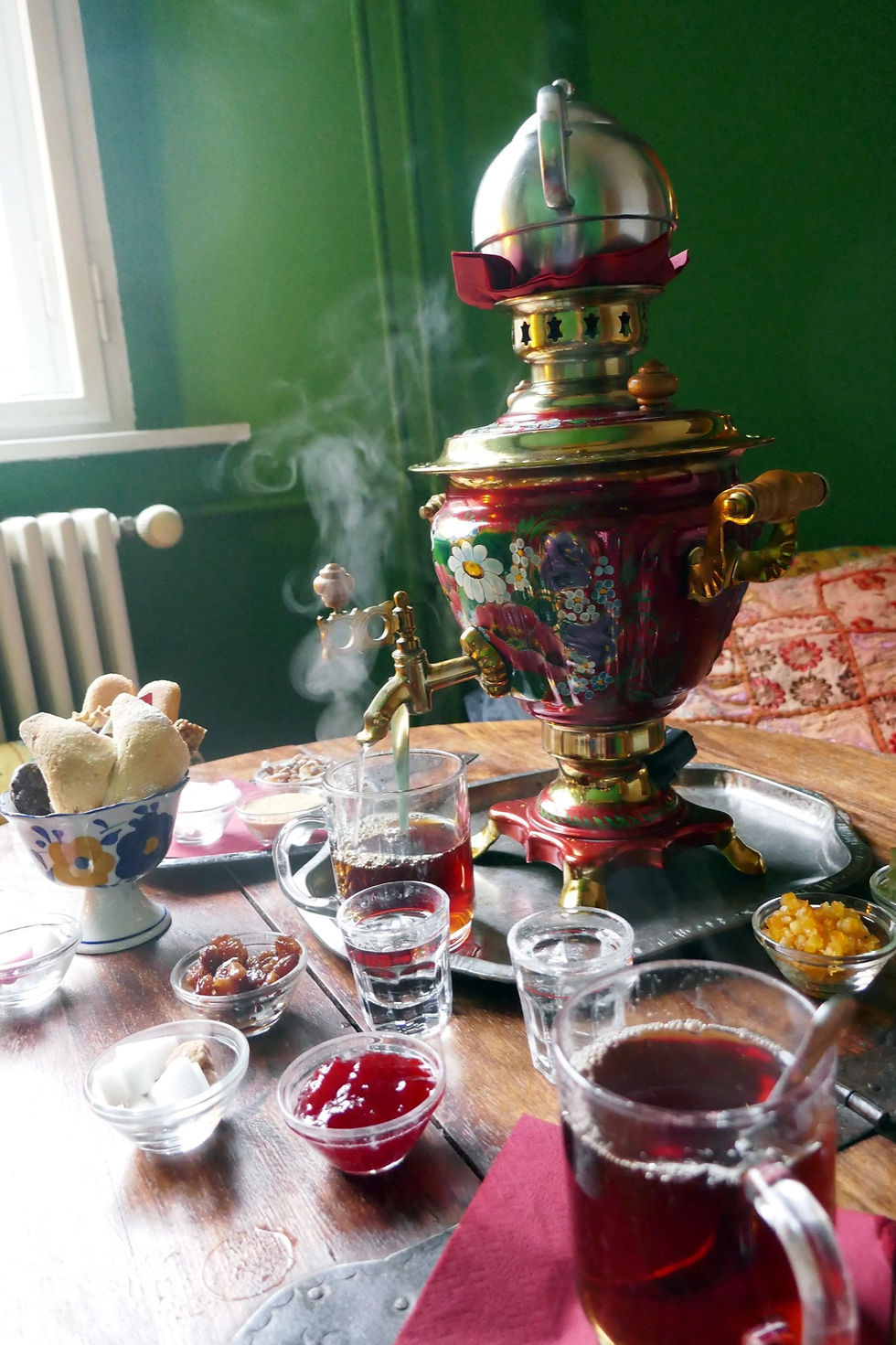
A small, characterful sit-down room like the Tajik Tea Room off Oranienburger Strasse. Intimate places like this are exactly where a Friday or Saturday booking saves you a wait.
If you want to sanity-check your own plan against these, this little tool does the thinking for you. Tell it your group size, the night and the kind of place, and it gives you a clear call plus how that type of Berlin restaurant actually takes bookings.
How Berlin restaurants actually take bookings
Once you have decided to reserve, the how can be confusing, because Berlin does not funnel everything through one big app the way some cities do. There are three routes, and it is worth trying them in this order:
Google Maps first. Look the restaurant up and check for a Reserve a table button under the name. When it is there, you pick the date, time and party size and you are finished in under a minute. Monsieur Vuong on Alte Schonhauser Strasse works exactly this way: its own site sends you straight to the Google booking page, and spontaneous walk-ins are still welcome.
Then the restaurant's own website. If Maps shows nothing, the booking form is usually one click from the homepage, under Reservierung. Berlin's busier kitchens mostly run their own booking widget instead of listing on a marketplace app. Some do use OpenTable, but no single app covers the city, so the restaurant's own site beats hunting through platforms.
Phone or email, especially at the old Berlin houses. The traditional German restaurants are the ones most likely to still handle tables by hand. Zur letzten Instanz near Klosterstrasse takes bookings by phone or email, and Max und Moritz in Kreuzberg asks for an email for a normal table and a call for a same-day one. A short call or a two-line email in plain English almost always works, and staff are used to it.
There is also a group that sits outside all three routes: a lot of Berlin places take no reservations at all. Every Imbiss, most beer gardens and plenty of good casual restaurants seat whoever turns up, so no amount of searching will find you a booking link. That is by design, and it is a large part of why eating here feels easy.
My honest tip: check Maps, then the restaurant's own site, and if neither shows a booking option in about a minute, call between three and five in the afternoon. That is the quiet gap between lunch and dinner service, and it is when someone actually picks up. (Booking routes checked on 22 August 2026.)
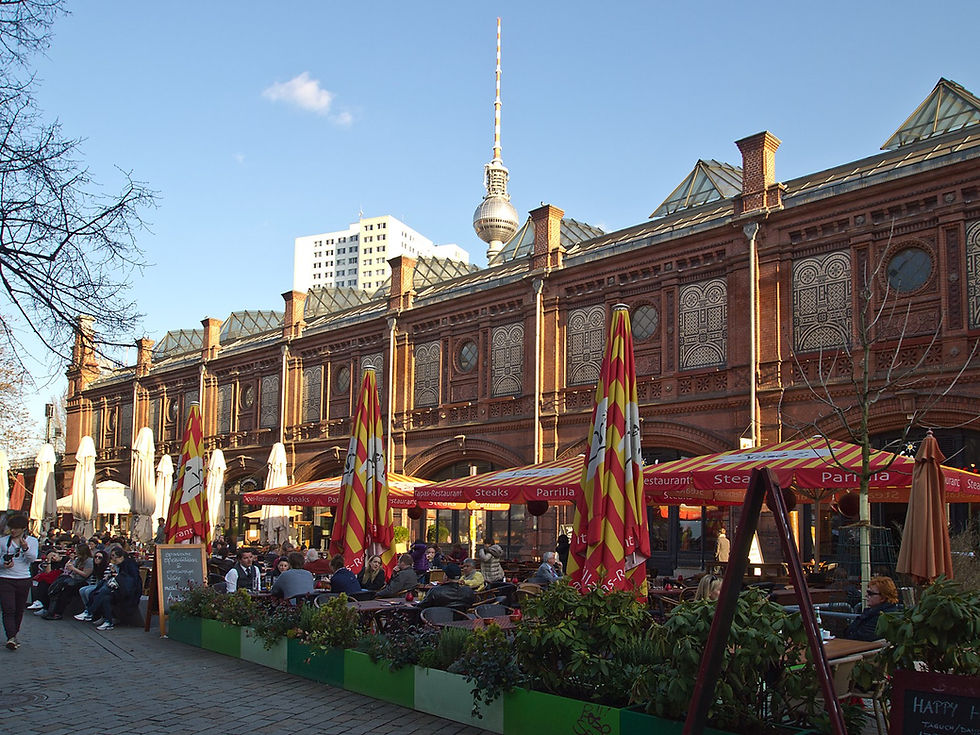
The packed terraces at Hackescher Markt, where my tour ends. When a spot is the name everyone repeats, a table booked a couple of days ahead beats standing on the pavement watching others eat.
Sundays and big groups: the two that catch people out
Two situations trip up more visitors than any other, so they are worth calling out on their own.
Sundays are quieter than you expect. Berlin is a famously Sunday-closed city for shops, and while plenty of restaurants do open, fewer kitchens run than on a weekday, and the ones that do get busy for brunch and late lunch. On a Sunday, my rule is simple: check the place is actually open before you set out, and if it is a popular brunch spot, treat it like a weekend booking.
Big groups need a plan every time. I will say it twice because it matters most: for five people or more, book directly, and do it by phone or email rather than an app, even where online booking exists. Walk-in luck runs out fast once the table gets long.
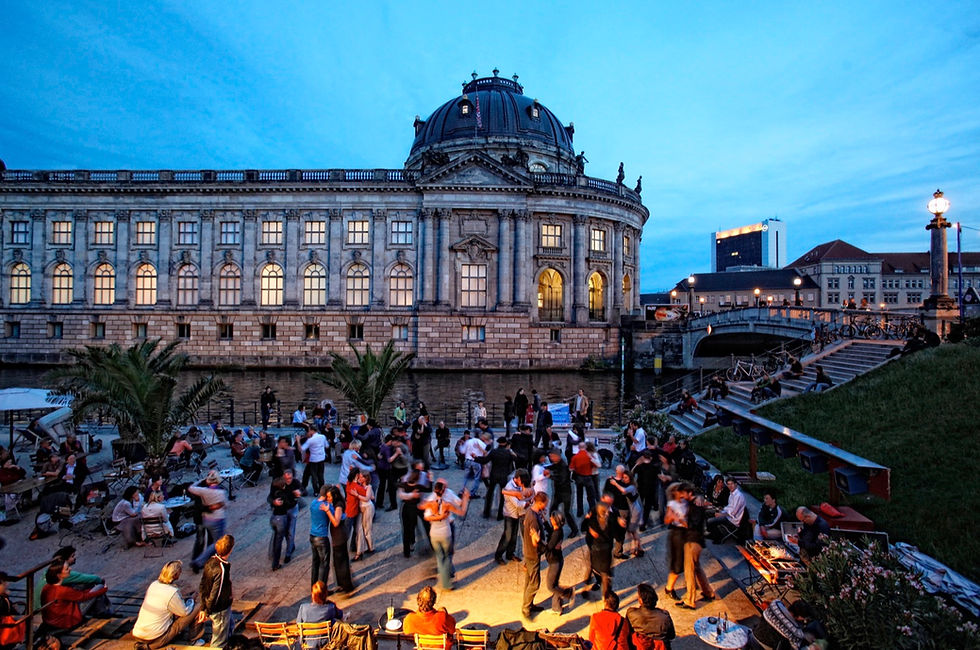
Summer evenings at Strandbar Mitte on the Spree run first-come. At a waterside spot like this the move is to arrive early, not to reserve.
A few local habits that keep it easy
Whatever you end up doing, these small habits keep Berlin dining relaxed:
Default to walking in, but carry a backup. Pick a street with a few options, so one full door is never the whole plan.
For terraces and beer gardens, come early. Outdoor tables in summer are first-come, and the good ones go by early evening.
Bring cash as well as a card. Plenty of Berlin restaurants are still card-shy or cash-only, which is worth knowing before the bill arrives. My guide to cash-only restaurants in Berlin covers how to tell.
Be roughly on time for a booking. A held table is usually held for around fifteen minutes, no more.
Let the neighbourhood guide you. If you are still deciding where to head, my where to eat in Berlin by neighbourhood guide is a good place to start, and for the classics there is what to eat in Berlin.
So, to answer the question I get at the end of every tour: no, you usually do not need to book, and Berlin is more fun that way. Keep the reservations for the big table, the special night, the famous name and the Sunday brunch, and let every other meal be a place you simply walked into.
If you would rather end the tour knowing exactly where you are and what is around you before the hunger hits, that is half of what a good walk gives you. My free walking tour runs on dates shown in the booking calendar, takes about 2 hours through the historic core, and finishes right in the middle of some of the city's best casual eating around Hackescher Markt. I will happily point you at a table on the way.
Image credits
Source and licence details for the 4 photographs used in this article.
Pavement cafes along the Kurfurstendamm in Berlin on a sunny day: Marek Śliwecki, CC BY-SA 4.0, via Wikimedia Commons.
The interior of the Tajik Tea Room off Oranienburger Strasse in Berlin: Ji-Elle, CC BY-SA 4.0, via Wikimedia Commons.
The busy terrace at Hackescher Markt in Berlin, with the TV Tower behind: Pedelecs, CC BY-SA 3.0, via Wikimedia Commons.
Riverside tables at Strandbar Mitte on the Spree in Berlin on a summer evening: Bernd Schönberger, CC BY-SA 4.0, via Wikimedia Commons.