Is the DDR Museum Worth It? Tickets, Queues, and What to Expect

Updated: 1 day ago
Almost every day, somewhere near the end of my walking tour, a guest points across the Spree at the low glass building next to the cathedral and asks the same thing: is the DDR Museum worth it? It is one of the most visited museums in Berlin, it is right in the middle of everything, and it is not free, so the question is fair. My honest answer is that it depends on what you want from it, and on when you walk through the door. Here is the version I give on the riverbank.
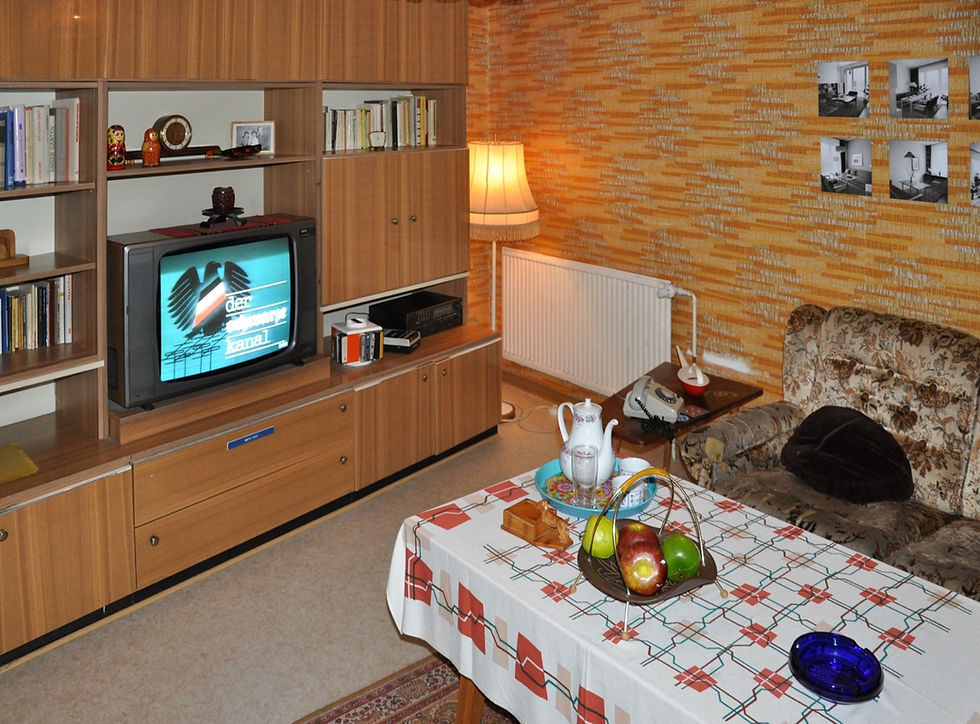
The DDR Museum recreates everyday life in East Germany, right down to the wallpaper. This reconstructed apartment is the heart of it.
What the DDR Museum actually is
The DDR Museum opened in 2006, and it set out to do something most history museums do not: let you touch things. Instead of glass cases and long wall texts, it recreates daily life in the German Democratic Republic, the socialist East German state that existed from 1949 until reunification in 1990. You open cupboards, pull out drawers, rummage through a reconstructed prefab apartment, and climb into a car. It is hands-on, it is playful, and it is aimed squarely at people who want to feel a vanished country rather than read about it.
That is its strength and its limit in one line. This is a museum about the texture of everyday life behind the Iron Curtain, the Trabant and the wallpaper and the breakfast table, more than a deep, sober account of the dictatorship. It is genuinely good at what it does. Just know what it is before you buy a ticket.
Where it is, and how to fit it in
The location is half the appeal. The DDR Museum sits right on the Spree promenade at Karl-Liebknecht-Strasse 1, directly opposite the Berliner Dom and a two-minute walk from Museum Island. From Alexanderplatz, where my free tour starts and ends at the World Clock, it is about a ten-minute stroll along the river.
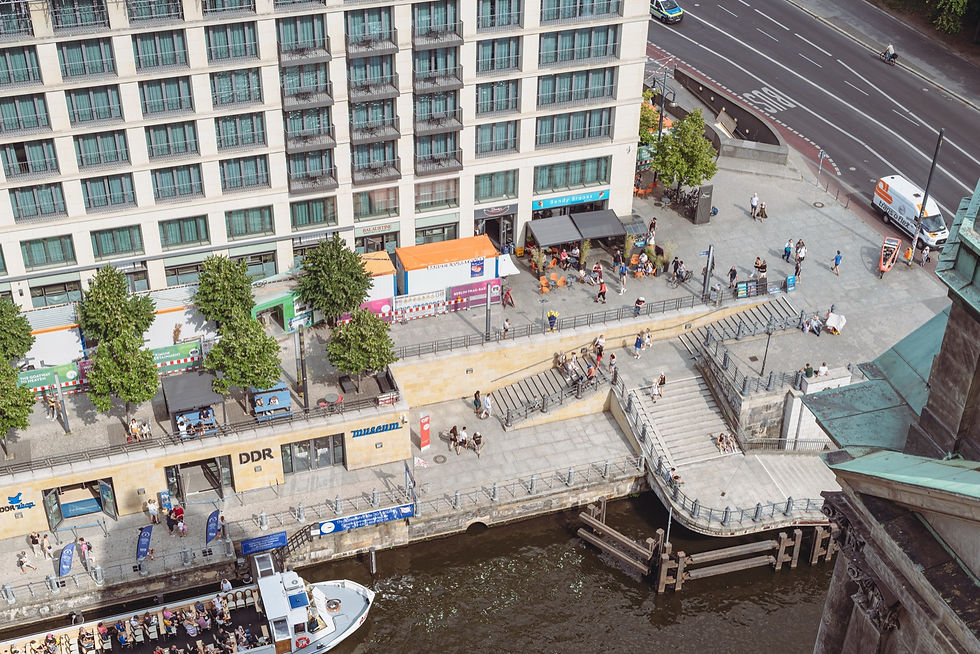
The museum runs along the Spree promenade opposite the cathedral, so it slots naturally into a Museum Island afternoon.
One detail makes it easy to plan around: it is open every day from 09:00 to 21:00, which is unusually late for a Berlin museum. Most of Museum Island closes by 18:00, so the DDR Museum is a rare option for a late-afternoon or early-evening visit once the big collections have shut. That long window matters more than it sounds, and I will come back to it.
What you will actually see
The exhibition is compact but dense, packed into a warren of small rooms. The highlights most people remember:
The Trabant. You can sit in the iconic East German car and, in the newer setup, take a simulated drive through a Plattenbau housing estate. It is the photo everyone takes.
The reconstructed apartment. A full furnished flat from a prefab tower block, where you are meant to open every door and drawer. It is the part that lingers, because it feels lived-in.
Everyday life displays on holidays, work, shopping, schooling, and the peculiar East German nudism culture (FKK) that surprises a lot of visitors.
The serious side. Amid the nostalgia there is a reconstructed Stasi listening room and material on surveillance, the planned economy, and the Wall, so it does not pretend the GDR was only cosy furniture.

Climbing into the Trabant is the moment most visitors come for. The whole museum is built to be touched, not just looked at.

The reconstructed surveillance desk is a reminder that the same state also spied on its own people.
Tickets, prices and opening hours in 2026
The DDR Museum is privately run, and this trips people up more than anything else. A standard adult ticket is 13.90 euros, with a reduced rate of 8.50 euros for students, children aged 6 and over, and other concessions. Children under 6 go free. You can buy at the door or online through the official DDR Museum site, and I would book online: it lets you walk past the ticket desk instead of queuing at it.
Here is the important part for your budget. Because it is private, the DDR Museum is not included in the state Museum Island ticket or the Museum Pass Berlin. If you have one of those passes, do not expect it to cover this door. Some city tourist cards list a small discount, so if you are carrying a WelcomeCard, check before you pay.
The one thing tourists get wrong
If there is a single mistake I watch people make with the DDR Museum, it is not the price. It is the timing. The museum is small, the rooms are narrow, and the whole point is to touch and open things, which means it clogs up badly when it is full. Arrive at the wrong hour and you spend your visit shuffling in a queue behind someone else's selfie in the Trabant.
The fix is free. Because the museum is open until 21:00, you have two genuinely calm windows almost every day: right at the 09:00 opening, and the evening after roughly 18:30. The tool below shows you the crowd hour by hour, and it shifts for weekdays, weekends, and rainy days, when every indoor attraction in Mitte overloads at once.
So, is the DDR Museum worth it?
Yes, with the right expectations. It is worth it if you are travelling with kids, if it is raining, if you want a tactile, human sense of what daily life felt like on the other side of the Wall, or if you simply want something open in the evening when Museum Island has closed. Allow about an hour to an hour and a half. It is immersive and it is fun.
It is the wrong choice if you want a deep, unflinching account of the dictatorship. For that, pair it with a serious site: the Stasi Museum in Lichtenberg, the Berlin Wall Memorial on Bernauer Strasse, or the free Cold War locations you can still visit around the centre. The DDR Museum shows you the furniture of a lost country. To understand why that country was divided in the first place, you need the streets outside, which is exactly what I walk people through.

Small, central, and open late: the DDR Museum is an easy add-on rather than a whole-day commitment.
That is really the way to use it. Do not build a day around the DDR Museum. Build it into one. Meet me at the World Clock on Alexanderplatz for my free walking tour, let me give you the real history of the divided city on the ground where it happened, then walk ten minutes to the river and go sit in the Trabant.
Image credits
Reconstructed DDR living room: User:FA2010, public domain, via Wikimedia Commons.
DDR Museum on the Spree: Flocci Nivis, CC BY 4.0, via Wikimedia Commons.
Trabant inside the DDR Museum: HerrAdams, CC BY-SA 4.0, via Wikimedia Commons.
Reconstructed Stasi listening room: User:FA2010, public domain, via Wikimedia Commons.
DDR Museum sign: Maria Krüger, CC BY-SA 2.5, via Wikimedia Commons.