Currency Exchange in Berlin: Where to Change Money (and Where Not To) in 2026
You land in Berlin, walk out into the city, and within a few minutes you pass a bright yellow machine near the Brandenburg Gate promising "travel money" and a desk at the airport offering "0% commission". It feels like the sensible, tourist-friendly thing to do: change some cash, feel sorted, get on with the trip. It is also one of the quietest ways to lose money on your whole visit.
My advice on currency exchange in Berlin is almost boring, and that is the point. Do not go looking for the perfect exchange office. I have watched visitors hand over a note at an airport desk and get back noticeably fewer euros than they expected, then spend the rest of the trip annoyed about it. The better plan is to change almost nothing, lean on your card, and pull a little cash from the right kind of machine. Let me walk you through exactly how that works here.

Berlin uses the euro. The real question is not where to exchange money, but how to get the euros you need without paying a hidden margin.
Do you even need currency exchange in Berlin?
For most visitors, honestly, no. Berlin uses the euro, like the rest of Germany, so if you are coming from another eurozone country there is nothing to exchange at all. If you are coming from the UK, the US, or anywhere else, the cleaner move is usually to bring a card and skip the exchange office.
Cards work in more places than Berlin's cash-loving reputation suggests. Hotels, restaurants, supermarkets, big shops and most attractions take Visa and Mastercard, and contactless or Apple and Google Pay are normal now. You can read the full picture in my guide to using credit cards in Berlin, but the short version is that a card covers the large everyday costs of a trip without any exchange step.
Where Berlin still catches people out is the small stuff. Some bars, Spätis (the late-night corner shops), market stalls, and small imbiss counters are cash-only or set a card minimum. So you do want a bit of euro cash on you. Not a thick stack, just enough to be relaxed about the cash-only corners of the city.

Spätis, market stalls and some small bars are where Berlin still runs on cash. This is what your euro notes are actually for.
The cheapest euros in Berlin come from a bank ATM
Here is the single most useful habit: when you need cash, use an ATM attached to a real German bank and let your own bank handle the exchange. That is almost always the closest you get to the true rate.
Look for machines run by an actual bank, not a standalone box in a shop doorway. The names to trust are Sparkasse (the red S logo), Volksbank, Deutsche Bank, Postbank and Commerzbank. Their ATMs are all over the city centre, including inside the airport, and they do not add the aggressive margins that the tourist machines do.
Two things make this even better:
Bring a card with no foreign-transaction fee. A normal home debit card often adds 1 to 3 percent on foreign spending. A fee-free travel card such as Wise or Revolut removes most of that and gets you very close to the interbank rate.
Withdraw in one or two larger amounts, not lots of small ones. If your home bank charges a flat fee per foreign withdrawal, fewer, larger pulls keep that cost down.
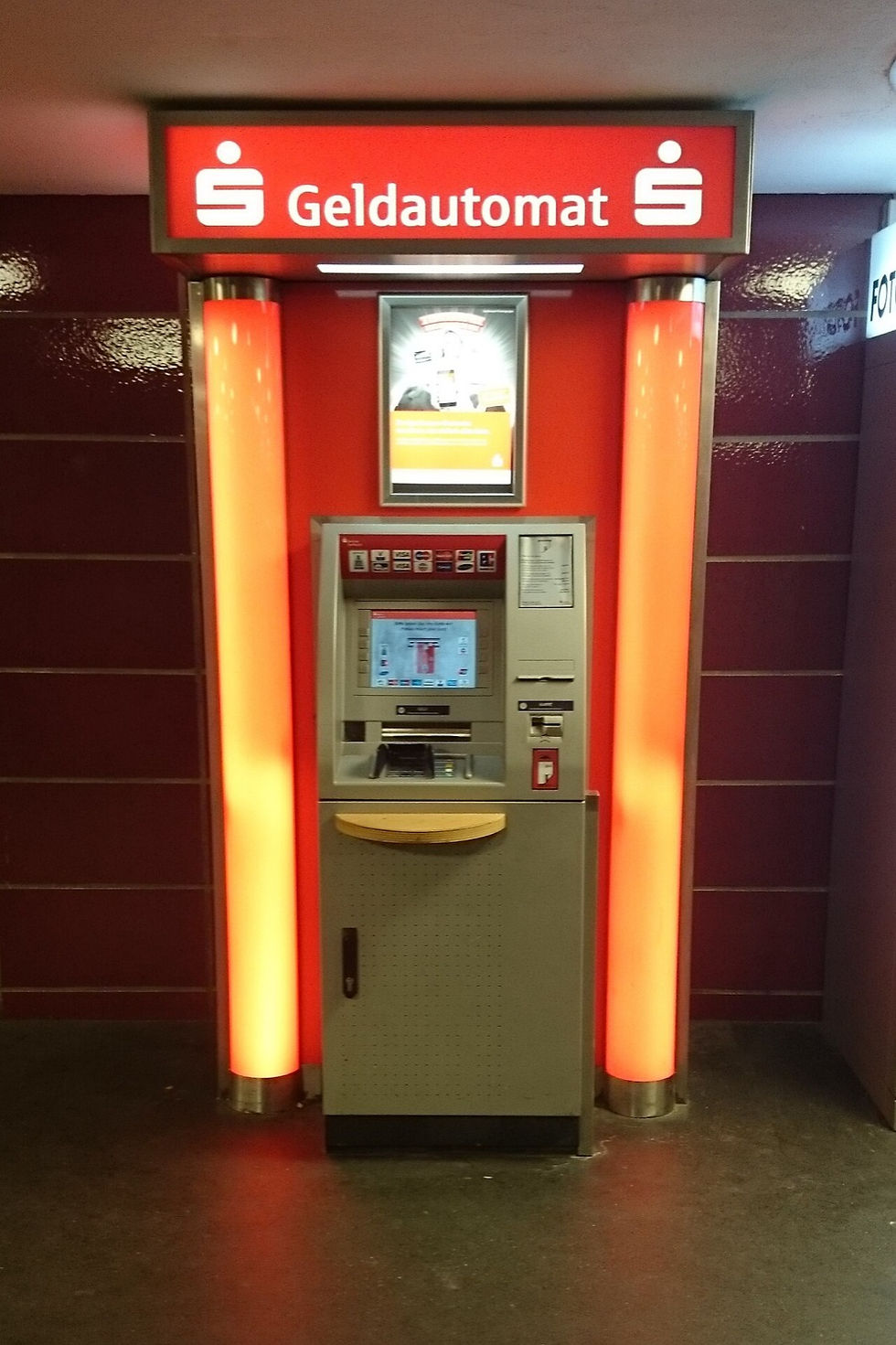
A Sparkasse Geldautomat in Berlin. A bank-run ATM like this one, with conversion declined, is the cheapest euro cash in the city.
Always choose to be charged in euros
This is the rule that saves more than any clever choice of exchange office. At a German ATM, and at many card terminals, you will sometimes be asked whether you want to be charged in euros or in your home currency. It sounds like a helpful convenience. It is not.
Choosing your home currency triggers something called dynamic currency conversion (DCC), where the machine or the shop sets the exchange rate instead of your bank, and quietly adds a markup that is often 5 to 13 percent worse than paying in euros. Always tap euros (EUR) and let your own bank do the maths. Do this at every machine and every terminal, and you will have handled the biggest money leak of the trip.
The tool below makes the difference concrete. Slide to the amount of cash you had in mind and see what the same euros cost you four different ways.
The machines and desks to avoid
Two things in Berlin are built to cost tourists the most, and they are easy to spot once you know them.
The first is the standalone "travel money" ATM, usually bright yellow and blue, from operators like Euronet. You will see them clustered exactly where visitors gather: by the Brandenburg Gate, around Alexanderplatz, and outside big stations. They combine a withdrawal fee with a poor built-in rate, and they push hard on that home-currency conversion trap. If a machine is not attached to a bank branch, walk past it.

A Euronet "travel money" machine. These stand-alone ATMs near tourist sights give some of the worst value in the city.
The second is the airport exchange desk. They are convenient, and that is exactly why the rate is poor. A "0% commission" sign does not mean a fair deal; it just means the margin is baked into the rate instead of shown as a fee.
If you land at BER and need cash right away
Berlin Brandenburg Airport (BER) has exchange counters like Travelex and Euro Change right in the arrivals area. Skip them. Instead, walk a little further to a bank-run ATM inside the terminal, decline the currency conversion, and take out only what you need for the first day or two. You can top up later in the city at a better machine.
You do not need a big pile of cash to get moving anyway. Getting from the airport into town is straightforward, and my guide on getting from Berlin Airport to Alexanderplatz shows the simple route. A ticket machine and your card will handle the train.

Inside BER. The exchange desks near arrivals are easy to reach and easy to overpay at. A bank ATM in the same terminal is the better stop.
If you really do want to exchange cash
Some people simply prefer to hand over notes and walk away with euros, and that is fine. If that is you, the city-centre exchange desks are still better value than the airport. Reisebank and Euro Change run counters at the main transport hubs, and the official visitBerlin currency exchange page lists them with hours:
Hauptbahnhof (central station): Reisebank, open long hours daily.
Friedrichstraße station: Reisebank.
Zoologischer Garten (Zoo station): Reisebank.
Alexanderplatz: Euro Change.
Ostbahnhof: Reisebank.
One rule when you get there: compare the rate they actually give you, not the commission sign. Ask how many euros you will receive for your notes, then decide. If it feels far off the real rate you saw online, it probably is.
How much cash should you actually carry?
For a typical few-day visit, around €100 to €200 in cash is plenty for most people, topped up from a bank ATM if you run low. That covers the genuinely cash-friendly parts of Berlin while your card handles hotels, dinners and shopping.
Keep a little on you for the small moments: a round in a cash-only bar, a stall at a weekend market, a few euros for tipping in Berlin, and something for the guide if you join a tip-based tour. If you are still working out your overall spending, the Berlin daily budget tool helps you set a realistic number before you arrive, and the wider is Berlin expensive guide puts it in context.
On my free walking tour, money is one of the most common quiet worries people bring with them, and my answer is always this same short version: use your card for the big things, pull a little cash from a bank ATM, always choose euros, and never trust the machine by the Brandenburg Gate. Handle those four, and Berlin stops being an expensive-feeling city and starts being a very fair one.
Image credits
Photos via Wikimedia Commons: euro banknotes by Markus Spiske (CC BY 2.0); Sparkasse ATM at Möckernbrücke by Dirk Ingo Franke (CC BY-SA 4.0); Berlin Spätkauf by Nicolas Bouliane (CC BY-SA 4.0); BER terminal by Muns (CC BY 3.0); Euronet travel-money machine by Wilfredor (CC0).