Berlin Train Stations: Hauptbahnhof, Ostbahnhof, Südkreuz and Arrival Tips
- Yusuf Ucuz

- Jul 5
- 7 min read
Berlin train stations can be confusing because the city does not behave like a place with one obvious central arrival point. Your train may stop at Hauptbahnhof, Ostbahnhof, Südkreuz, Gesundbrunnen or Spandau, and each one can be the right answer depending on what you need next.
My advice: choose the station by your first move, not by the famous name. If you arrive tired, with luggage, before a timed museum slot, or on the way to BER Airport, the wrong first move can cost more energy than the train journey itself.
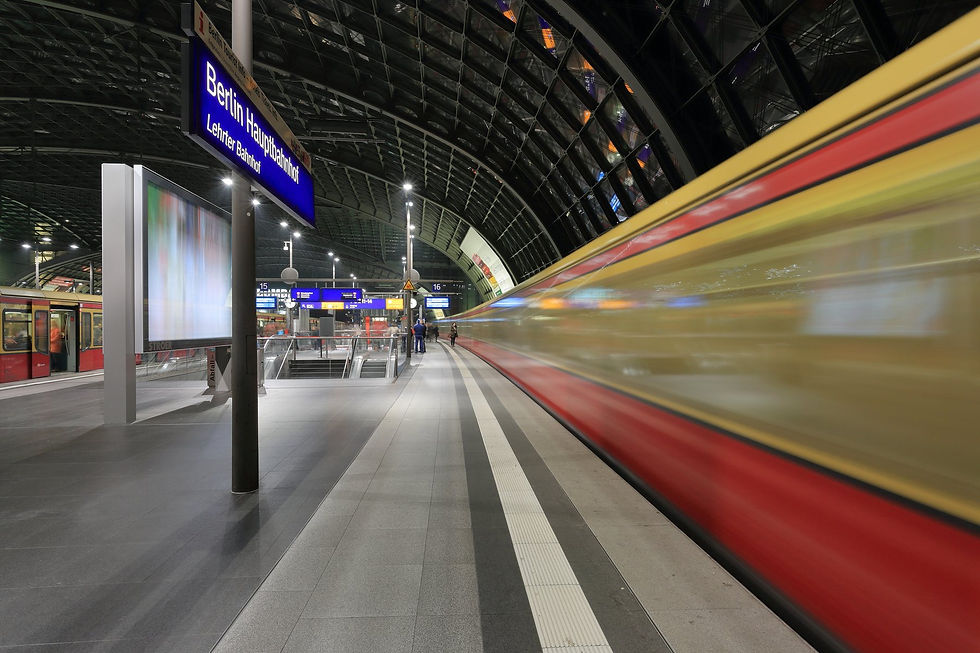
Hauptbahnhof is the easiest all-round arrival, but it is still a layered station where you should decide your next line before walking.
Berlin train stations: the simple arrival rule
If you only remember one rule, use this: Hauptbahnhof is the easiest default, Südkreuz is the clean airport-side station, Ostbahnhof is the east-side station, Gesundbrunnen is the north-side station, and Spandau is the west-side station.
That does not mean you should always change your ticket to Hauptbahnhof. VisitBerlin's official arrival-by-train page lists several classic arrival stations across the city, including Hauptbahnhof, Berlin-Südkreuz, Berlin Ostbahnhof, Berlin-Gesundbrunnen and Berlin-Spandau. That spread is the point. Berlin is large, flat and well connected, so the best station is often the one closest to your hotel or next transport layer.
The mistake I see is different: visitors treat every station name as if it points to the same central Berlin. It does not. A train to Spandau is still a Berlin train, but if your hotel is near Alexanderplatz, you have a real eastbound ride after arrival. Südkreuz is excellent for BER Airport, but it is not where I would start a first-time Museum Island walk. Ostbahnhof is useful for Friedrichshain, but it is not automatically better for Brandenburg Gate.
Hauptbahnhof: best default for first-time visitors
Berlin Hauptbahnhof is the station I would choose for most first-time tourists if the ticket price and timing are similar. It sits close to the government district and has S-Bahn, U5 subway, bus, tram, taxi and service-point layers in one place. Berlin.de notes that S-Bahn travel from Hauptbahnhof to Alexanderplatz or Zoologischer Garten takes about 10 minutes.
That makes it a strong first arrival for Mitte, Moabit, Museum Island edges, the Reichstag area, Alexanderplatz, and many classic sightseeing days. It is also a good station if you want a simple meet-up point, a taxi rank, DB service help, WiFi or luggage options.
The trap is thinking "central" means "walk everywhere." Hauptbahnhof is central in the railway network, but a tired walk with bags toward Museum Island or Alexanderplatz is not a good first Berlin memory. If your hotel is east of the centre, take the S-Bahn or U5. If you are joining my walking tour at the World Clock, use the train layer first, then walk the last piece calmly.
For airport departures, always check the current route. BER Airport's official public-transport page says the airport connection changed with the railway timetable on 14 December 2025. The current FEX route is Hauptbahnhof - Potsdamer Platz - Südkreuz - BER Airport, and BER lists Hauptbahnhof to BER at about 23 minutes before your walking, platform and disruption buffers.
Ostbahnhof: good for Friedrichshain and the east side
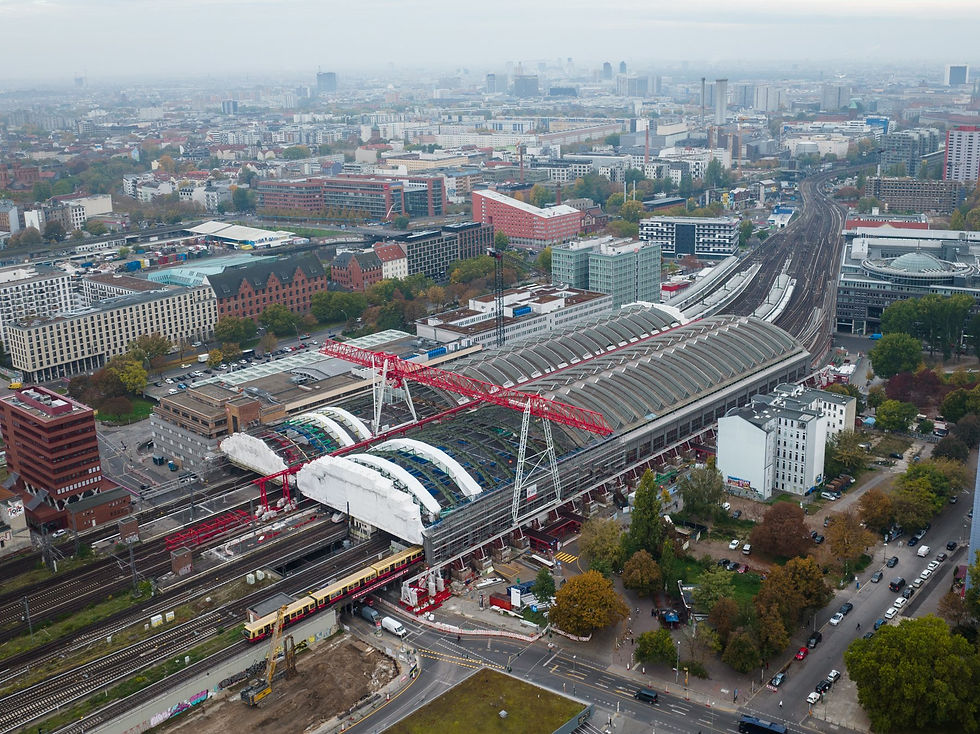
Ostbahnhof is useful when your Berlin is east: Friedrichshain, East Side Gallery, Warschauer Straße, Ostkreuz connections, or a hotel on that side of the city.
Berlin.de describes Ostbahnhof as a long-distance, regional and S-Bahn station at the same time. It also notes that S-Bahn trains from Ostbahnhof go through Alexanderplatz and Friedrichstraße to Hauptbahnhof in about 10 minutes. That east-west S-Bahn spine is the key to using Ostbahnhof well.
If you arrive here and your hotel is in Friedrichshain, stay east and solve the hotel first. If your first plan is Museum Island, Brandenburg Gate or the BerlinWalk meeting point at Alexanderplatz, use the S-Bahn west before you start sightseeing. Do not turn a practical arrival into an improvised East Side Gallery walk unless you actually have time for it.
Ostbahnhof can also work for BER Airport through the east-side rail network, especially if a live route sends you through Ostkreuz. But if you are choosing a station mainly because of the airport, compare it with Südkreuz and Hauptbahnhof on the day.
Südkreuz: best when BER Airport is part of the plan
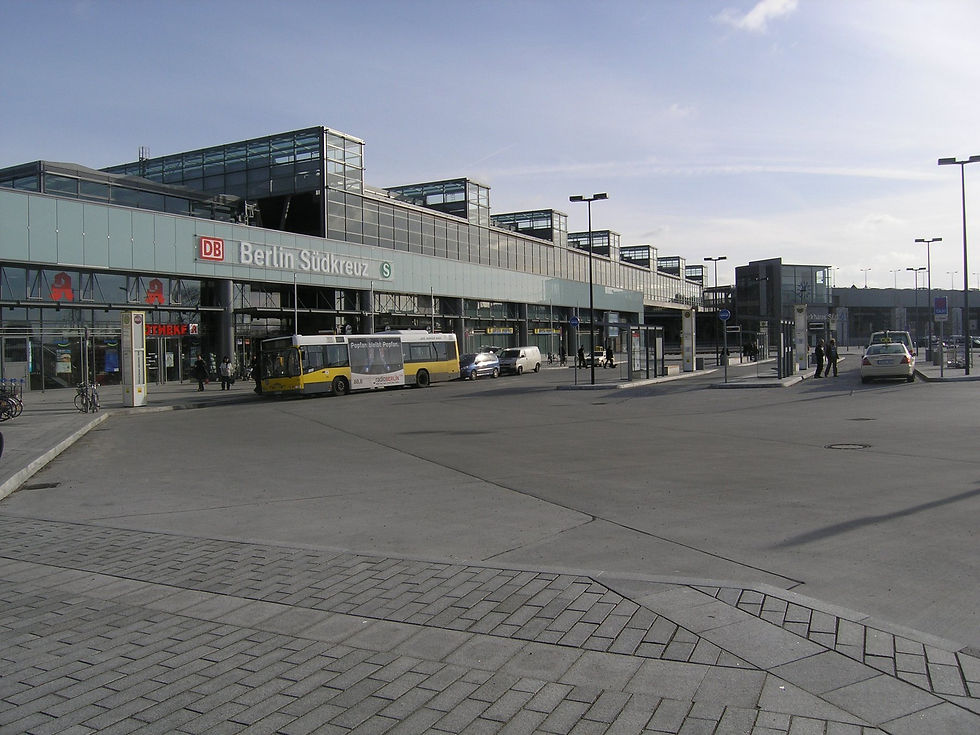
Südkreuz is the station I would take seriously if your next move is BER Airport, south Berlin, Schöneberg, Tempelhof, or a north-south rail connection. Berlin.de places it south of the city centre and says long-distance trains, regional trains and S-Bahn lines stop there.
For the airport, Südkreuz is especially useful. BER Airport's public-transport page lists the current FEX route through Südkreuz and gives Südkreuz to BER at about 14 minutes. DB Regio's FEX page says the airport train runs every 15 minutes during the main day window and uses the shortest route to the airport.
That does not make Südkreuz the best station for every tourist. If your first plan is Unter den Linden, Museum Island, Hackescher Markt or Alexanderplatz, Südkreuz still requires a proper transfer. It is efficient, not atmospheric. Use it when it solves your route. Do not use it because it sounds simpler than it is.
For luggage, solve the bag problem before leaving the station area. A station like Südkreuz is built for transfers. It is not a nice place to begin a long rolling-suitcase walk.
Gesundbrunnen: useful for north Berlin and ring connections
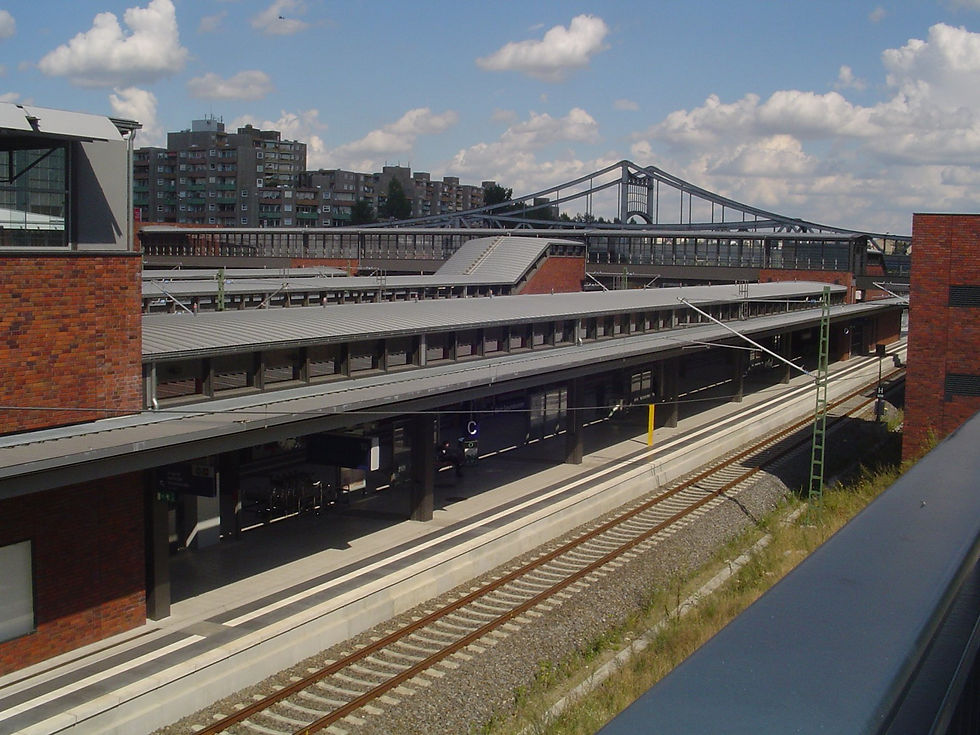
Gesundbrunnen makes sense when your Berlin is north: Wedding, Prenzlauer Berg edge, Pankow, Mauerpark area, or a train route that naturally uses the north-south railway. Berlin.de says long-distance and regional trains heading north and toward the Baltic Sea stop here, and that the station links to S-Bahn and U8 subway service.
The main tourist mistake is treating Gesundbrunnen as if it were a hidden central station. It is not bad. It is just not the same as arriving at Alexanderplatz, Friedrichstraße or Hauptbahnhof. If your hotel is north, it can be excellent. If your first plan is the historic centre, you need a transfer and a little patience.
For BER Airport, check live routes. Berlin.de gives airport connection notes from Gesundbrunnen, and DB Regio points travellers from Gesundbrunnen toward connections through Potsdamer Platz or Ostkreuz depending on the best route. This is exactly where a live app beats a memorized rule.
Spandau: best for the west, not for a rushed Mitte plan
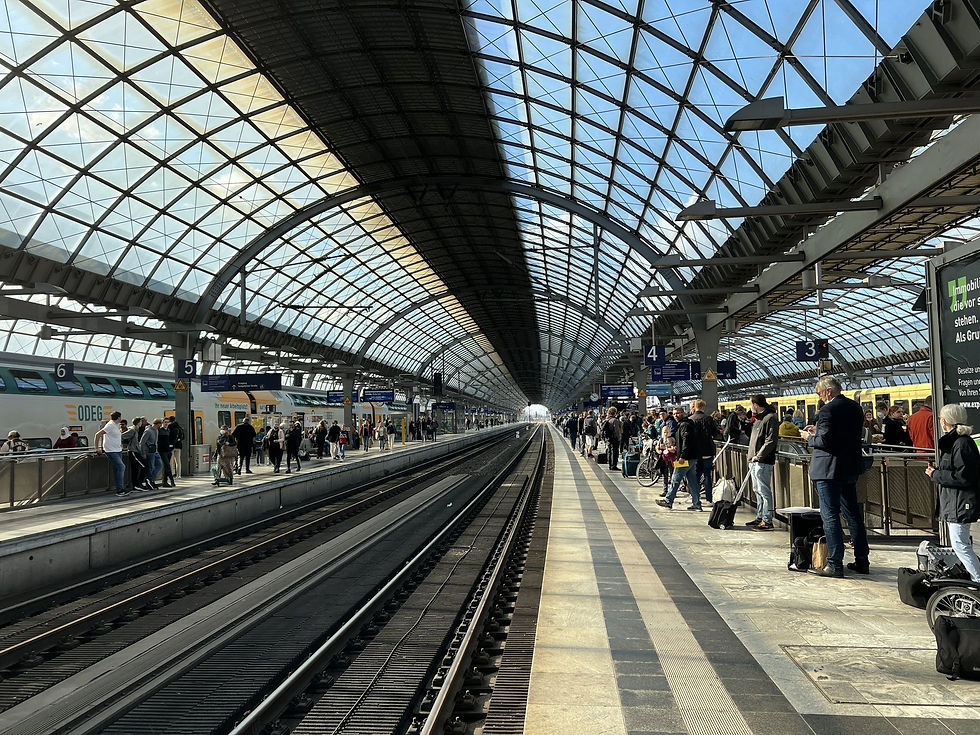
Spandau is a real Berlin arrival station, but it sits far to the west. Berlin.de says Spandau station is served by long-distance and regional trains and is directly connected to the subway and S-Bahn. It also notes that public transport from Spandau to the city centre takes about 30 minutes.
That can be perfect if you are staying in Spandau, Charlottenburg, around Messe/ICC, or using a west-side plan. It is less perfect if your first booking is at Alexanderplatz, Museum Island, Brandenburg Gate or a walking tour meeting point in the old centre.
If you arrive at Spandau with a fixed central plan, do not panic. Just treat the station-to-centre leg as a real journey. Use S-Bahn or regional trains east, keep an eye on transfers, and add a missed-connection buffer. Berlin is not hard from Spandau, but it is not a five-minute hop either.
Tickets, zones and the airport mistake
Most normal journeys inside Berlin use AB. BER Airport and Potsdam are in zone C, so they usually need ABC or a valid zone C extension. Berlin.de's public-transport ticket page explains that AB covers the urban centre up to the city limits, while ABC adds the surrounding area, BER Airport and Potsdam Central Station.
This matters when you are tired after arrival. A train station is exactly where people buy the wrong ticket because they are trying to move quickly. If your first move stays inside Berlin, AB is normally enough. If your first move is BER Airport, Potsdam, or a hotel beyond the city boundary, check ABC.
If you are unsure, use the official BVG, VBB or DB Navigator route result and match the ticket zone to the destination. Do not copy an old screenshot. Berlin transport is stable enough to plan, but construction and timetable changes still happen.
How I would choose your station
Use this quick decision:
First time in Berlin, hotel in Mitte or first walk near Alexanderplatz: choose Hauptbahnhof when the ticket is similar.
Hotel in Friedrichshain, East Side Gallery or east Berlin: Ostbahnhof can be more practical.
BER Airport soon after arrival or before departure: look hard at Südkreuz, Hauptbahnhof and the current FEX.
Hotel in Wedding, Prenzlauer Berg north or Pankow: Gesundbrunnen may save time.
Hotel or plan in west Berlin: Spandau can be useful, but protect time if you need the old centre.
Luggage before sightseeing: solve the bags first, then start the day. My Berlin luggage storage guide is the better next read if this is your real problem.
For ticket zones, pair this with my Berlin AB or ABC ticket guide. For the main station itself, read the deeper Berlin Hauptbahnhof guide. If you are planning your final day before a train or flight, use the Berlin last day guide because the logic changes when departure is fixed.
If the station question is really a first-hour arrival problem, not just a train-station question, use my Berlin First-Day Rescue Plan for the paid version. It is built around airport, train station, luggage, check-in time and weather, while this guide keeps the station choice itself clear and free.
If you are joining my walking tour
My tour starts at the World Clock on Alexanderplatz and runs about 2 hours through the old centre of Berlin. From Hauptbahnhof, the station phase is simple: take the S-Bahn east or U5 toward the Alexanderplatz area, then walk the last part. From Ostbahnhof, use the S-Bahn west. From Südkreuz, Gesundbrunnen or Spandau, give yourself more buffer because the first transfer matters.
The move I would make is this: arrive light, arrive early, and do not make the station your first sightseeing stop unless it actually helps your day. A calm 20 minutes at Alexanderplatz beats a rushed transfer with luggage almost every time.
You can check the current tour times on the BerlinWalk booking page, then work backwards from the meeting time.
FAQ
Image Credits
Cover/Hauptbahnhof image: Martin Falbisoner, `S-Bahn at Hauptbahnhof Berlin`, CC BY-SA 4.0, via Wikimedia Commons. Ostbahnhof image: Arne Müseler, `Berlin Ostbahnhof 2022`, CC BY-SA 3.0 DE, via Wikimedia Commons. Südkreuz image: Kanakari, `Berlin Südkreuz 2008`, CC BY-SA 3.0, via Wikimedia Commons. Gesundbrunnen image: bukk (LT), `Berlin Gesundbrunnen station 2006`, CC BY-SA 3.0, via Wikimedia Commons. Spandau image: Lukas Beck, `Bahnhof Berlin-Spandau`, CC BY-SA 4.0, via Wikimedia Commons.