Berlin Parking Zones: When the Meter Stops and What the Resident Permit Covers

Berlin hands out a very specific kind of morning. You come back to the car at twenty past nine, there is a paper slip under the wiper, and you are certain the machine was dark when you parked. It was dark. Nothing in Berlin charges before 09:00, and almost everything charges from 09:00 exactly.
That twenty minutes is the whole subject here. The city runs 103 managed parking zones, and the thing residents get wrong is almost never the price. It is the closing time, and it moves by district, by zone and by weekday.
I went through the official zone register street by street, checked on 12 September 2026. One zone charges for 45 hours a week. Another charges for 105. The two of them are a five-kilometre drive apart, both inside Mitte.
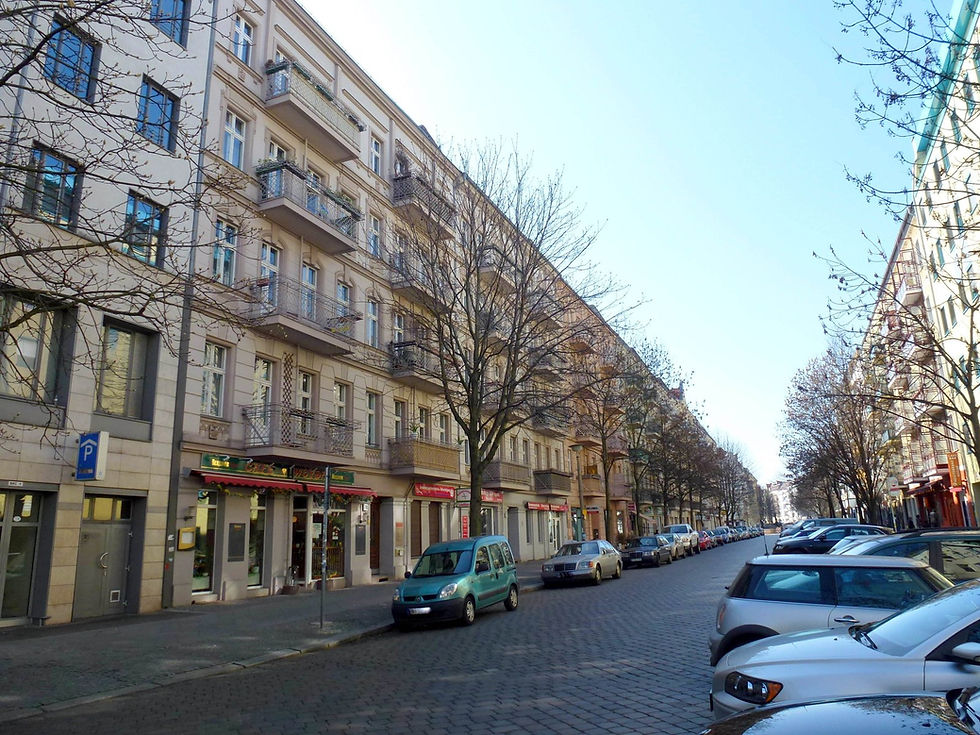
Kopenhagener Straße in Prenzlauer Berg sits inside zone 43, where the meters run Monday to Saturday from 09:00 until midnight.
Where Berlin parking zones actually are
Managed parking is not a citywide rule. It covers 8 of Berlin's 12 districts, and inside those eight it follows the inner ring, not the district border. Four districts have no managed zone at all:
Lichtenberg
Marzahn-Hellersdorf
Reinickendorf
Treptow-Köpenick
The count inside the other eight is lopsided. Mitte has 30 zones, Charlottenburg-Wilmersdorf 24, Friedrichshain-Kreuzberg 17, Tempelhof-Schöneberg 15, Pankow 6, Spandau and Neukölln 4 each, Steglitz-Zehlendorf 3. That is why two people who both live in Berlin and both keep a car can have completely different relationships with the kerb outside their door.
Each district plans and runs its own zones, which is exactly why the rules are not uniform. The Senate department for mobility publishes them all in one register, and the districts set the hours and the tariff inside it. The legal test is not revenue: a zone may only be introduced if it improves the traffic situation, and Berlin's own evaluation found that occupancy drops by around ten percentage points once a zone comes in, typically from about 90 per cent to about 80 per cent. That is the difference between circling for fifteen minutes and finding something.
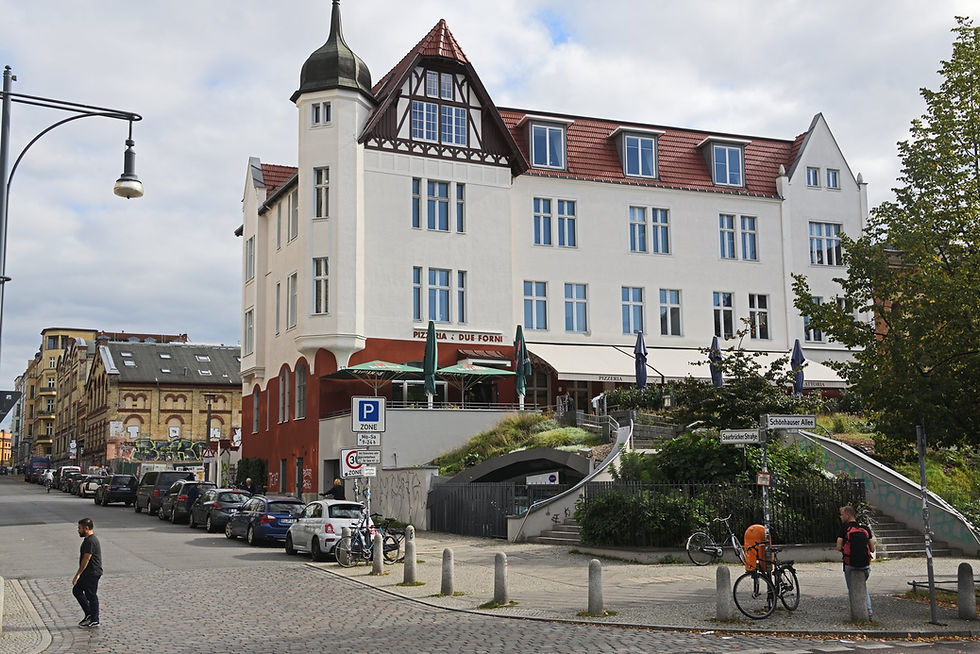
The blue ZONE plate at the entrance to zone 41 on Schönhauser Allee. Every zone announces itself this way, and the small print underneath is the part that matters.
The price is the easy part. The clock is not.
Hourly tariffs in Berlin come in three sizes: 2 euros, 3 euros or 4 euros. Thirty-eight zones charge 2, forty-six charge 3, sixteen charge 4, and three Pankow zones sit between 2 and 3 depending on the street. You can learn that in a sentence.
The charged week is where it gets interesting. Across all 103 zones it runs from 45 hours to 105 hours, averaging about 70. Where the day ends:
10 zones run until midnight
37 stop at 22:00
49 stop at 20:00
7 stop at 19:00 or earlier, four of them in Spandau at 17:00
And then there is Sunday. Exactly one zone in the whole city charges on a Sunday: zone 29 in Mitte, which covers Karl-Liebknecht-Straße, Alexanderstraße, Mollstraße, Torstraße and Rosenthaler Straße. It runs Monday to Sunday, 09:00 to midnight, at 4 euros an hour. That is 105 charged hours a week, the highest in Berlin, and it is the only place where a Sunday visit needs a ticket.
Put a few real moments against that and the picture sharpens:
Sunday at midday: 1 zone of 103 is charging.
Saturday at 20:00: 37 are still charging, 66 are already free.
Wednesday at 18:00: 97 of 103 are charging. Six are not.
Monday at 08:00: none of them are charging.
My advice: learn the closing hour of your own zone and the one next to it, and forget the rest. Those two numbers decide almost every parking decision you will make this year.

Rosenthaler Straße is inside zone 29, the only Berlin parking zone that charges seven days a week.
Four zones that work completely differently
These four are all real, all current, and all within half an hour of each other by car.
Spandau Altstadt, zones 10 to 13. Monday to Friday 09:00 to 17:00, Saturday 09:00 to 14:00, at 2 euros an hour. Forty-five charged hours, the shortest week in the city, because the zone is built around shop opening times. The one quirk: on Advent Saturdays it extends to 17:00.

The Spandau Altstadt, covered by zones 10 to 13. The meters there keep shop hours, which is why the charged week is half as long as Pankow's.
Karl-Marx-Straße and Sonnenallee in Neukölln, zones 100, 101, 105 and 106. The most expensive tariff Berlin has, 4 euros an hour, and yet the meters never run at the weekend. Monday to Friday 09:00 to 20:00 and nothing else. Fifty-five charged hours. If your weekend life happens in Neukölln, the kerb there is free.
Schönhauser Allee, Kastanienallee and Danziger Straße in Pankow, zones 41 to 45. Monday to Saturday 09:00 to midnight at 2 to 3 euros an hour. Ninety charged hours at a cheap rate, which is the opposite trade to Neukölln: low price, almost no gaps.
Ostkreuz-Kiez and Arena Süd in Friedrichshain-Kreuzberg, zone 50 and part of zone 51. Monday to Saturday 09:00 to midnight at 4 euros an hour. That is the most expensive kerb-week in Berlin: a full day of legal parking there costs more than the two-year resident permit.
The resident permit: 20.40 euros, two years, one zone
If your registered address is inside a zone, you can apply for a Bewohnerparkausweis. It costs 20.40 euros and lasts up to two years. Renewal can be requested a month before it expires.
What it is worth depends entirely on the tariff outside your window. Twenty euros forty is the price of:
5 hours 6 minutes at a 4 euro meter
6 hours 48 minutes at a 3 euro meter
10 hours 12 minutes at a 2 euro meter
For two years. If you park on your own street even once a week, the permit has paid for itself before the end of the second month. I have never met anyone eligible for one who regretted getting it.
Four things about it that catch people out:
It is valid in your zone only. Park two streets over in the next zone and you need a ticket like everybody else.
It is one permit per vehicle, and you need the fully unfolded front of your Zulassungsbescheinigung Teil 1.
It does not give you a right to a parking space. The official wording is explicit about that. It only means you owe nothing when you do find one.
Processing takes up to four weeks, and longer if the application is incomplete. Apply through the online form on the Berlin service portal rather than by post, because that is the one step that reliably saves time.

Every machine carries its own plate with the local hours and the minimum payment. This one in zone 25 in Steglitz was photographed in 2022, when the tariff was 25 cents per 15 minutes; the zone now charges 2 euros an hour, which is why the plate at the kerb always beats any list, including mine.
Two more zones switch on before the year ends
Friedrichshain-Kreuzberg is converting the whole district in stages, and it publishes the dates in advance. Four zones already started this year. Two are still coming:
Askanischer Platz, zone 58, from 1 October 2026, 09:00 to 22:00, 4 euros an hour
Samariterviertel, zone 31, from 1 December 2026, 09:00 to midnight, 3 euros an hour
After that the district moves on to Blücherstraße, Rathaus Yorckstraße, Richard-Sorge-Viertel, Hausburgviertel and Alt-Stralau in 2027 and 2028, in that order, ranked by how full the parking already is and how many of the cars come from outside the area.
Here is the practical point, and it is why this post is going up in September. A permit takes up to four weeks and Askanischer Platz starts on 1 October. If you live there, the window to have the permit in your hand on day one closed a few days ago. Apply anyway, pay at the machine in the gap, and treat the district's own zone page as the calendar for your street.

Bergmannstraße in zone 61, where a stretch of kerb became seating. Zones are only one of the things competing for that space.
How to pay when you do not have a permit
Two ways, and the second one is better.
At the machine. Coins only on most of them, so keep some in the car. The ticket goes behind the windscreen, face up and visible. If a machine is broken, call the service number printed on the device to report it, then walk to another machine or pay by phone.
By app. Berlin works with the smartparking platform, and six apps currently plug into it: EasyPark, Yellowbrick Flowbird, moBiLET, PayByPhone, Parkster and PARCO. You pay by the minute, you stop the clock when you leave, and no paper goes behind the glass. Some providers offer a windscreen sticker so the warden can see at a glance that you paid digitally.
One detail worth knowing: the zones generally have no maximum parking duration. You may stay as long as your ticket is valid. The exceptions are local and signed, such as the four-hour cap around Gendarmenmarkt in zone 1.
What it costs to get this wrong
The fine ladder for parking without a valid ticket is federal, so it is the same in Spandau as in Mitte:
20 euros up to 30 minutes
25 euros up to an hour
30 euros up to two hours
35 euros up to three hours
40 euros beyond three hours
Cheap on paper. The reason it adds up is the checking. Friedrichshain-Kreuzberg alone puts 50 parking wardens on the street in two shifts, Monday to Saturday from 09:00 until midnight. Their job list includes one thing most people forget: inside a parking zone they also note vehicles missing the green environmental sticker. One stop, two possible slips.
If the sums in this post are making you reconsider the car itself, that is a reasonable reaction, and I have written separately about whether you need a car in Berlin at all and about which park and ride lots still have room when you want to drive part of the way and take the train for the rest.
If you are driving into the centre
The historic centre is the worst possible place to test your luck with this. My free walking tour starts at the World Clock on Alexanderplatz, which sits inside zone 29: 4 euros an hour, seven days a week, until midnight. Two hours of walking would cost 8 euros at the kerb before you have paid for anything else.
So come by U-Bahn or S-Bahn. Alexanderplatz is one of the best-connected points in the city and the walk is about 3 kilometres on foot from there, so the car adds nothing. If you do insist on driving in, the car parks around Alexanderplatz are usually cheaper than four hours of zone 29.
Image credits
Source and licence details for the 6 photographs used in this article.
Cars parked along both kerbs of Kopenhagener Strasse in Berlin-Prenzlauer Berg: Fridolin freudenfett (Peter Kuley), CC BY-SA 3.0, via Wikimedia Commons.
The parking zone sign and kerbside parking at Schoenhauser Allee 12 in Berlin-Prenzlauer Berg: Dosseman, CC BY-SA 4.0, via Wikimedia Commons.
Rosenthaler Strasse in Berlin-Mitte: Dguendel, CC BY 3.0, via Wikimedia Commons.
A parking ticket machine on Schmiljanstrasse in Berlin-Steglitz: IgorCalzone1, CC BY-SA 4.0, via Wikimedia Commons.
The corner of Ritterstrasse and Carl-Schurz-Strasse in the Spandau Altstadt, Berlin: Hedwig Storch, CC BY-SA 4.0, via Wikimedia Commons.
Parklets on the kerb of Bergmannstrasse in Berlin-Kreuzberg: Fridolin freudenfett, CC BY-SA 4.0, via Wikimedia Commons.