Berlin Itinerary for Couples: Build One Day Around Two Different Interests
- Yusuf Ucuz

- 6 days ago
- 6 min read
Updated: 13 hours ago
You are sitting over breakfast in Berlin with two saved lists. One person wants Museum Island and a quiet park. The other wants the East Side Gallery, street food and somewhere that still feels lively after dark. The problem is not that you travel badly together. The problem is that Berlin spreads good ideas across a very large city.
My advice: do not negotiate every hour. Give each person one must-do, choose one shared pause between them, and let one part of Berlin own each half of the day. That produces a better Berlin itinerary for couples than a generic list of romantic places.

A good couple's day begins with two honest priorities and one shared link between them, not a long list that neither person really chose.
Berlin itinerary for couples: the short answer
Each person chooses one non-negotiable stop. Put the stop with a fixed ticket, reservation or opening window into the day first. Then add the other person's flexible choice in the nearest sensible area. Use one cafe, park, market or riverside walk as the shared pause.
For example, if Museum Island matters to one person and food matters to the other, book the museum slot first and finish around Hackescher Markt or a dinner district you genuinely want. If the East Side Gallery matters more, pair it with Oberbaumbrücke and Kreuzberg rather than adding a west-Berlin museum on the same afternoon.
The aim is not a perfect 50/50 split by the minute. It is a day in which both people can point to one part and say, “I chose that.”
Why a romantic top-ten list does not solve this
Most romantic Berlin lists assume both people want the same atmosphere. They offer sunset viewpoints, candlelit restaurants and photogenic bridges. Those can be lovely, but they do not answer the practical question: what happens when one person cares about ancient history and the other would rather be outside?
I have made the mistake of trying to create a compromise stop that excites nobody. Berlin makes that especially easy because the map looks smaller on a phone than it feels on foot and public transport. A museum in Mitte, lunch in Kreuzberg, a park in the west and dinner back in Friedrichshain can turn a shared day into a chain of platforms.
Use difference as the structure. One interest takes the lead before the shared pause. The other takes the lead after it. You still spend the day together, but nobody has to pretend that every stop was their first choice.
Start with the least flexible promise
Put the hardest commitment on the page first. This might be a timed museum entry, a restaurant reservation, a concert or a train you must catch. Everything else should bend around it.
Museum Island is a good example. The ensemble is central, but current openings, tickets and entry arrangements belong to the museums themselves. Use the official Museum Island planning page before you build the day around a particular collection. Do not rely on an old itinerary for a current admission decision.
Once that fixed block is real, choose the other person's stop nearby or on one clean transit line. If nothing important is fixed, pick the stop that will become less enjoyable later because of crowds, heat, darkness or tired feet.
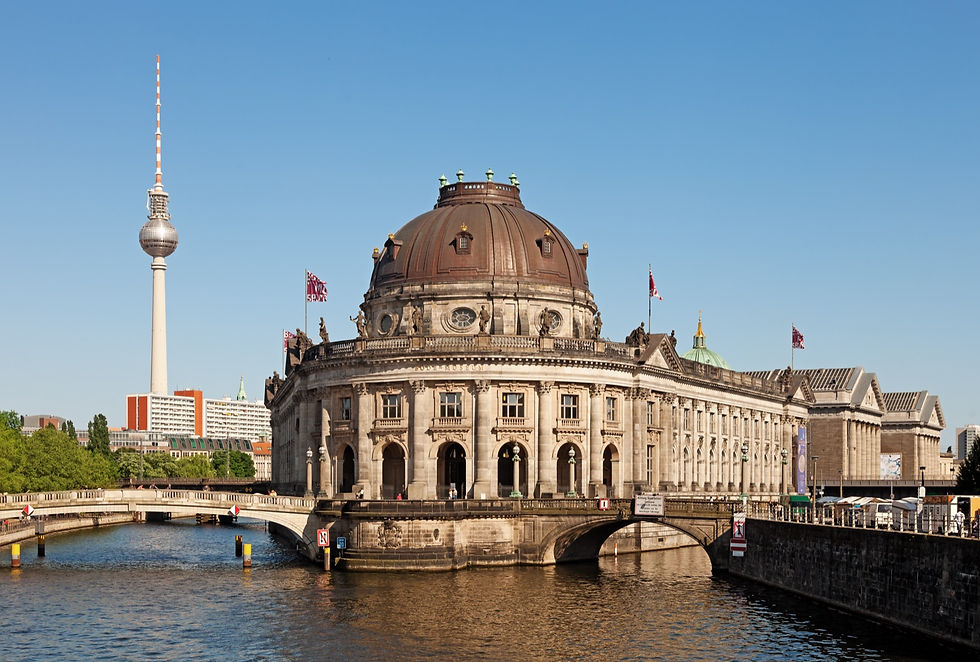
Museum Island works as a fixed cultural stop. Let the official ticket information set the time, then build the flexible part of the day around it.
Give each half-day one Berlin area
Berlin rewards compact halves more than ambitious zigzags. These three combinations work because the places have a real geographic relationship.
Mitte: museum, courtyards and a river pause
Choose this when one person wants a major museum and the other wants architecture, cafes or a slower city walk. Begin with the booked museum or the place that matters most. Afterwards, cross towards Hackescher Markt, look inside the Hackesche Höfe, or sit near the Spree and Monbijoupark.
This pairing gives the museum lover a proper visit without making the other person wait inside three collections. It also gives the non-museum half a specific place rather than “just wandering around Mitte.” If you need help choosing the indoor stop, my first-time Berlin museum guide narrows the decision by interest.
Friedrichshain and Kreuzberg: Wall art, bridge and food
Choose this when one person wants divided-city history or public art and the other wants an active neighbourhood and food. Walk the East Side Gallery, cross or view Oberbaumbrücke, then continue into Kreuzberg. The official East Side Gallery page is the right source for the monument and visitor context.
Markthalle Neun can be a useful food stop, but it is not a promise of a particular event every evening. Check the official Markthalle Neun programme before making it the fixed point. My Berlin food-by-neighbourhood guide helps you keep dinner in the part of the city where the day already ends.

The East Side Gallery and Oberbaumbrücke form one clear east-Berlin sequence. Add Kreuzberg food afterwards instead of crossing the city again.
Tiergarten and the central west: green time plus one strong interior
Choose this when one person needs trees, space or a quiet walk and the other wants culture or a major landmark. Tiergarten is not a decorative gap between attractions. It is a large central park with several different entrances and landscapes. The official visitBerlin Tiergarten guide is a useful orientation before you choose the side that matches your next stop.
Enter from the side that serves the rest of the day. Brandenburg Gate and the eastern park edge work with central history. Potsdamer Platz and Kulturforum work with galleries and concert plans. The Zoo and City West work when the evening belongs around Kantstraße or Savignyplatz.

Tiergarten is a real half-day choice for someone who needs green space. Enter from the side that connects to the other person's cultural or evening plan.
Try the Berlin Day Duet
The tool below is designed for two people sharing one phone. Traveller A privately chooses two Berlin postcards, seals the choice and passes the phone. Traveller B does the same. The reveal gives you one shared stop and one personal stop for each person.
If you have no overlap, do not invent one
No matching card does not mean the day has failed. It simply means the link between your priorities must be practical rather than magical.
Choose the closest pair from the two lists. Put one person's stop first, use a real transfer point or short shared pause, and let the other person's stop lead the second half. Museum Island and Hackesche Höfe can meet around Monbijoupark. East Side Gallery and Markthalle Neun can meet around Oberbaumbrücke and the river. Tiergarten and a Mitte stop need an explicit transport move, not a claim that they are “just around the corner.”
The shared pause should be simple enough that neither person has to research it for another hour. A coffee beside the Spree, one bridge crossing, a market lunch or a park bench can do the job. It connects the day without becoming a third major attraction.
Three planning mistakes to avoid
Splitting every hour equally
A strict rotation creates constant switching. One proper museum block followed by one proper outdoor or food block feels fairer than six short stops. Equality is about ownership of the day, not identical minutes.
Choosing a fake midpoint
The geometric centre between two saved pins may be a station, office block or traffic junction. Choose a place with a purpose: a riverside pause, a market, a courtyard or one direct transport interchange.
Booking two distant reservations
Two fixed bookings on opposite sides of Berlin leave no recovery room when lunch runs late or a train is delayed. Keep one fixed promise and one flexible priority whenever possible. If both must be booked, place a generous travel block between them and stop adding attractions.

A market or meal can be the shared pause, but check the current programme before treating Markthalle Neun as a fixed event.
Put the couple's day inside the whole trip
One balanced day is easier when it does not have to carry every Berlin interest. Put the must-do that belongs to both of you on this day. Move the second museum, distant neighbourhood or specialist history visit to another part of the trip.
My two-day Berlin itinerary gives you a practical central spine if you need a starting point. If your dates, pace, interests, food needs and fixed plans are more complicated, use the Berlin Trip Planner. It builds a 1-to-7-day plan around the details you enter, so your couple's day can sit inside the rest of the visit instead of fighting it.
Make the next move simple: each person chooses one must-do now. Put the less flexible one on the calendar, then use the Berlin Day Duet to find the shared stop.
Image credits
Source and licence details for the five photographs used in this article.
The Oberbaumbrücke carrying the Berlin U-Bahn over the River Spree by Guido from Berlin, CC BY 2.0.
Museum Island and the TV Tower across the River Spree by Thomas Wolf, CC BY-SA 3.0.
Visitors beside murals at the East Side Gallery by Perituss, CC0 1.0.
A cyclist crossing a small bridge in Berlin’s Tiergarten by Ryan Snyder, CC BY 2.0.
Food counters and visitors inside Markthalle Neun by Dirk Ingo Franke, CC BY-SA 4.0.