Is the Hop-On Hop-Off Bus in Berlin Worth It? An Honest Guide
- Yusuf Ucuz

- Jul 17
- 6 min read
Updated: Jul 22
Somewhere near Alexanderplatz or the Zoo, on almost every warm morning, a bright red or yellow double-decker rolls past with an open roof full of people, and someone in the group I am guiding always asks the same thing: should we just get the hop-on hop-off bus instead? It is a fair question. The buses are everywhere, the tickets are easy to buy, and the promise is simple, which is to see all of Berlin without working out the transport.
So this is the honest answer I give on my free walking tour, the one I would give a friend. The hop-on hop-off bus in Berlin is not a scam and it is not a waste. It is a convenience you can pay for, and for most people staying in the centre it is the expensive way to solve a problem the city already solves cheaply. The trick is knowing which kind of visitor you are before you spend the money.
Is the hop-on hop-off bus in Berlin worth it?
The short version: for a fit traveller staying in central Berlin, usually not, because the big sights sit in a short walkable line and a normal city bus covers almost the same route for a fraction of the price. For visitors with limited walking, very little time, small children, or a bad-weather day, the bus can genuinely earn its price.
Decide by your situation, not by the marketing. The bus companies are selling the feeling of seeing everything without effort. That feeling is real, but in Berlin it is unusually easy to get for free, because the historic centre is flat and compact and the public buses are already double-deckers. Once you understand that, the choice gets a lot simpler.
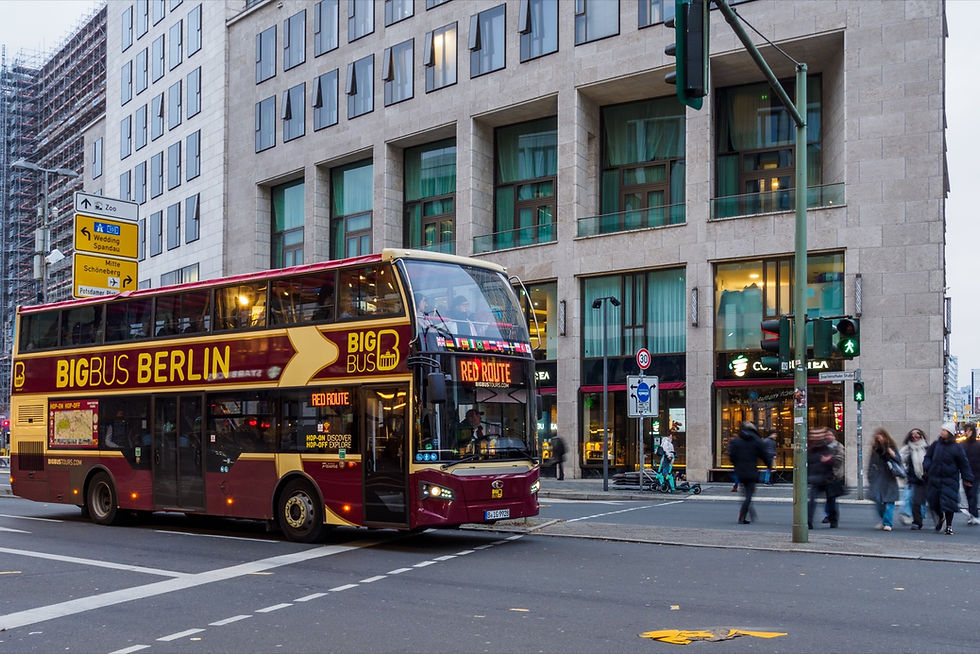
A Big Bus "Red Route" hop-on hop-off in central Berlin. Note the line 100 sign on the post behind it, which is the cheap alternative I get to below.
What the hop-on hop-off bus costs in 2026
Berlin has about four operators running roughly six routes, and the big names you will see are Big Bus and City Sightseeing, plus smaller ones like City Circle and Tempelhofer. The routes overlap heavily, so the real difference is price and which extras you actually use.
Here is the money, in round 2026 numbers:
A 24-hour adult pass is roughly €30 to €45, depending on the operator and the tier. Children are cheaper, usually around half.
Most operators also sell 48-hour and 72-hour passes, and some tickets stay valid for months so you can pick your day.
Some tiers bundle extras: a Spree boat cruise (seasonal, spring to autumn), a guided or app-based walking tour, headphones, or a currywurst. If you will use those, the higher tier can make sense. If you will not, you are paying for them anyway.
For comparison, hold on to two numbers. A normal Berlin single ticket is €4.00, and an all-day AB ticket that covers every U-Bahn, S-Bahn, tram and public bus is €11.20. You can check the current fares on the official BVG tickets page, and the tourist bus options are listed on visitBerlin. Keep those two numbers in your head, because they are the whole argument.

City Circle in City West, marked "every 30 minutes." The buses come often in summer and thin right out in winter.
What you actually get on board
The good parts are real. You get a fixed loop past the headline sights, recorded commentary in several languages, an open top deck for photos in good weather, and the freedom to get off at a stop, look around, and catch a later bus. On a hot clear day, riding the open roof past the Brandenburg Gate and down Unter den Linden is a genuinely nice hour.
The catches are just as real, and this is where I earn my keep as a guide:
The buses stop early. Most run from about 09:30 to 18:00, with the last full loop leaving in the late afternoon, and the timetable thins out or pauses in winter. A "24-hour" pass is really a daytime pass.
Berlin traffic is Berlin traffic. The loop can crawl, so "hop-on hop-off" sometimes means "sit in traffic near Potsdamer Platz."
The commentary is recorded, not a person. It cannot answer your question, read the room, or tell you the thing that makes a place click. That is the difference between information and a guide.
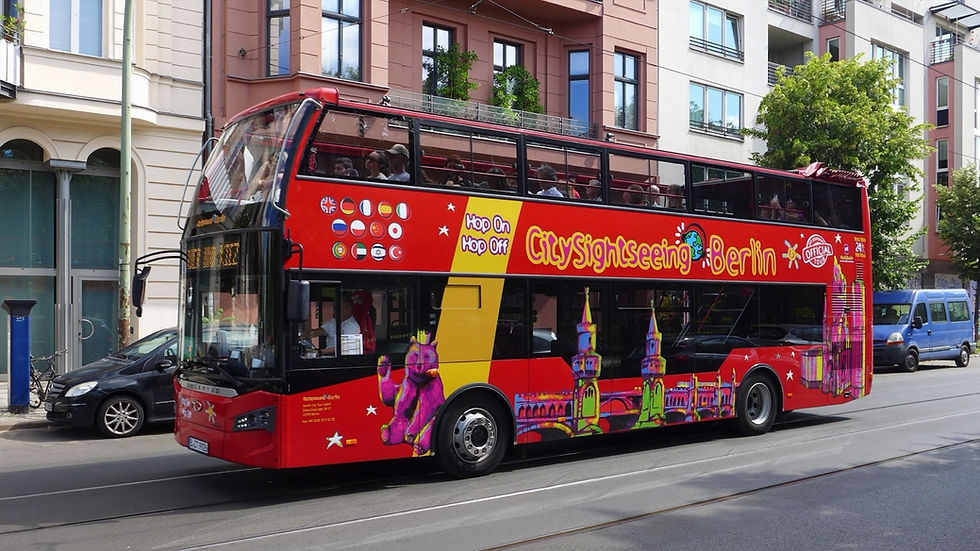
The open top deck on a summer day is the real product you are buying, so the weather matters more than the operator.
Before you decide, it helps to see the actual numbers for your own trip. Set your days, your group and how much you like walking, and this tool lays the hop-on hop-off price next to the two things I normally recommend instead.
The cheaper alternative most locals use: Bus 100 and 200
Here is the part the tour-bus posters will not tell you. Bus 100 and Bus 200 are normal BVG public buses, and any valid ticket covers them. They are often double-deckers, and their route runs straight through the sightseeing heart of the city, past the Reichstag, the Brandenburg Gate, the Tiergarten and the Siegessäule, between Alexanderplatz and Zoologischer Garten.
Sit in a top-front seat and you get a slow sightseeing ride along the most famous corridor in Berlin for the price of a €11.20 day ticket, or €4.00 for a single hop. There is no recorded commentary, but there is a real Berlin around you, and you can get off anywhere and walk. I wrote a whole guide to this in Bus 100: the €4 sightseeing tour locals don't want you to know about, and if you want to understand how the whole network fits together, start with my Berlin public transport guide.
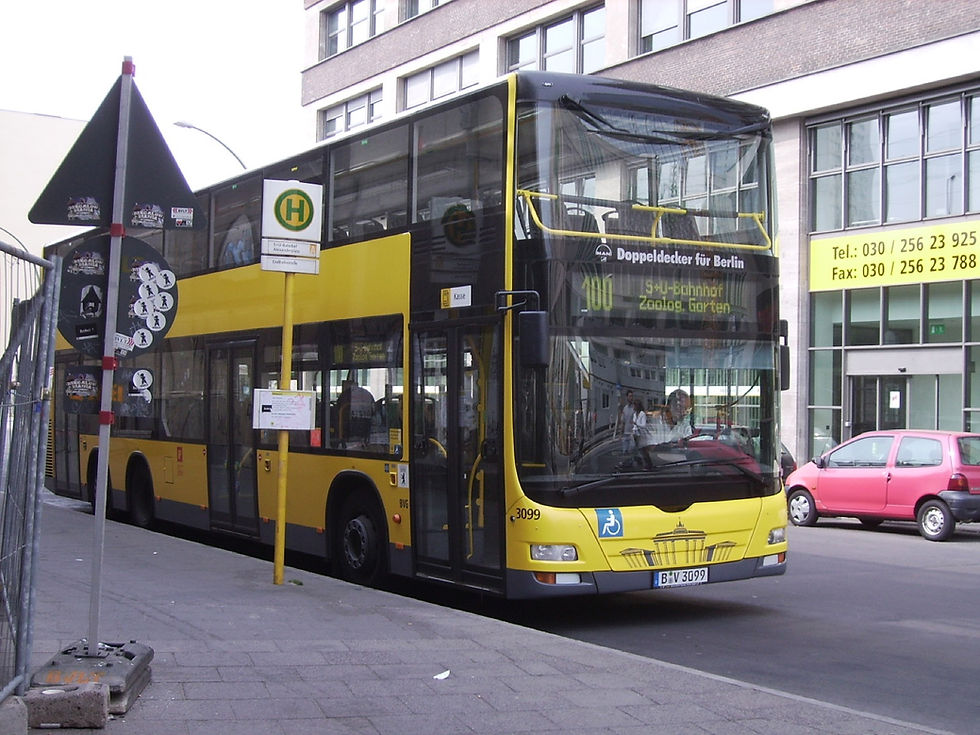
A BVG line 100 double-decker at Alexanderplatz, signed for the Zoo. This is the same corridor the tourist buses run, at day-ticket price.
The other honest option: walk the centre
The second thing most first-time visitors underestimate is how small the historic centre is. Almost every headline sight sits on a straight line from Alexanderplatz to the Brandenburg Gate, and you can walk the whole thing in about 30 flat minutes without hurrying, passing the TV Tower, Museum Island, the Berliner Dom, Unter den Linden and the Gate on the way.
That is the walk my tour is built around, and it is why I keep telling people not to buy a bus to see things they could reach on foot in less time than it takes the loop to come around. If you want the story that turns those buildings into something you remember, a tip-based walking tour does the job the recorded commentary cannot, and then you keep the bus money for lunch. For a longer plan, my Berlin in 3 days itinerary shows how little of the centre actually needs wheels.

Unter den Linden runs from the Brandenburg Gate toward the TV Tower. Most of what tourists want to see is strung along this one flat, walkable axis.
When the hop-on hop-off bus is genuinely worth it
I do not want to talk anyone out of a ticket that fits them. There are real situations where I tell guests to just take the bus and enjoy it:
Limited walking or mobility needs. If long distances on foot are hard, a seated loop with a roof and step-friendly stops is worth every euro. This is the clearest yes.
One short day with a lot to cover. On a single tight day, especially with a cruise or walking tour bundled in, the bus can be an efficient way to sample the whole city and pick where to return.
Cold or wet weather. In November drizzle, a warm covered deck beats trudging between sights.
Families with tired children. A fixed base with a roof, cheaper child tickets and commentary can take the stress out of a long day, though even here a day ticket plus Bus 100 usually costs a lot less.
If you are weighing this against a city pass instead, my honest Berlin WelcomeCard breakdown covers whether the transport-and-discounts card is the better buy for your trip.
My verdict
The hop-on hop-off bus sells convenience, and Berlin happens to be a city where that convenience is cheap to get another way. For most fit visitors in the centre, I would start with a walking tour for the story, use Bus 100 or 200 for the one longer stretch, and skip the pass. Save it for the day, the group, or the weather that actually needs it.
Whatever you choose, the sights are not going anywhere, and neither is the €4 bus. If you want the version with a real person pointing out what you are looking at, that is exactly what I do on the walking tour route.
Image credits
Big Bus Berlin hop-on hop-off, photo by JoachimKohler-HB, CC BY-SA 4.0, via Wikimedia Commons.
City Circle Sightseeing bus, photo by Antonio Vera, CC BY-SA 2.0, via Wikimedia Commons.
BVG line 100 double-decker, photo by Jcornelius, CC BY-SA 3.0, via Wikimedia Commons.
City Sightseeing Berlin open-top bus, photo by Bahnfrend, CC BY-SA 4.0, via Wikimedia Commons.
Unter den Linden boulevard, photo by Jorge Royan / royan.com.ar, CC BY-SA 3.0, via Wikimedia Commons.